Choosing a Nail Hardener Machine is not simply a matter of selecting the brightest lamp or the lowest price. Buyers need to match the equipment to the products they use, their daily workload, and the service environment. A gel coating that cures well under one lamp may remain tacky under another. Check the product manufacturer’s curing guidance before comparing machine specifications.
This guide introduces common types, including UV, LED, hybrid, and portable models. Each serves a different workflow. UV and LED units vary in curing compatibility, while hybrid designs combine light sources for broader product support. Portable machines can suit mobile technicians, but compact size may mean less room for the hand or fewer settings. Small details matter. A clear digital timer, a removable base, and an automatic sensor can make repeated salon use more practical. Still, features alone do not prove consistent performance.
For global buyers, compare wavelength information, stated power, timer options, build quality, and replacement-part availability. Ask suppliers for test documentation and user instructions, then verify that the machine works with the specific gel system you plan to use. Regional voltage and plug requirements also deserve attention. Do not assume one model fits every market. There is no universally best choice; the right machine depends on products, service volume, budget, and after-sales support. Some listings provide incomplete specifications, so pause before treating marketing claims as verified facts. A careful comparison can reduce mismatches and help buyers choose equipment with confidence.
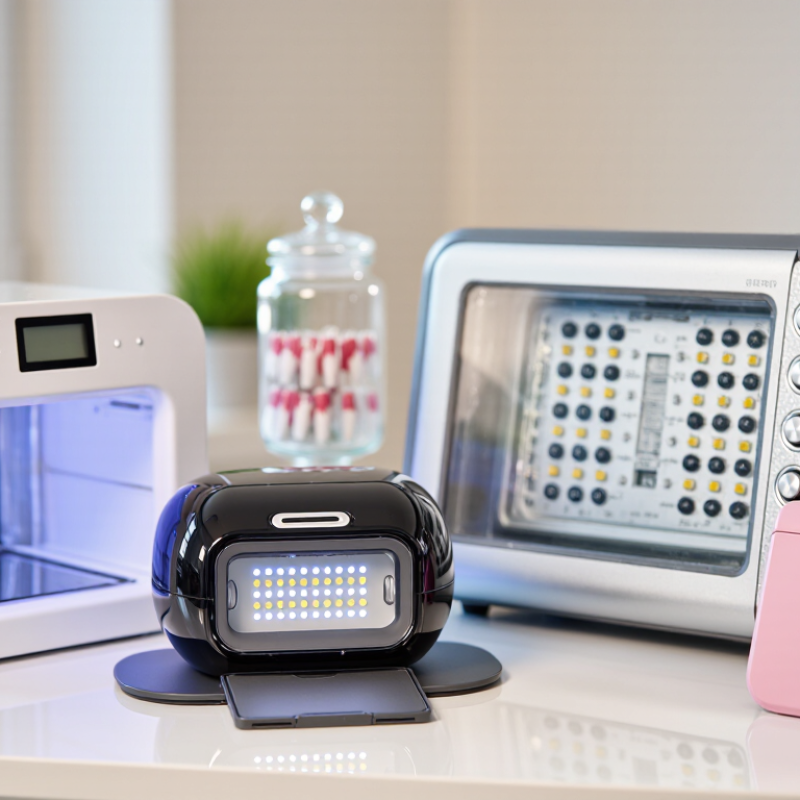
A nail hardener machine usually means a UV or LED lamp that cures gel nail coatings. It does not harden the natural nail itself. Inside the coating, light activates photoinitiators, starting a chemical reaction that links liquid ingredients into a firmer polymer layer. The hand sits beneath the lamp, and a timer controls the exposure. Short cycles are common, but the required time depends on the coating’s formula, layer thickness, and lamp output. A thick coat may feel dry on top while remaining soft underneath. That distinction is easy to miss.
For buyers, check the lamp’s wavelength range, power consistency, curing area, and timer settings—not just its advertised wattage. The FDA explains that UV nail lamps expose skin to UVA; protective gloves or sunscreen can reduce exposure to the hands. A 2023 Nature Communications study reported cell damage after repeated 20-minute nail-dryer exposures in laboratory conditions. Those results do not directly measure the risk from typical salon use, but they support sensible exposure practices. The machine is a curing tool, not a substitute for product instructions or careful application. And yes, the technology still leaves room for user error.
Buyers usually compare curing technology, lamp coverage, and operating format. Fluorescent UV units cure many UV gels, but often need longer exposure and periodic tube replacement. LED units can shorten curing times, yet their wavelength must match the gel’s photoinitiators.
A lamp’s wattage alone does not prove that a product will cure evenly.
Hybrid UV/LED machines combine light sources and suit salons using different gel formulas. Check the stated wavelength range, timer settings, and whether the lamp reaches the thumb and sidewalls. Uneven curing can leave gel soft beneath the surface.
That detail is easy to miss.
Portable cordless machines favor mobile technicians and small workstations; fixed, higher-capacity units suit frequent salon use. Convenience has limits. Battery life, charging time, ventilation, and a stable hand rest all affect daily workflow. Follow the gel maker’s cure schedule rather than shortening it to serve more clients.
For market context, Grand View Research’s 2024 nail salon market report estimates a global market value of USD 11.0 billion in 2023 and an 8.0% CAGR for 2024–2030. This measures salon services, not machine sales, so it indicates demand context rather than device growth. Buyers should compare test conditions and service access, not just advertised curing speed.
Buyers comparing 2026 nail hardener machines should inspect wavelength, measured irradiance, and timer behavior—not wattage alone. Fluorescent UV units commonly emit around 365 nm, while many LED or dual-source models combine 365 nm and 405 nm. Formulations respond differently to these wavelengths. Numbers can mislead.
Shipp and colleagues tested 17 nail lamps in a 2014 JAMA Dermatology report and found substantial variation in measured UVA irradiance. This helps explain why two machines with the same wattage may cure differently: electrical input is not the same as light reaching the nail. Compare irradiance at the hand position, wavelength data, and output consistency across the lamp bed. Ask for test conditions, not just a peak figure.
Timer settings matter, but gel chemistry determines the validated curing schedule. Avoid shortening cycles to increase throughput. Check whether thumbs and sidewalls receive even exposure; hand placement can create shadows. IEC 62471 provides a recognized framework for assessing photobiological safety, though it does not verify curing performance. There is no perfect comparison: hand size, device aging, and measurement position all affect results.
“Nail hardener machine” often refers to a lamp that cures gel-based strengthening products, not a device that strengthens natural nails by itself. That distinction matters. Professional and salon units are built for repeated appointments, with stable hand positioning, clear timers, and room for both hands. Technicians should follow the product’s curing schedule and wavelength guidance; appearance alone cannot confirm a full cure.
For salon work, consistent hand placement helps limit uneven curing across thumbs and fingertips. A well-sized opening is useful. Some units offer preset cycles, while others allow timed settings, so staff can follow approved product instructions without guessing. Cleaning routines and equipment checks also matter during busy days. Small details count.
At home, compact lamps may suit occasional gel-overlay care, but they are not needed for every nail-strengthening routine. Read the product instructions, keep skin outside the curing area where practical, and stop if irritation develops. Do not extend exposure to compensate for a mismatched lamp; check compatibility instead. A lamp cannot diagnose or treat brittle, painful nails. Persistent changes warrant advice from a qualified clinician. Convenience helps, but it has limits.
| Machine Type | Typical Technology | Typical Configuration | Best-Fit Applications | Advantages | Buying Considerations |
|---|---|---|---|---|---|
| Professional salon LED/UV lamp | LED or dual-wavelength LEDs, commonly specified around 365 nm and/or 405 nm | Full-hand opening; multiple LEDs; preset timers; removable base on some models. Advertised electrical input varies, often around 36–72 W. | Busy salons, independent nail technicians, and regular gel services | Designed for repeated use and full-hand placement; multiple timer settings can support different product instructions. | Confirm compatibility with the gel system being used. Advertised watts indicate electrical input, not a standardized measure of UV output or curing performance. |
| Professional dual-wavelength LED lamp | LED sources combining wavelengths commonly listed near 365 nm and 405 nm | Full-hand format, timer controls, and sometimes a low-heat or gradual-power mode | Technicians using several compatible gel products or working with a varied client base | Offers two commonly used wavelength bands in one unit; useful when product instructions call for a compatible LED/UV lamp. | Dual-wavelength labeling does not guarantee compatibility with every gel. Follow the gel manufacturer’s curing instructions and recommended exposure time. |
| High-capacity salon lamp | LED or dual-wavelength LED technology | Wide hand opening, larger interior, and often a removable base for toenail services | Salons handling frequent appointments, full-hand curing, and occasional pedicure services | Roomier placement can make hand positioning easier; a removable base can improve access during foot services. | Check the usable interior dimensions, sensor operation, cleaning access, and whether the lamp’s layout gives consistent coverage across all nails. |
| Compact at-home LED/UV lamp | LED or dual-wavelength LEDs; wavelength specifications vary by model | Small footprint, typically a partial or full-hand opening, with basic preset timers. Advertised electrical input is often approximately 6–24 W. | Home users with limited storage space and occasional gel manicures | Portable and space-saving; simpler controls can be convenient for personal use. | Check that the hand fits comfortably and that the lamp is suitable for the specific gel product. Compact size does not remove the need to follow curing instructions. |
| Portable or cordless lamp | Usually LED; wavelength and output vary by model | Rechargeable battery or USB power, compact body, and limited timer options | Mobile nail technicians, travel, and small touch-up tasks | Convenient where a mains outlet is not nearby; easy to transport between work areas. | Check battery runtime, charging method, curing-area size, and whether it is intended for full-hand use or only targeted curing. |
| Handheld spot-curing lamp | Typically LED, with wavelength specifications dependent on the device | Small directed curing area; often operated by a button or short timer | Securing nail art, extensions, or individual nails when the product and workflow allow spot curing | Offers precise placement and is easy to move around a workstation. | It is generally not a substitute for a full-hand lamp. Use only for products and steps that permit spot curing, then complete the prescribed cure as directed. |
| Traditional fluorescent UV lamp | Fluorescent UV-A tubes, commonly around 365 nm | Enclosed hand-sized unit with replaceable tubes and timer controls | Users or salons maintaining a compatible fluorescent-lamp setup | Uses established UV-lamp technology; replacement tubes may be available for some models. | Tube output can decline with use, so follow the equipment instructions for replacement and maintenance. Confirm product compatibility and avoid comparing tube wattage directly with LED lamp ratings. |
| Selection note: In this table, “nail hardener machine” refers to a UV/LED lamp used to cure compatible gel nail products. These lamps do not cure ordinary air-dry nail polish or replace liquid nail-hardening treatments. Wavelength, exposure time, and lamp compatibility depend on the specific gel formulation; follow its instructions. Use UV protection measures recommended by relevant health and product guidance. | |||||
For salon use, compare UV, LED, and dual-wavelength curing lamps. They cure gel coatings; they do not strengthen natural nails by themselves. Check that the lamp’s wavelength and curing times match the gels you use. A compact unit suits mobile technicians, while a larger lamp may fit a busy workstation better. Fit matters.
Grand View Research’s Nail Care Market report estimated the global market at USD 23.41 billion in 2023, with projected growth of 5.9% annually from 2024 to 2030. This is broad market context, not proof of demand for any specific machine type. For a reliable purchase, check input voltage, plug options, timer accuracy, ventilation around the unit, and replacement-part availability in your destination market. I would not choose by wattage alone; labels do not always show how evenly a lamp cures across the hand. Ask suppliers for test details and try representative products before ordering in volume.
Tips: Test with the gel formulas your technicians actually use. Compare cure results at the thumb and fingertips, not just the center. Keep a sample unit in daily use before scaling up. A spreadsheet helps, but it can miss awkward controls or a cramped hand position.
1901 West Main Street
Washington, MO 63090
Main Directory: 1-800-227-4873
Email: sale@pangcofurniture.com

We’re always looking for talented individuals to join our team. Send us your resume using the form below. When a position comes available that matches your skillset, one of our team members will reach out to you.
"*" indicates required fields