Best Cargo Tie Down Straps Manufacturer in China?

Choosing the best Cargo Tie Down Straps manufacturer in China takes more than comparing prices or catalog photos. A strap may look sturdy on a screen, yet weak stitching or a poorly matched buckle can change how it performs under load. Buyers should examine webbing material, rated capacity, hardware quality, stitching consistency, and clear product labeling. Ask for sample straps and inspect the seams, edges, and buckle action yourself. Small details matter.

For a practical perspective, this introduction uses an illustrative comment from cargo-securing specialist Alex Morgan; it is not a sourced quotation: “A dependable tie-down system starts with the right rating, sound anchor points, and straps suited to the load.” That principle helps frame the sections ahead. The article will explore how to assess manufacturers, compare product specifications, review quality-control practices, and ask useful questions before placing an order. It will also consider customization, communication, lead times, and after-sales support. A low quote can be tempting. But does it include consistent inspection and traceable specifications? Buyers should verify claims with documentation, samples, and direct questions rather than relying on marketing language alone. Even then, no supplier is perfect; repeat checks can reveal issues that one sample misses. This guide offers a grounded way to compare options and identify a Chinese manufacturer whose products fit your cargo-securing needs.
Best Cargo Tie Down Straps Manufacturer in China?

Understanding Cargo Tie-Down Straps and Their Main Types

Best Cargo Tie Down Straps Manufacturer in China?

Understanding Cargo Tie-Down Straps and Their Main Types

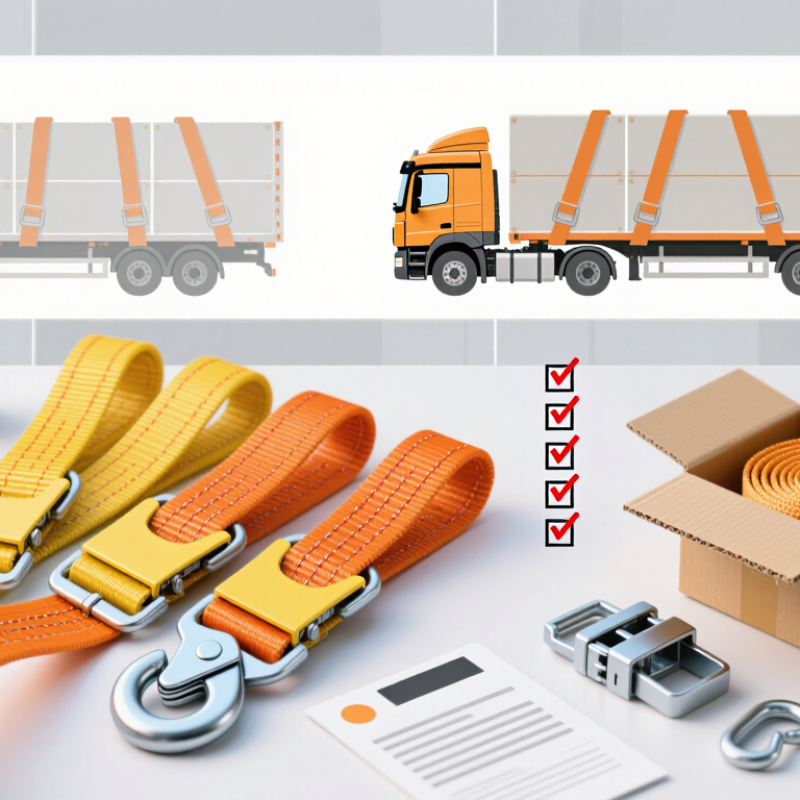
Cargo tie-down straps use tension to limit load movement during transport. The main types include ratchet straps, cam-buckle straps, winch straps, and endless-loop straps. Ratchet models provide stronger tension for heavy palletized loads. Cam buckles are easier to adjust and suit lighter cargo that could be crushed by excessive force. Winch straps work with flatbed winches, while endless-loop straps wrap around bundles without hooks. Check the webbing, stitching, end fittings, and printed working load limit before use. Small details matter.

The Federal Motor Carrier Safety Administration’s Cargo Securement Rules, 49 CFR 393.106(d), require the aggregate working load limit of tiedowns to equal at least half the cargo’s weight. This is a useful baseline, not a substitute for checking the full securement arrangement. A 1,000-kilogram load, for example, needs tiedowns with a combined working load limit of at least 500 kilograms under that rule.

Capacity depends on the complete assembly, including its weakest component. Wet webbing, sharp edges, and worn stitching can change performance; a label alone cannot reveal every problem. It is easy to overlook strap angle, too. The right type depends on cargo shape, anchor points, and how often tension needs adjustment.

Key Safety Standards and Specifications for Tie-Down Straps

For cargo tie-down straps, safety starts with a readable label and a specification matched to the load. In markets where it applies, EN 12195-2 covers textile lashing assemblies for road transport. Check the lashing capacity (LC), standard hand force (SHF), and standard tension force (STF); these values describe different things. Never treat a strap’s breaking strength as its usable securing capacity. The label should also identify the material and traceable manufacturer details.

Webbing width alone does not prove strength. Polypropylene and polyester behave differently under heat, moisture, and repeated tension. Inspect stitching, hooks, ratchets, and label integrity before use. Look for cuts, fraying, damaged seams, bent hooks, or corrosion. Retire damaged equipment according to the maker’s instructions. A tidy label can still hide weak stitching, so physical checks matter. In day-to-day loading, sharp pallet corners can wear webbing quickly; edge protection helps reduce that risk.

Tips: Match strap capacity to the securing method and load. Keep the webbing flat, avoid knots, and do not use cargo straps for lifting. Store straps dry and away from sharp tools. If a specification is unclear, ask for test documentation and confirm which standard the assembly was tested against.

How to Assess Cargo Strap Manufacturers in China

Assessing a cargo strap manufacturer in China starts with evidence, not polished product photos. Ask for the rated working load and breaking strength, and confirm that labels distinguish them clearly. Those figures are not interchangeable. Request test reports tied to the exact strap width, webbing, stitching pattern, and buckle or ratchet assembly you plan to order. Check whether reports come from a qualified independent laboratory, and verify their dates and sample identification. Details matter. On a sample, inspect edge finish, loose threads, stitch consistency, corrosion protection, and whether the hardware operates smoothly under tension. A bright showroom sample tells little about a production run.

Then examine how the factory controls repeatability. Ask how incoming webbing is checked, how machines are calibrated, and how finished lots are sampled before shipment. Request a production sample made with the same materials and process as your order, not a hand-finished display piece. If possible, compare several units side by side. Small differences can signal inconsistent control. Discuss packaging, lead times, defect handling, and document retention in writing; vague answers deserve follow-up. A factory may have convincing paperwork yet struggle to maintain stitching quality at volume. One audit or test cannot predict every shipment. Keep dated samples, inspection records, and agreed specifications, and consider independent inspection when order size or risk justifies it.

Comparing Quality, Customization, and Production Capabilities

Choosing a cargo tie-down strap manufacturer requires more than comparing quoted prices. UNCTAD’s Review of Maritime Transport 2024 reports that seaborne trade grew 2.4% in 2023 and forecasts 2.7% growth for 2024. More freight means more varied loads, making consistent webbing, stitching, and clear load ratings essential. Check whether the factory tests finished assemblies, not only raw webbing. Ask for batch records and inspect the stitching around hooks and ratchets. Small details matter.

Customization should solve a real handling problem. A manufacturer may adjust strap length, width, end fittings, labels, and packaging for a specific application. But custom colors alone prove little. Request samples and check whether the ratchet operates smoothly with gloves and whether edge protectors fit the actual load. The FMCSA cargo-securement rules set an aggregate working load limit of at least half the cargo’s weight. That figure is a useful design reference, not a substitute for application-specific review.

Production capability is visible in repeatability. Ask how the factory controls webbing strength, sewing tension, and final inspection across shifts. Can it maintain the same specification in a large order? A polished sample can hide uneven mass production. I would also verify lead times against documented capacity, though schedules still slip. That is worth discussing openly.

Best Cargo Tie Down Straps Manufacturer in China? Comparing Quality, Customization, and Production Capabilities

Illustrative evaluation framework: scores show how three hypothetical capability profiles might compare across common buyer criteria. They are not verified ratings of actual manufacturers.

Use this framework to guide supplier checks. Verify load capacity and test documentation, confirm available webbing and hardware options, and assess production capacity and traceability before selecting a supplier.

Choosing a Manufacturer for Your Cargo Securing Needs

Choosing a cargo tie-down manufacturer means checking more than price and breaking strength. Ask for test reports showing lashing capacity, elongation, and performance after repeated use. EN 12195-2 is a useful reference for web lashings; confirm that certificates match the exact strap, fittings, and label you will receive. A neat sample is not enough. Inspect stitching, ratchet movement, edge protection, and whether load ratings are clearly marked.

The World Shipping Council’s 2023 Containers Lost at Sea report recorded 661 containers lost in 2022. That figure does not measure strap failures, but it shows why cargo restraint deserves careful attention.

Ask manufacturers how they control webbing consistency, inspect stitching, and trace production batches. Request a sample and test it with your own handling routine: tighten the ratchet, release it, and check for fraying or sticking. Small details matter.

Factory visits or live production videos can reveal practical habits, such as keeping sharp tools away from webbing. Yet audits and paperwork can miss problems. I would also ask how complaints are investigated and whether corrective actions are documented. A reliable supplier should explain limitations plainly, not promise that one strap suits every load, route, or weather condition.