
Global electricity demand is rising, putting more pressure on the equipment that distributes power safely. The International Energy Agency’s Electricity 2025 report says worldwide electricity demand grew by about 4.3% in 2024. Its 2023 report, Electricity Grids and Secure Energy Transitions, estimates that 80 million kilometres of grids may need upgrading or adding by 2040. That is a vast task. Behind each connection are practical choices about enclosure strength, circuit capacity, heat management, and access for maintenance.
An Electric Distribution Box may look like a simple cabinet, but small design differences matter on site. A crowded interior can complicate wiring. A weak seal may be unsuitable for a dusty workshop or exposed outdoor location. Buyers should compare rated current, ingress protection, material, mounting style, available circuits, and documentation. IEC 61439 is a useful reference for low-voltage switchgear assemblies, but buyers must verify which standards and approvals apply in their destination market.
This guide reviews seven options for global buyers, with attention to product fit rather than bold claims alone. We consider residential, commercial, and light industrial use, while noting where specifications need confirmation with the supplier. No single box suits every project. That is worth remembering. Product listings can omit important details, and even a well-built enclosure cannot correct poor installation or an incorrect load calculation. Check the datasheet, confirm local requirements, and ask how replacement parts and technical support are handled before ordering.
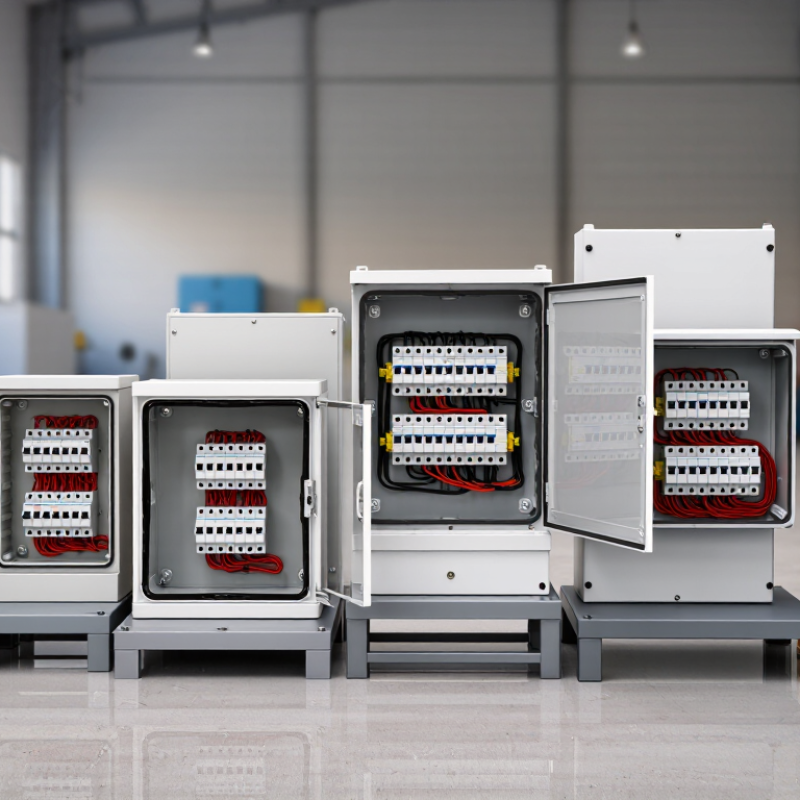
An electric distribution box receives power from an incoming supply and routes it to separate circuits. Inside, busbars or terminals provide connection points, while circuit breakers can interrupt current during overloads or short circuits. The enclosure helps shield live components from accidental contact, dust, and impact. Its protection depends on the enclosure rating, installation conditions, and proper sealing. Details matter.
In practical use, the box also supports isolation, inspection, and circuit organization. Clear labels help technicians identify a lighting circuit or a pump supply without guessing. A suitable layout leaves enough room for wiring bends and future maintenance. Crowded boxes can make inspection harder and may contribute to heat buildup. The correct design depends on load, supply characteristics, environment, and local electrical requirements.
Tips: Check the rated current, number of outgoing circuits, enclosure protection, and available installation space before choosing a box. Confirm that protective devices match the connected wiring and equipment. Keep cable entries sealed, and leave access for safe inspection. A specification sheet may not show how easy a box is to service once installed, so review the internal layout carefully. Small details are easy to miss.
For global buyers, the best electric distribution box is not simply the one with the most features. It must match the installation site, electrical load, and destination market. Check rated voltage, current, short-circuit capacity, and the number of outgoing circuits. Leave room for future circuits where practical. Small details matter.
Environmental protection deserves close attention. A dusty workshop, coastal site, and outdoor utility area place different demands on an enclosure. Review ingress protection, corrosion resistance, temperature range, and ventilation needs against actual conditions. Also check the door seal, cable-entry layout, and access for maintenance. In specification reviews, unclear labels and cramped wiring space are common oversights. Fit matters. Confirm applicable product standards and certification requirements with qualified local professionals; requirements vary by market and application. Clear test records and installation instructions help buyers compare suppliers more reliably.
Tips: Request dimensioned drawings, material details, test documentation, and spare-part availability before purchase. Ask how the box handles heat at expected loads. Then verify that the proposed configuration fits the site; a neat catalogue image cannot show every installation constraint.
Global buyers rarely need the same electric distribution box. A compact residential enclosure suits apartments and small shops, where wall space is limited. Modular DIN-rail boxes make circuit changes easier for installers. Outdoor projects may need sealed enclosures with suitable ingress protection. Check the rating against actual dust and moisture exposure, not appearance alone. Small details matter.
Industrial sites often favor sturdy metal boxes that can tolerate knocks and warmer operating conditions. High-current applications require careful review of rated current, conductor space, and fault levels. Metering-ready boxes help keep measurement equipment organized and accessible. For complex layouts, multi-circuit enclosures can be configured around the project. These are seven practical choices, but none is automatically right for every site.
Compare enclosure dimensions, wiring access, material, and operating temperature before ordering. Ask for test reports and documentation relevant to the destination market; requirements can differ. A high ingress rating does not prove every other performance claim. That trade-off is real. I have seen buyers focus on the box exterior and overlook cable entry space. Leave room for bends, labels, and maintenance. A box that fits on paper may feel crowded once conductors are installed.
An electric distribution box should be compared by usable capacity, not its door label alone. Check the rated current, number of outgoing circuits, pole arrangement, and spare ways. A compact 12-way enclosure may suit a small workshop, but leave little room for later loads. That matters. For larger sites, compare busbar ratings and conductor space, not just circuit count. Crowded wiring can make inspection and heat management harder. The largest box is not automatically the best choice; unused capacity adds cost and may complicate installation. Still, undersizing is an expensive lesson.
Safety features deserve equal scrutiny. Look for a secure cover, clear circuit identification, adequate terminal protection, and an enclosure rating suited to dust or moisture. In damp or outdoor locations, verify the stated ingress-protection rating and material durability. A sealed case can still trap heat if poorly specified. Check whether protective devices, such as residual-current or overcurrent protection, are included or must be selected separately. Compliance varies by destination. Request test reports and certificates tied to the exact model, then confirm applicable local standards with a qualified installer. Paperwork can look complete while omitting an accessory or configuration. That detail is easy to miss.
| Distribution box type | Typical capacity | Common applications | Key safety features | Environmental protection | Relevant standards to check | Best suited for |
|---|---|---|---|---|---|---|
| 1. Residential DIN-rail distribution board | Typically 4–36 DIN modules; circuit current depends on the selected breakers, busbars, and assembly design. | Homes, apartments, and small commercial premises. | Overcurrent protection, neutral and earth terminals, insulated covers, and optional residual-current protection or surge protection. | Usually for indoor installation; select an enclosure rating appropriate to the room and installation conditions. | IEC 61439-3 for distribution boards intended to be operated by ordinary persons; IEC 60529 for IP ratings. Requirements vary by market. | Residential projects needing a compact, modular board. |
| 2. Flush-mounted residential distribution box | Commonly 8–48 DIN modules, subject to enclosure dimensions and the chosen protective devices. | New-build housing and renovations where wiring is concealed in walls. | Covered live parts, secure device mounting, circuit identification, and space for correctly rated protective devices. | Generally intended for dry indoor locations; the finished installation and door must maintain the required protection level. | IEC 61439-3 and IEC 60529; confirm local wiring rules and any national product requirements. | Projects prioritizing a neat, low-profile indoor finish. |
| 3. Weather-resistant outdoor distribution enclosure | Often configured for 4–36 modules or a small number of molded-case circuit breakers; current capacity is assembly-specific. | Outdoor lighting, gates, small pumps, and building service circuits. | Gasketed door, protected cable entries, suitable terminals, and correctly coordinated overcurrent and earth-fault protection. | IP ratings such as IP54 or IP65 are available in some designs; the actual rating depends on the complete enclosure, glands, and installation. | IEC 60529 for IP classification; IEC 61439 for the low-voltage assembly where applicable. Check UV, corrosion, and temperature suitability separately. | Installations exposed to rain, dust, or wash-down conditions when the specified rating matches the environment. |
| 4. Industrial metal distribution cabinet | Commonly designed around 125–630 A incomers, with outgoing circuits selected to suit the load and fault level. | Factories, workshops, commercial buildings, and machinery supply. | Metal enclosure, main isolator or circuit breaker, busbar protection, earthing provisions, and optional interlocks or metering. | Indoor and outdoor versions are available; corrosion protection and IP rating should be specified for the installation site. | IEC 61439-1 and IEC 61439-2 for power switchgear and controlgear assemblies; IEC 60529 for IP rating. Verify assembly design and test documentation. | Sites requiring higher current capacity, robust construction, or multiple outgoing feeders. |
| 5. Temporary construction-site distribution box | Often supplied with a 16–125 A incoming connection and several socket outlets; final ratings depend on the supply system and configuration. | Construction sites, events, maintenance work, and temporary power distribution. | Appropriately rated residual-current protection, overcurrent protection, protective earthing, durable sockets, and a lockable or impact-resistant enclosure. | Choose a rating and construction suitable for outdoor exposure, dust, impact, and expected handling; plugs and sockets also need suitable protection. | IEC 61439-4 for assemblies for construction sites; IEC 60309 for industrial plugs and socket-outlets where applicable; local temporary-installation rules. | Temporary installations needing portable, clearly protected power outlets. |
| 6. Floor-standing modular distribution cabinet | Typically engineered for 400–1,600 A, with capacity dependent on busbar design, temperature rise, and fault withstand. | Large commercial buildings, campuses, and industrial distribution rooms. | Segregated sections may be specified; common provisions include a main protective device, busbar covers, earthing, and accessible cable compartments. | Usually installed indoors; enclosure protection and ventilation must suit the room and heat load. | IEC 61439-1 and IEC 61439-2; verify rated current, short-circuit withstand, temperature-rise performance, and forms of internal separation if required. | Projects needing expandable feeder capacity and organized cable management. |
| 7. Photovoltaic DC combiner box | Designed for a specified number of PV strings; input voltage and current limits must match the modules, string layout, and inverter. | Solar PV systems where multiple DC strings are combined before the inverter. | May include string fuses, DC-rated isolator, surge protective devices, and polarity or circuit labels; components must be rated for PV DC use. | Outdoor versions are common; select an enclosure and cable entries suitable for UV exposure, temperature, and site conditions. | IEC 61439-2 may apply to the assembly; IEC 60529 for IP rating; IEC 61643-31 for PV surge protective devices. Confirm national PV installation requirements. | PV installations requiring appropriately protected and organized DC string connections. |
Buyer note: The capacities and configurations shown are typical selection ranges, not guaranteed ratings for every product. Confirm rated voltage and current, prospective short-circuit current, earthing arrangement, ambient temperature, enclosure rating, and required local approvals with the supplier and a qualified electrical professional. Standards listed are reference frameworks; their applicability and certification requirements depend on the destination market and the specific assembly.
The installation environment should shape the enclosure choice before price or appearance does.
A dry utility room has different risks from a sunlit exterior wall or a washdown area. Check likely exposure to rain, dust, salt air, cleaning chemicals, vibration, and accidental impact. For outdoor use, confirm that the stated IP rating suits the actual dust and water exposure; the rating alone does not prove suitability for every site. Consider UV resistance and the expected temperature range, too. A dark box in direct sun can heat internal components faster than expected.
That matters.
In cold or humid settings, condensation may form even when water cannot enter. A drain or vent can help, but only if it preserves the required protection. Check wall strength, mounting position, and cable-entry direction; downward-facing entries may reduce direct water exposure. Leave enough room for wiring, heat dissipation, and safe maintenance.
For coastal or chemically exposed locations, verify material and coating compatibility rather than relying on a general “weatherproof” description. Ask for documented test data and installation limits. Not every site is harsh. Still, assumptions are easy to regret when the box is already mounted.
1901 West Main Street
Washington, MO 63090
Main Directory: 1-800-227-4873
Email: sale@pangcofurniture.com

We’re always looking for talented individuals to join our team. Send us your resume using the form below. When a position comes available that matches your skillset, one of our team members will reach out to you.
"*" indicates required fields