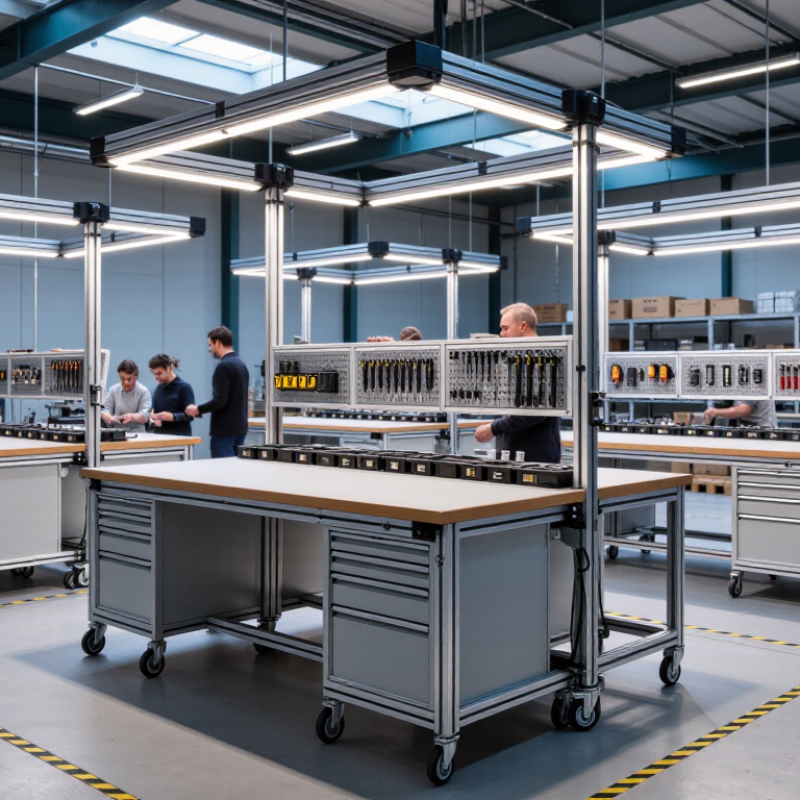
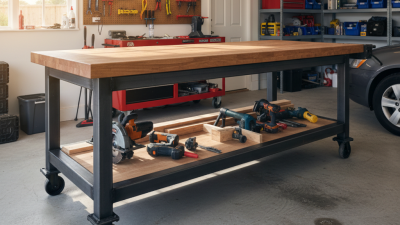
Choosing the best industrial workbench in 2026 requires more than comparing prices or polished product photos. Global buyers need a stable platform for real production work, from electronics assembly to metal fabrication. A suitable bench should support the intended load, resist daily wear, and fit the operator’s working height. It should also allow practical upgrades, such as drawers, lighting, tool panels, power modules, and ESD protection.
Ergonomics deserves serious attention. Alan Hedge, a respected ergonomics researcher, often shared this reminder: “The best posture is the next posture.” This idea matters on a factory floor. A height-adjustable industrial workbench can reduce awkward reaching and repeated bending. Rounded edges, generous legroom, and a clear work surface can improve movement around a busy station. Small details become important after eight hours.
Global purchasing adds another layer of difficulty. Buyers must review load ratings, steel thickness, surface materials, assembly instructions, packaging quality, and after-sales support. Regional electrical requirements may also affect integrated power accessories. Certifications can help, but they do not replace practical inspection. A product may look strong online and still arrive with weak casters or unclear installation steps. That is an uncomfortable possibility.
This guide compares leading workbench types for international buyers in 2026. It considers durability, adjustability, modular design, worker comfort, shipping practicality, and long-term value. No single model suits every facility. The best choice depends on the work, the people, and the environment. Perfect answers are rare. Careful evaluation is not.
Industrial workbench selection should begin with task analysis, not appearance. Not every bench fits. Fixed-height benches support repetitive assembly and heavy fabrication. Adjustable-height models suit mixed teams and reduce prolonged awkward postures. Mobile benches add flexibility for maintenance areas, while modular benches allow shelves, drawers, lighting, power outlets, and tool panels to change with production needs. ESD-safe surfaces are essential for electronics handling. Stainless-steel versions serve clean, corrosion-sensitive environments.
Core functions determine long-term value. A reliable bench needs a verified load rating, stable leveling feet, protected edges, and accessible storage. Locking casters should move smoothly but hold firmly during work. The working height should support neutral shoulders and wrists, consistent with ergonomic principles in ISO 6385.
EU-OSHA’s 2022 OSH Pulse survey found that three in five workers reported musculoskeletal complaints. BLS 2023 data also showed sprains, strains, and tears represented about one quarter of days-away-from-work cases in the United States.
In practical evaluations, cable routing and lighting are often overlooked. They should not be. A heavy frame can still create poor posture if its surface is too high. Adjustable accessories may improve fit, but they can increase maintenance points. Buyers should compare tested load capacity, grounding performance, corrosion resistance, and replacement-part access. These details feel minor during purchasing. They become expensive during daily use.
Choosing the best industrial workbench in 2026 starts with measurable specifications, not appearance. The U.S. Bureau of Labor Statistics reported that sprains, strains, and tears represented about 47% of days-away-from-work cases in 2023. This supports adjustable working heights, supportive legroom, and reduced reaching distances. A fixed 900-millimeter height may suit one operator, but it can fatigue another.
Load capacity needs careful interpretation. NIOSH’s Revised Lifting Equation uses a 23-kilogram recommended weight limit under ideal lifting conditions. That figure does not equal a safe bench rating. Buyers should check evenly distributed capacity, point-load resistance, frame deflection, and anchoring requirements. A 1,000-kilogram rating can still be misleading if the surface bends under one heavy tool. Ask for test methods.
Surface selection depends on the task. Steel tops tolerate impact and heat, while laminated surfaces support cleaner assembly work. Electronics areas may require ESD-dissipative materials verified against IEC 61340-5-1 requirements. Check resistance values, grounding points, edge protection, and replacement access. Add task lighting around 500 lux for detailed assembly, following common workplace lighting guidance. Storage should keep frequently used tools between knee and shoulder height. Small details matter.
Industrial buyers should also verify corrosion resistance, noise, wheel locking, and local safety compliance. Documentation is essential: load tests, material thickness, adjustment cycles, and warranty terms. I would not choose the tallest capacity automatically. It may waste floor space and increase cost without improving productivity. The specifications must reflect the real operator, process, and environment.
A practical specification comparison for selecting industrial workbenches by application, load requirement, workplace environment, safety needs, and international purchasing conditions.
| Selection Dimension | Heavy-Duty Assembly Workbench | ESD-Safe Electronics Workbench | Stainless Steel Clean Workbench | Mobile Maintenance Workbench | Modular Production Workbench |
|---|---|---|---|---|---|
| Recommended Application | Metal assembly, tooling, fabrication, repair, and industrial production. | Electronic assembly, testing, repair, inspection, and static-sensitive component handling. | Food processing, laboratory support, pharmaceutical handling, and corrosion-sensitive operations. | Maintenance, field service, warehouse repair, and production-line support. | Lean manufacturing, kitting, packaging, inspection, and reconfigurable assembly cells. |
| Typical Worktop Size | 1,200–2,400 mm wide × 600–900 mm deep. | 1,200–1,800 mm wide × 600–750 mm deep. | 1,200–2,000 mm wide × 600–800 mm deep. | 900–1,800 mm wide × 600–800 mm deep. | 1,200–2,000 mm wide × 600–800 mm deep; expandable by modules. |
| Recommended Working Height | 850–950 mm for general assembly; adjustable models may cover approximately 700–1,100 mm. | 720–900 mm, with adjustable height preferred for seated and standing tasks. | 850–950 mm for standing work; height should match local ergonomic requirements. | 850–1,000 mm, depending on caster height and maintenance activity. | 700–1,100 mm when electric or manual height adjustment is provided. |
| Static Load Capacity | 500–2,000 kg, evenly distributed; confirm frame and top capacity separately. | 300–1,000 kg, evenly distributed; prioritize electrical safety over maximum load. | 300–1,200 kg, evenly distributed; capacity depends on the stainless top and underframe. | 250–750 kg, including tools, drawers, and equipment; reduce capacity when mobile. | 300–1,000 kg per bay, depending on the modular frame and accessories. |
| Worktop Construction | Steel, hardwood, laminated board, or composite top; 25–50 mm thickness is common. | Conductive laminate, dissipative composite, or ESD rubber surface with grounded metal support. | Typically 304 stainless steel; 316 stainless steel is preferred for higher chloride or chemical exposure. | Steel or laminated worktop with a reinforced edge and impact-resistant surface. | Replaceable laminated, steel, wood, or composite panels mounted to a standardized frame. |
| Frame Material and Finish | Welded or bolted steel frame with powder coating or corrosion-resistant coating. | Grounded steel frame with conductive or dissipative coating and ESD-compatible accessories. | Stainless steel frame or stainless-clad structure with smooth, cleanable surfaces. | Powder-coated steel frame with reinforced base and industrial-grade casters. | Bolted steel or aluminum frame designed for height, shelf, and accessory adjustment. |
| Mobility | Usually fixed; leveling feet or optional lockable casters are available. | Usually fixed to maintain grounding and stability; mobile ESD versions require continuous grounding. | Usually fixed for hygiene and stability; lockable casters may be used where permitted. | High mobility Four casters, normally with at least two locking brakes. |
Fixed or semi-mobile; optional casters and floor anchoring support line reconfiguration. |
| ESD Protection | Not normally included; add an ESD mat and grounding system when required. | Groundable dissipative surface, wrist-strap connection, common-point ground, and ESD-compatible storage. | Conductive stainless steel may be grounded, but the complete ESD system must be verified as a whole. | Optional ESD package; verify grounding continuity through casters, frame, and worktop. | Optional ESD worktop and accessories for electronics production cells. |
| Electrical Specification | Optional power strip, cable routing, task lighting, and compressed-air connections. | Grounding points, protected power distribution, cable management, and low-glare task lighting. | Sealed or cleanable electrical accessories are recommended where liquids or cleaning agents are present. | Protected power strip, cable reel, battery charging point, and optional pneumatic connection. | Integrated power, data, lighting, and tool-balancer connections for standardized workstations. |
| Storage Configuration | Drawers, cabinets, lower shelves, pegboards, and tool panels. | ESD drawers, conductive bins, monitor arms, shelf levels, and tool holders. | Open undershelf, adjustable shelf, drawer unit, or enclosed cabinet with cleanable surfaces. | Lockable drawers, side trays, vertical tool panels, and storage for service equipment. | Modular shelves, bins, flow racks, parts trays, and pick-to-light-ready accessories. |
| Lighting Recommendation | Approximately 500–750 lux for general assembly and inspection. | Approximately 750–1,000 lux for detailed electronics assembly and visual inspection. | Approximately 500–1,000 lux, using sealed and cleanable fixtures where necessary. | Approximately 500–750 lux for maintenance and repair tasks. | Approximately 750–1,000 lux for production, inspection, and error-proofing activities. |
| Ergonomic Features | Rounded front edge, adequate knee clearance, adjustable feet, and optional height adjustment. | Seated/standing adjustment, anti-fatigue mat, monitor positioning, and wrist-support options. | Rounded corners, smooth edges, comfortable working height, and easy-to-clean geometry. | Push handle, balanced wheelbase, ergonomic drawer height, and secure tool access. | Height adjustment, adjustable shelving, reach-distance control, and standardized work aids. |
| Environmental Resistance | Suitable for normal indoor industrial environments; coating quality determines corrosion resistance. | Suitable for dry indoor electronics areas; avoid uncontrolled humidity and conductive contamination. | High resistance to moisture and many cleaning agents; select stainless grade according to exposure. | Suitable for indoor maintenance areas; wheel and coating selection should match oil and chemical exposure. | Suitable for controlled indoor production; specify coatings and materials for humidity or chemical exposure. |
| Safety Priorities | Load stability, anti-tip design, levelers, rounded edges, and secure anchoring for heavy equipment. | Verified grounding, electrical protection, ESD compliance, cable safety, and low-glare lighting. | Hygienic design, cleanable joints, corrosion resistance, edge safety, and chemical compatibility. | Wheel brakes, anti-tip protection, load distribution, handle strength, and secure drawers. | Frame stability, accessory locking, workstation anchoring, safe cable routing, and clear operator access. |
| Common Reference Standards | Apply relevant local workplace safety, machinery, electrical, and ergonomic requirements. | IEC 61340-5-1 is commonly referenced for ESD control programs; verify applicable local requirements. | Material selection should consider applicable food-contact, hygiene, laboratory, or pharmaceutical requirements. | Apply local requirements for manually handled equipment, industrial trucks, electrical safety, and workplace ergonomics. | Apply local machinery safety, electrical safety, ergonomic, and lean-workstation requirements. |
| Best Fit for Global Buyers | Buyers needing maximum strength, long service life, and broad accessory compatibility. | Buyers handling static-sensitive products and requiring documented grounding or ESD control. | Buyers requiring corrosion resistance, hygiene, frequent cleaning, or a premium cleanable surface. | Buyers prioritizing rapid relocation, field service, and flexible tool access. | Buyers planning standardized work cells, future reconfiguration, and scalable production layouts. |
| Key Purchase Checks for 2026 | Confirm distributed versus point-load capacity, frame thickness, weld quality, coating specification, and spare-part availability. | Request surface resistance data, grounding diagram, ESD test method, power protection details, and compliance documentation. | Confirm stainless grade, sheet thickness, weld finish, surface roughness requirement, cleaning chemicals, and drain or splash details. | Check caster load rating, brake type, turning radius, center of gravity, drawer lock, and shipping protection. | Confirm module compatibility, adjustment range, replacement parts, accessory interchangeability, packaging dimensions, and assembly instructions. |

Note: Capacity, dimensions, resistance values, and lighting levels are typical specification ranges rather than universal limits. Final selection should be verified against the supplier’s technical drawings, test reports, applicable local regulations, and the actual operating environment.
For global buyers, an industrial workbench should be judged beyond its catalogue photograph. In field inspections, I look at material thickness, weld consistency, and load distribution. Powder-coated steel resists daily abrasion, while sealed surfaces handle oil, dust, and routine cleaning. Stainless steel suits damp rooms, but it can cost more and still scratch. Solid construction starts with square frames and reinforced joints. Adjustable feet help stabilize uneven concrete floors. They also reduce rocking during repetitive tasks. Small movement becomes tiring after several hours.
Construction quality needs evidence, not confident wording. Ask for load tests, coating information, and inspection records. A trustworthy supplier should explain whether capacity applies evenly or at one concentrated point. Drawer slides should open smoothly under rated weight. Handles must stay secure after repeated pulling. I prefer rounded edges and protected corners near walkways. Sharp metal is an avoidable hazard. Cable openings can prevent loose wires from crossing a work area. Yet poorly placed openings collect debris. That detail is easy to miss. Safety is practical.
For workplace safety, consider height, posture, lighting, and access to tools. A height-adjustable surface may support different workers, though adjustment parts need regular checking. Non-slip feet are useful, but they cannot correct a badly leveled floor. Buyers should match the bench to actual tasks, expected loads, and local safety requirements. I once underestimated noise from metal-on-metal drawers; rubber buffers would have helped. The mistake was minor, but it changed my inspection checklist. Maintenance instructions matter too. A strong bench can still fail when bolts loosen or surfaces are neglected.
2026 Best Industrial Workbench for Global Buyers?
Global Buyer Requirements: Standards, Costs, and Logistics
A strong industrial workbench starts with documented requirements, not attractive photos. Buyers should verify load capacity, steel thickness, surface treatment, height range, and adjustment stability. ISO 6385 recommends designing work systems around human performance and safety. ISO 11228 also guides manual handling risk assessment. Measure twice.
In factory sourcing reviews, I have seen buyers compare only unit prices. That approach often fails. The landed cost includes packaging, export preparation, duties, inland delivery, and installation. UNCTAD reports that more than 80% of global merchandise trade by volume moves by sea. Therefore, a small packaging change can affect container utilization and damage rates. A reinforced corner may cost more, but replacing bent frames costs far more.
Logistics reliability deserves equal attention. The World Bank’s 2023 Logistics Performance Index shows major differences among countries in customs, infrastructure, and shipment timeliness. Buyers should request carton dimensions, pallet plans, HS classification support, and production lead times before placing orders. Confirm whether the supplier can provide load-testing records and material certificates. These documents strengthen traceability and purchasing confidence. Still, paperwork is not proof of perfect performance. Factory audits, sample inspections, and a pilot shipment remain practical safeguards. Small details matter.
2026 Best Industrial Workbench for Global Buyers?
The best industrial workbench is not always the cheapest one. Total value includes stability, ergonomics, delivery, service, and replacement parts. The U.S. Occupational Safety and Health Administration links musculoskeletal disorders to roughly one-third of workers’ compensation costs. That makes height, reach, posture, and work-surface layout purchasing issues, not decorative upgrades. EU-OSHA reports that about 60% of European workers experience work-related musculoskeletal complaints. A rigid frame and adjustable working height may therefore protect productivity over several years.
Supplier comparison needs more than a catalog price. Ask for tested load ratings, coating specifications, ESD evidence, assembly instructions, and spare-part availability. Check whether the supplier can provide drawings in your required units and electrical standards. The World Bank’s 2023 Logistics Performance Index evaluates customs, infrastructure, tracking, and delivery timeliness. Those factors affect landed cost. A lower quotation can become expensive after ocean freight, import handling, missing hardware, and delayed installation. I have seen buyers overlook this. It is an easy mistake.
Tips: Request a five-year total-cost sheet. Include purchase price, freight, installation, maintenance, downtime, and disposal. Compare at least three suppliers using the same specification. Test one sample with real tools, bins, and operators. Do not trust a polished photograph. Ask for evidence.
Comparing industrial workbench market segments by total value, including purchase cost, load capacity, warranty coverage, delivery time, and modularity.
The benchmark uses a 100-point total-value model for global purchasing decisions. Scores are based on commonly published specifications for economy, standard-duty, and heavy-duty industrial workbenches. Higher scores indicate a stronger balance of durability, ownership cost, delivery practicality, and long-term flexibility.
1901 West Main Street
Washington, MO 63090
Main Directory: 1-800-227-4873
Email: sale@pangcofurniture.com

We’re always looking for talented individuals to join our team. Send us your resume using the form below. When a position comes available that matches your skillset, one of our team members will reach out to you.
"*" indicates required fields