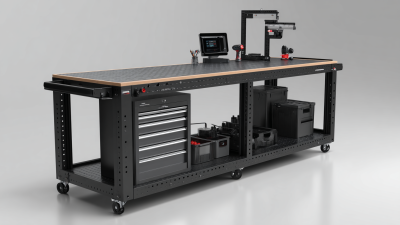
China Top 10 Work Benches on Wheels for Global Buyers
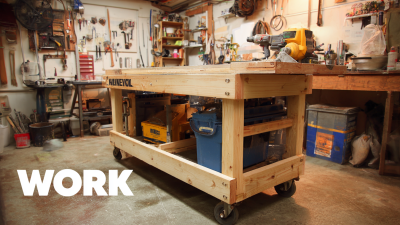
China Top 10 Work Benches on Wheels for Global Buyers examines a practical category shaped by mobility, load capacity, and workshop efficiency. A work bench on wheels can move from assembly lines to maintenance bays without requiring permanent installation. Its value is simple: fewer lifting steps, faster tool access, and better use of limited floor space.
Industry data supports this wider shift toward adaptable workspaces. Grand View Research’s industrial furniture studies identify manufacturing, logistics, and maintenance facilities as important demand areas for durable workplace equipment. Meanwhile, Fortune Business Insights’ workshop equipment research highlights automation, modular layouts, and operational efficiency as continuing market influences. These reports do not isolate mobile workbenches as a standalone category. That limitation matters. Buyers should avoid treating broad furniture forecasts as direct sales predictions.
This guide evaluates ten Chinese manufacturers and product lines through specifications that matter on a busy factory floor. These include steel gauge, drawer load ratings, caster diameter, wheel locking systems, surface thickness, and corrosion protection. A fully loaded bench should remain stable when a technician applies side pressure. Smooth drawers matter when hands are oily or gloved. Packaging quality matters too, especially after long-distance ocean transport.
The selection also considers OEM capability, quality-control documentation, export experience, and after-sales responsiveness. Certifications can support confidence, but they do not replace inspection. Product pages may omit real-world details. Buyers should request test videos, material certificates, sample units, and clear warranty terms before placing volume orders. Prices change. Specifications can change faster. This ranking is therefore a practical starting point, not a substitute for supplier verification.
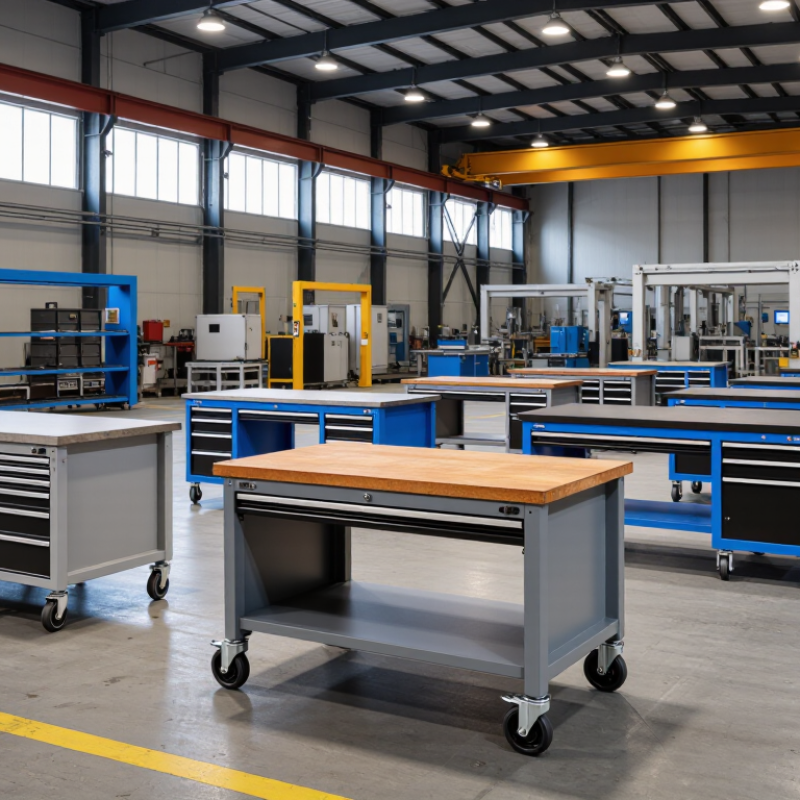
How Mobile Work Benches on Wheels Are Defined and Classified
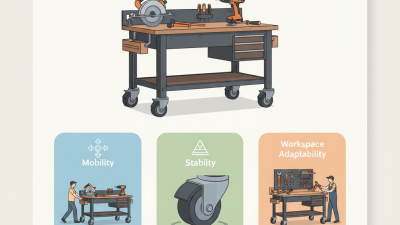
Mobile work benches on wheels are work surfaces built for safe movement inside workshops, warehouses, laboratories, and service areas. Their defining feature is a wheeled base, usually fitted with locking casters. A fixed bench does not qualify, even when it has handles. A reliable mobile bench should remain stable during cutting, assembly, inspection, or repair tasks.
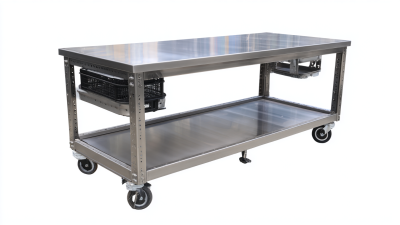
Classification depends on structure and intended use. Light-duty models suit hand tools and small parts. Heavy-duty benches support vises, machinery, and higher working loads. Buyers also compare steel or aluminum frames, laminated or solid worktops, drawer capacity, height adjustment, and wheel diameter. Braked swivel casters improve control, while non-marking wheels protect finished floors. In practical inspections, I check caster locks, drawer alignment, weld quality, and the bench’s balance under uneven loads. Specifications can look excellent on paper. Real movement may disagree.
Tips: Confirm the rated load includes tools and materials, not only the empty bench. Measure doorways, lift access, and storage spaces before ordering. Ask for testing evidence, dimensions, safety instructions, and applicable regional compliance documents. A lower bench may reduce fatigue for some users, but it can strain others. No classification is perfect. Workplace conditions should guide the final choice.
Key Features and Specifications Global Buyers Should Compare
China Top 10 Work Benches on Wheels for Global Buyers
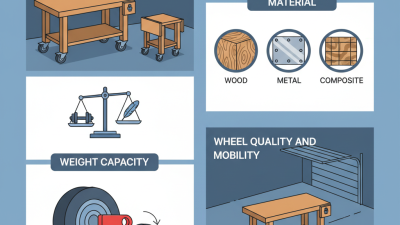
Global buyers should compare specifications before comparing prices. The top ten mobile work benches may look similar, but their working limits can differ sharply. Check both static and dynamic load ratings. A bench holding 500 kilograms while parked may perform poorly during movement. The caster rating should exceed the expected load, including tools and materials. Larger wheels usually cross floor joints more smoothly. However, they can increase the overall working height.
Height matters. The NIOSH Revised Lifting Equation uses 23 kilograms as the recommended load limit under ideal lifting conditions. This is not a universal safe limit. It reminds buyers to consider posture, reach distance, and repeated handling. Adjustable surfaces can support different operators, while fixed heights may reduce cost. Measure the actual work area, not only the advertised top dimensions. Small details matter.
Wheel brakes should lock both rolling and swiveling movement. Anti-tip design is essential when drawers are extended. Examine drawer capacity, slide durability, frame thickness, and corrosion protection. For electronic assembly, IEC 61340-5-1 is a useful reference for electrostatic-control requirements. For manual handling, ISO 11228-1 provides relevant ergonomic guidance. These standards do not guarantee every product’s quality. Ask for test reports, inspection records, and clear tolerances. I would also request photographs of welds and caster mounting plates. Specifications can be incomplete, and that weakness deserves scrutiny before purchasing.
China Top 10 Work Benches on Wheels for Global Buyers
Key features and specifications to compare: rated static load capacity and worktop length across representative mobile workbench configurations.
Heavy-duty mobile workbenches commonly range from approximately 150–600 kg in rated static load capacity, while worktop lengths typically span 900–2000 mm. Global buyers should also verify caster size, brake type, drawer load rating, steel thickness, surface material, and compliance documentation before purchase.
China’s Top 10 Work Benches on Wheels: Product Profiles
China’s Top 10 Work Benches on Wheels: Product Profiles
China’s mobile workbench sector serves factories, repair rooms, warehouses, and laboratories. Grand View Research reports continued growth in industrial furniture demand, supported by manufacturing expansion and ergonomic improvements. These ten profiles reflect common export-oriented specifications, not a fixed ranking.
The heavy-duty steel bench supports engines, molds, and dense components. A height-adjustable model suits mixed teams and reduces awkward bending. The ESD-safe bench protects sensitive circuit assemblies. A drawer-equipped bench keeps tools visible and limits walking time. The modular bench accepts shelves, pegboards, and lighting. A folding model saves space in temporary workshops. The packing bench adds rollers, bins, and cutting surfaces. The woodworking bench combines a thick top with locking casters. The laboratory bench uses chemical-resistant surfaces and stable frames. The compact inspection bench fits narrow production lanes.
Casters should lock firmly, while welded joints need clean finishing and load testing. A 2024 MHI industry report identifies labor pressure as a continuing material-handling concern, making mobility and organized storage practical priorities. Yet product descriptions often exaggerate capacity.
Buyers should request test methods, wheel ratings, surface thickness, and assembly drawings. One weakness remains. Some models look robust but flex under uneven loads. On-site trials still matter.
How to Select, Order, and Import the Right Mobile Work Bench
China Top 10 Work Benches on Wheels for Global Buyers
Selecting a mobile work bench starts with the working environment. Measure doorways, aisles, and storage spaces before comparing suppliers. A bench may look compact online, yet its handle or drawer can block a narrow passage. Check the steel thickness, working load, caster diameter, brake design, and surface coating. Ask for drawings, product photographs, and test records. A reliable supplier should explain tolerances, packaging, and replacement-part availability clearly.
Ordering requires more than choosing the lowest quotation. Confirm the exact configuration, quantities, lead time, payment terms, and inspection process in writing. Request a pre-shipment inspection, especially when drawers, locks, or heavy casters are included. Confirm the correct HS code with your customs broker, then estimate freight, duties, insurance, and destination charges. Packaging matters. Reinforced corners and moisture protection can prevent expensive damage during ocean transport. No checklist is perfect; small details are often missed.
Tips: Compare suppliers using the same specification sheet. Ask whether the stated load applies to the whole bench or one drawer. Choose casters suited to concrete, tile, or uneven floors. Review a sample if the order is large. Keep photos of approved details. One overlooked handle can delay installation. Be willing to revise your decision after checking the real workspace, not just a product catalogue.