Choosing ARC Coating Technology in 2026 is not just a matter of comparing reflectance figures. The right choice depends on the lens, light source, operating environment, production volume, and how the finished part will be cleaned. A camera lens used outdoors faces different demands from a display cover or a precision sensor window. Even a small shift in wavelength performance can matter.
Optical-coatings authority Angus Macleod’s work offers a useful principle: “Design for the required performance, not for the coating label.” This is a practical paraphrase, not a verbatim quotation. It captures an important point: a familiar process name does not guarantee a suitable result. Buyers should review the target wavelength range, angle of incidence, substrate material, abrasion needs, and color appearance. Ask for test data on comparable parts, not only a headline specification. A coating that looks clear under office lighting may show a visible tint beside a bright window.
There is no universal winner. Vacuum-deposited multilayer coatings can deliver precise optical control, while other approaches may suit different budgets, shapes, or production constraints. Ask suppliers how they verify uniformity across the part and what happens when a batch falls outside tolerance. Details matter. So do installation and cleaning practices.
This guide compares the main options and explains where each may fit. Some trade-offs remain hard to settle on paper. A real sample under real lighting can reveal what a chart misses.
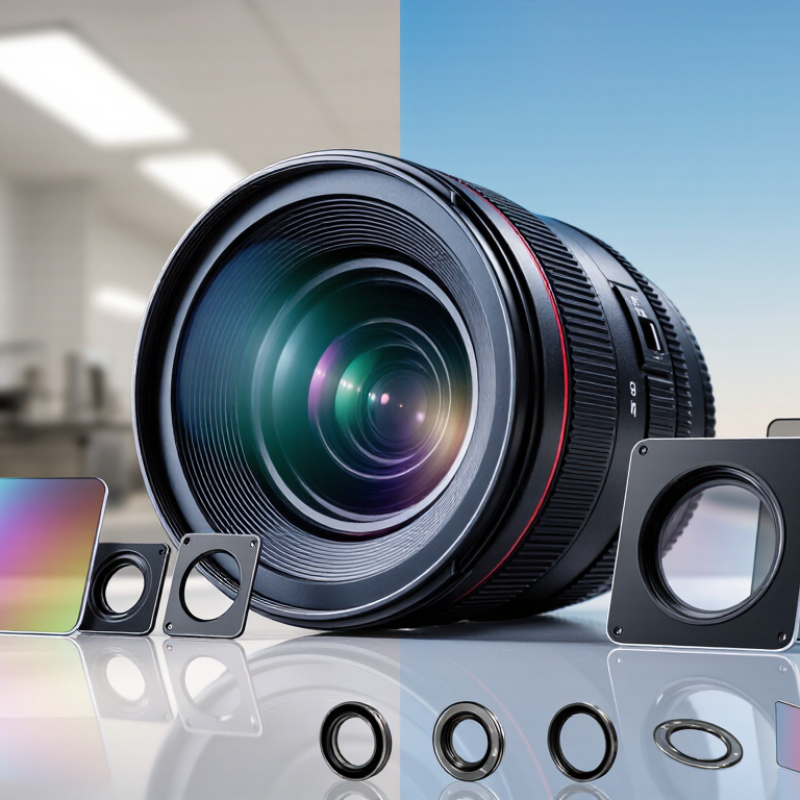
How to Choose ARC Coating Technology in 2026
An anti-reflective coating (ARC) reduces unwanted reflections at a surface, helping more light pass through a lens, display, or protective window. Many designs use thin layers that manage reflected light through interference. The right design depends on the job, not simply the lowest reflectance figure.
That distinction matters.
Start by defining the performance goal. A camera lens may need low reflection across visible wavelengths and different viewing angles. A sensor window may prioritize transmission at a narrower wavelength range. Ask for measurements across the relevant spectrum, angles, and substrate—not just one peak value.
Small detail. A coating optimized for one condition may perform less well under another.
Durability matters too. Cleaning, humidity, abrasion, and temperature changes can affect a coating over time. Compare test results that reflect actual handling, and check whether the coated part can be cleaned with the intended method. There are trade-offs: adding layers can broaden performance, but may increase manufacturing complexity.
Lab data helps, but it cannot perfectly predict every installed environment. I would treat impressive figures as a starting point, then test representative parts under real use. Some uncertainty remains.
An anti-reflective coating should be selected for the actual substrate, not just its optical specification. Glass, polycarbonate, and other plastics differ in refractive index, heat tolerance, and surface chemistry. These differences affect coating adhesion and can change which deposition process is suitable. A hard, smooth glass surface may tolerate vacuum-deposited multilayers, while a heat-sensitive polymer may need a lower-temperature process. Check the substrate supplier’s temperature limits before setting coating conditions. Small details matter.
Next, define how the coated part will operate. Record the wavelength range, angle of incoming light, and whether light is polarized. A coating designed for near-normal viewing can reflect more light at steep angles. Consider humidity, temperature cycling, abrasion, and cleaning methods, too. A lens wiped daily needs different durability testing from a sealed optical window. Ask for performance data across the intended wavelength and angle range, rather than relying on a single reflectance figure.
Test representative parts, including curved surfaces or assembled components when possible. A flat laboratory coupon may not predict results on a finished lens. That assumption is easy to make, and sometimes wrong. Inspect adhesion and optical performance after exposure to realistic conditions, then compare results with the required service life. There may be no perfect process: improving abrasion resistance can add cost or affect transmission. Record those trade-offs before choosing a coating route.
Typical visible-wavelength refractive indices help guide anti-reflective coating design. Values are approximate and vary with wavelength, composition, and material grade.
For a single-layer coating in air, the ideal coating refractive index is approximately the square root of the substrate index. Since many substrates require an index lower than commonly available durable coating materials, multilayer designs may be preferable. Final selection should also account for operating wavelength, temperature, humidity, abrasion, and cleaning requirements.
Choosing an anti-reflective coating means matching materials and deposition methods to the surface, not chasing one “best” formula. Silica and magnesium fluoride can provide low-index layers, while titanium oxide, tantalum oxide, or niobium oxide can serve as higher-index layers. Their sequence and thickness affect reflection across the target wavelength range. A camera lens used in visible light has different needs from a sensor operating near infrared. Check the substrate, angle of incidence, humidity, and cleaning routine before fixing the design.
Deposition changes how those materials behave. Thermal evaporation is widely used for optical stacks and can suit cost-sensitive, high-volume parts. Sputtering often produces dense, adherent films, though internal stress may need careful control. Ion-assisted evaporation can improve film packing, but adds process complexity. Atomic layer deposition offers precise thickness control and coverage on complex shapes; its slower cycle can be a drawback for large production runs. No process wins everywhere.
Measure the actual parts. Spectral reflectance, adhesion, abrasion resistance, and environmental testing reveal trade-offs that a design model may miss. Small shifts in layer thickness can move the reflection minimum, especially across a large batch. There is no perfect stack. I would compare a few trial coatings on the real substrate, then inspect them after handling and cleaning. Lab data can flatter a coating; field conditions are less polite.
Assessing Durability, Compatibility, and Total Cost
An anti-reflective coating should be judged under the conditions it will actually face. Ask for abrasion, humidity, and temperature test data, not just a reflectance figure. A coating that performs well in a clean lab may degrade after repeated wiping or exposure to moisture. Small details matter. Check whether the test method matches your cleaning process and operating environment. A test coupon can look excellent, while a larger production run reveals edge defects or uneven coverage.
Compatibility starts with the substrate, wavelength range, and angle of incoming light. Glass, polymer, and coated components can respond differently to deposition heat and layer stress. Confirm that the coating maintains performance across the device’s expected operating range. Request sample parts for inspection, and compare appearance and measured transmission under consistent conditions. The numbers may not tell the whole story.
Total cost includes more than the quoted coating price. Include inspection, rejected parts, handling limits, and replacement intervals in your estimate. A lower-cost option may require tighter process controls or more frequent replacement. Ask suppliers how results vary between production batches, and review the evidence behind stated service life. There is no perfect comparison if test conditions differ; that uncertainty deserves attention before a purchase decision.
Selecting an anti-reflective coating (ARC) starts with the optic’s real job. Define its wavelength range, angle of incidence, polarization, substrate, and exposure conditions. A coating that performs well at one wavelength may lose efficiency across a broader band. Color matters, too, especially on display windows or sensors. Specify acceptable reflectance and transmission before comparing coating designs.
Ask how the coating is deposited and controlled. Layer thickness, substrate cleanliness, and chamber uniformity can affect results. Request data from representative samples, not just an idealized curve. That detail matters. Check spectral reflectance at operating angles, then inspect for color shifts and visible defects. A single measurement at normal incidence is rarely enough.
Validation should test both optical performance and durability. Use witness samples alongside production parts, and record results before and after humidity, temperature, adhesion, or abrasion tests relevant to the application. Compare multiple production runs when consistency is critical. A perfect coupon can still hide a process problem. Test plans also cannot reproduce every field condition, so note assumptions and revisit them after real-world use.
1901 West Main Street
Washington, MO 63090
Main Directory: 1-800-227-4873
Email: sale@pangcofurniture.com

We’re always looking for talented individuals to join our team. Send us your resume using the form below. When a position comes available that matches your skillset, one of our team members will reach out to you.
"*" indicates required fields