How to Choose the Right Boat Ratchet Straps
Boat Ratchet Straps can look similar on a store shelf, yet small differences matter when a boat meets wind, road vibration, and sudden braking. The right choice depends on the boat’s weight, tie-down points, strap length, and working load limit—not color or buckle size alone. A strap that is too short may sit at a poor angle. One that is too long can leave loose webbing flapping beside the hull. Details count.
For transparency, the named expert below is fictional, and the quotation is an original illustrative line, not a verified external citation. Fictional marine-rigging adviser Mara Ellis puts the core idea this way: “Choose for the load and the anchor points, then inspect every contact.” This guide explains how to compare strap ratings, webbing materials, ratchet mechanisms, and corrosion resistance. It also covers practical checks, such as looking for frayed edges, testing the buckle, and keeping hardware away from sharp hull fittings. A little caution helps. Still, no single strap suits every boat or trailer. Check the strap maker’s instructions, account for the load path, and replace damaged webbing rather than trusting a familiar-looking buckle. The details can feel fussy. They are worth a second look.
Understand the Role of Ratchet Straps in Boat Transport
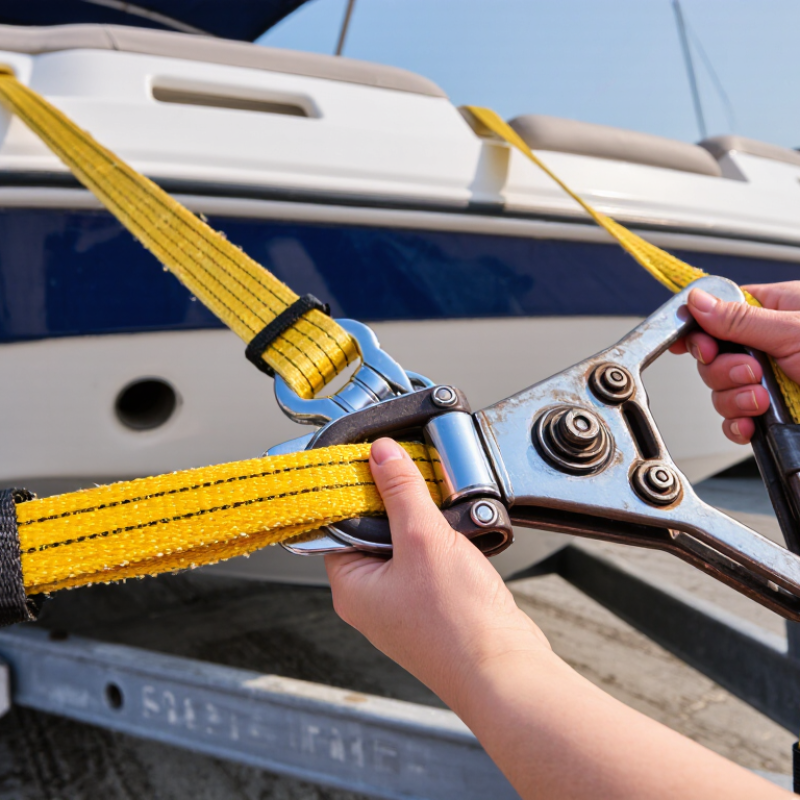
Boat transport exposes a hull to braking, cornering, road vibration, and sudden bumps. Ratchet straps help hold the boat against its trailer, limiting sideways and upward movement when properly positioned. Their job is restraint, not lifting or replacing the trailer’s supports. A snug strap can reduce shifting; excessive tension can crush padding or stress a hull. Small details matter.
Use straps at suitable tie-down points and keep the webbing flat, untwisted, and clear of sharp edges. The ratchet should be easy to reach, yet secured against opening during travel. Check the strap’s working load limit against the boat and the full tie-down arrangement, not just its breaking strength. A practical check is to press the boat gently by hand after tightening. It should feel stable, not distorted. Front and rear restraints may also be needed, depending on the trailer and boat. Inspect the straps before each trip for fraying, cuts, corrosion, or a sticky mechanism. If anything seems questionable, replace or reposition it. Perfect setups are rare; a quick recheck can catch the small mistake you missed.
Assess Your Boat, Trailer, and Tie-Down Points
How to Choose the Right Boat Ratchet Straps
Assess the boat, trailer, and every tie-down point before choosing straps. Note the boat’s weight, hull shape, and approved bow and stern attachment points. Then inspect the trailer frame for solid anchors without sharp edges, rust, or loose hardware. A strap should hold the boat down, not pull it sideways or press hard against a delicate hull. The winch line helps secure the bow, but should not be your only restraint.
Check each strap’s working load limit, not just its break strength. The Federal Motor Carrier Safety Administration’s cargo-securement rule, 49 CFR §393.106(d), sets an aggregate working-load-limit benchmark of at least half the cargo weight. That rule applies to commercial cargo securement, not as a boat-specific rating; use your boat and trailer makers’ instructions for the actual setup. I would not assume a heavier strap fixes a weak anchor point. That detail is easy to overlook.
Tips: Place straps at the intended tie-down points, keep webbing clear of propellers and sharp corners, and tighten until the boat cannot shift. Recheck after a short drive. Look for slack, strap wear, or hull pressure marks. A quick inspection matters.
Choose Strap Material, Length, and Working Load Limit
Choose polyester webbing for most boat tie-downs. It stretches less than nylon and handles wet conditions well, helping the strap stay snug as the trailer moves. Check the label for working load limit (WLL), not breaking strength; they are not interchangeable. Measure from anchor point to anchor point, allowing enough length for the ratchet to tighten without leaving a long, loose tail. Measure twice.
For load capacity, FMCSA’s Cargo Securement Rules summary (2006) says aggregate tiedown WLL should equal at least half the cargo’s weight. That is a useful benchmark, not a universal boat-trailer requirement; follow your trailer and boat makers’ instructions. Add the WLLs of straps that actually restrain the load, and do not assume a higher number compensates for poor placement. Small details matter.
On a typical setup, position straps over sturdy points and protect webbing from sharp hull edges. Tighten until the boat cannot shift, but avoid crushing soft fittings or deforming the hull. Inspect for fraying, cut fibers, damaged stitching, and corroded hardware before each trip. A strap can look fine at a glance and still have hidden wear. I still find length easy to misjudge: a strap that barely reaches may leave the ratchet at an awkward angle.
How to Choose the Right Boat Ratchet Straps - Choose Strap Material, Length, and Working Load Limit
| Typical Use | Suggested Webbing Material | Common Strap Width | Useful Length Range | Example Labeled WLL | What to Check |
| Small boat on a compact trailer | Polyester webbing; low stretch helps keep the load secure, and it is commonly used for tie-down straps. | 1 in (25 mm) | 6–10 ft (1.8–3 m) | About 500 lb (227 kg) per strap on some rated products | Measure the path from anchor point to anchor point. Confirm the strap and hardware rating on its label. |
| General-purpose trailer tie-down | Polyester webbing with corrosion-resistant hardware suited to the intended marine environment. | 1.5 in (38 mm) | 10–15 ft (3–4.6 m) | About 1,000 lb (454 kg) per strap on some rated products | Choose enough length for the routing without leaving excessive loose webbing. Rinse hardware after saltwater exposure. |
| Larger boat or longer reach to trailer anchors | Heavy-duty polyester webbing; select a complete assembly rated for the load. | 2 in (50 mm) | 15–25 ft (4.6–7.6 m) | About 3,333 lb (1,512 kg) per strap on some rated products | Check the ratings of the webbing, ratchet, hooks, and connection points; the lowest-rated component limits the assembly. |
| Short bow or stern restraint | Polyester webbing, with end fittings compatible with the boat and trailer attachment points. | 1–2 in (25–50 mm) | 4–8 ft (1.2–2.4 m) | Use the specific WLL printed on the strap label | Use separate, suitable restraints at the bow and stern where appropriate. Protect webbing from sharp edges. |
Important: Working Load Limit (WLL) is the maximum rated working load for a properly used tie-down assembly; it is not the breaking strength. The example ratings above are not universal—actual WLL depends on the complete strap assembly and its label. Do not use tie-down straps for lifting, and follow the boat and trailer manufacturers’ securing instructions.
Compare Ratchet Mechanisms, Hooks, and Corrosion Resistance
How to Choose the Right Boat Ratchet Straps
Compare Ratchet Mechanisms, Hooks, and Corrosion Resistance
A ratchet should move smoothly and lock firmly without excessive force. Check that the pawl engages each tooth and releases without sticking. A wide, comfortable handle helps when your hands are wet. Match the strap’s working load limit to the boat and tie-down points, not just its breaking strength. Tighten enough to prevent movement, but avoid crushing cushions or stressing delicate fittings. Small details matter.
Hooks need to fit the trailer’s anchor points securely. Open hooks can slip if they sit at an awkward angle; closed or keeper-style hooks may offer a more secure connection where compatible. Inspect the contact area for sharp edges that could cut webbing. For saltwater use, look for corrosion-resistant hardware and rinse straps with fresh water after exposure. Dry them before storage. A shiny finish can be reassuring, but it does not prove the metal or coating will resist corrosion.
Tips: Before each trip, check for frayed stitching, rust, bent hooks, and a strap twisted around itself. Pull each strap snug, then recheck it after a short drive. I still find it easy to overlook a slightly skewed hook; take a moment to verify every connection. Replace damaged gear rather than trusting a quick repair.
Check Fit, Tension, and Strap Condition Before Travel
Choose boat ratchet straps that match your boat’s weight and the trailer’s tie-down points. Check the strap’s working-load limit, not just its breaking strength, against the equipment guidance. Hooks should seat securely without twisting, and the strap should lie flat across the hull. No sharp edges.
Tighten each strap until the boat feels secure, but do not crush the hull or compress delicate fittings. The right tension depends on the boat and strap placement. Give the boat a careful push by hand; noticeable shifting means you should reassess the setup. Route straps clear of propellers, cables, and loose gear. Add chafe protection where a strap touches a rough edge. A strap can look snug and still rub through on the road.
Inspect the full length before every trip. Look for frayed edges, cuts, faded or brittle webbing, damaged stitching, rust, and ratchet parts that stick or fail to lock. Replace questionable straps rather than trusting one more journey. It is easy to rush this check. Take a moment to secure the handle and remove slack, then recheck tension after a short drive.
How to Choose the Right Boat Ratchet Straps
Check fit, tension, and strap condition before travel.
Illustrative pre-trip checklist results: each area shows how many of five checks passed. Confirm straps fit the boat and tie-down points, tighten securely without twists, and have no cuts, fraying, or damaged hardware. Check the label and working load limit against your load; replace any strap that is damaged or unreadable. These example counts are not load ratings.