How to Choose a Welded Tantalum Tube?

Choosing a Welded Tantalum Tube starts with the service conditions, not the catalog description. Consider the fluid, operating temperature, pressure, and required dimensions. A tube carrying a corrosive process stream may need different specifications from one used in a laboratory assembly. Small details matter. A narrow variation in wall thickness can affect fit-up, flow, or fabrication.

Review the material grade, tube dimensions, and weld quality together. Ask for documented chemical composition and inspection records, and confirm how the longitudinal seam is checked. A smooth surface is useful, but appearance alone cannot establish weld integrity. Request clear tolerances for outside diameter and wall thickness, then compare them with your design drawings. If the tube will be formed or joined again, discuss those steps with the supplier before ordering.

There is no universal “best” tube. The right choice depends on actual operating data, connection methods, and the consequences of failure. Be cautious when a quote gives broad claims but few measurable details. That does not always mean the product is unsuitable; it does mean more questions are needed. Share the intended environment and acceptance criteria with a qualified materials or process engineer. Their review can help identify gaps before the tube reaches the workshop. Even then, specifications deserve a second look. That pause can prevent an expensive mismatch.
How to Choose a Welded Tantalum Tube?

What Is a Welded Tantalum Tube?

A welded tantalum tube is made by forming tantalum strip into a cylinder and joining its longitudinal edges. Unlike seamless tubing, it has a weld seam. Its integrity depends on strip quality, edge preparation, welding control, and inspection. The seam matters. NIST reference data place tantalum’s melting point near 3,017 °C. That figure describes the metal, not a tube’s safe operating limit; pressure, wall thickness, joints, and chemical conditions still govern service suitability.

ASTM B521 covers seamless and welded tantalum and tantalum-alloy tubes, providing a specification framework for material and dimensions. A weld should be assessed through documented procedures and appropriate inspection, not appearance alone. A bright, even seam can still conceal incomplete fusion or local thinning. That detail deserves a second look. The USGS Mineral Commodity Summaries 2025 estimated world tantalum mine production at about 2,400 metric tons in 2024. This is raw-mineral output, not finished-tube supply, but it gives useful context when assessing availability. For a specific tube, verify its material certificate, wall-thickness records, and weld-inspection documentation.

Identify the Requirements of Your Application

Before choosing a welded tantalum tube, define the conditions it must handle. Record the process fluid, operating temperature, pressure, and exposure time. Note any vacuum service, temperature cycling, or contact with mixed chemicals. Small details matter. A brief heat spike can affect performance differently from steady operation. Describe the tube’s route, support spacing, and connection method too; these influence diameter, wall thickness, and end preparation.

Turn those conditions into measurable requirements. Specify the inside and outside diameters, length, wall tolerance, and allowable leakage, where relevant. Confirm that the tantalum grade and weld quality suit the actual environment, including chemical impurities. Ask for material traceability and inspection records, then check that the proposed test method matches your risk. If the service conditions are uncertain, be cautious: a successful trial under ideal conditions may not represent the full process. A representative sample or test section can reveal issues before installation.

Tips: Share a simple process sketch with the tube supplier. Include start-up and cleaning conditions, not just normal operation. Verify critical dimensions on receipt. Do not assume “corrosion-resistant” means suitable for every mixture.

Evaluate Tube Dimensions, Grade, and Weld Quality

How to Choose a Welded Tantalum Tube?

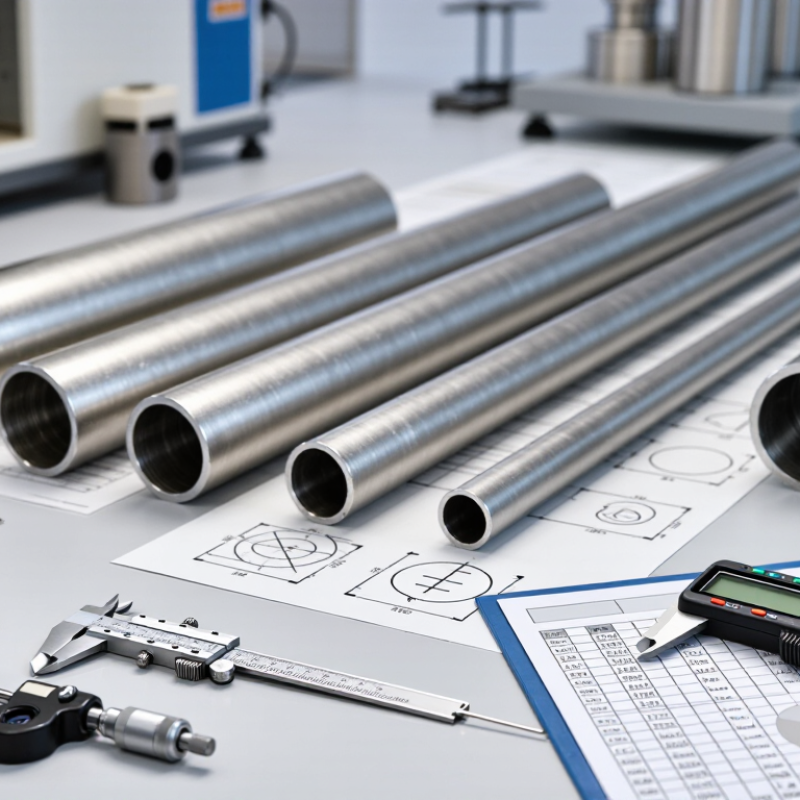
Start with dimensions that match the actual assembly. Confirm outside diameter, wall thickness, length, and tolerances against the mating parts. A tube may look correct on a drawing yet bind at a fitting. Check straightness too, especially for long runs. Small deviations can complicate installation.

Grade matters. Match the tantalum grade to the service environment, temperature, and required corrosion resistance. Review the material certificate and confirm that its heat number matches the tube. For demanding service, ask about chemistry limits and impurity controls, including oxygen and nitrogen. Paperwork helps, but it cannot show how the tube was handled. That part deserves attention.

Inspect the weld seam and ask how it was qualified. Look for a consistent bead, without visible cracks, pinholes, or abrupt changes in profile. Look closely. A clean surface is reassuring, but it does not prove the seam is sound through its full thickness. Request inspection records and, where appropriate, non-destructive examination or pressure-test results. The right test depends on the tube’s use. It is easy to specify every available check; sometimes that adds cost without improving the decision. Focus on evidence tied to the dimensions, grade, and service conditions that matter.

Compare Performance with Operating Conditions

How to Choose a Welded Tantalum Tube?

Compare the tube’s performance with the conditions it will actually face. Map the process temperature, pressure, fluid chemistry, and exposure time before comparing specifications. A tube handling a cool, clean liquid may need different properties from one exposed to hot, corrosive process media. Check the stated tantalum grade and confirm that its purity suits the application. Also review wall thickness and dimensions against the system design. Small differences matter. A neat datasheet can still leave out details about the weld seam, so ask how weld quality is inspected and documented.

Tips: Compare operating temperature and pressure with the supplier’s stated limits, not just typical values. Check whether the fluid contains contaminants or changes composition during cleaning. For cyclic service, consider repeated heating and cooling. These details are easy to overlook.

The welded area deserves particular attention. Ask for relevant inspection records and dimensional tolerances, then consider whether the tube will be formed or joined again during installation. A tube that performs well in a straight run may behave differently after bending. I would not treat one corrosion-resistance figure as a complete answer; actual performance depends on chemistry, temperature, and exposure. If those conditions are uncertain, test a representative sample or seek an application-specific review before specifying the tube.

How to Choose a Welded Tantalum Tube?

Compare material melting points as a first screening step for high-temperature service.

Tantalum melts at approximately 3,017°C, higher than the other materials shown. Melting point is not a recommended operating temperature: actual suitability depends on the chemical environment, temperature, pressure, weld quality, and material purity. In particular, tantalum can oxidize rapidly at elevated temperatures in air.

Reference values are approximate; 316L stainless steel is shown as its typical melting range.

Verify Quality Standards and Supplier Capabilities

When choosing a welded tantalum tube, ask for evidence tied to the exact grade, dimensions, and application. ASTM B521 covers seamless and welded tantalum and tantalum-alloy tubes; request the applicable edition and confirm that the supplier’s inspection plan matches it. Check material test reports for chemistry and traceability, then compare measured wall thickness, outside diameter, and ovality with your drawing. Paperwork matters. But it is not proof of a sound weld.

Ask how the longitudinal seam is formed and inspected. Suitable records may include weld-process qualifications, visual inspection results, and non-destructive examination reports, where specified. Request sample inspection data, not just a statement that testing is available. The USGS Mineral Commodity Summaries 2024 estimated global tantalum mine production at about 2,100 metric tons in 2023. That relatively limited supply makes documented material origin and batch traceability useful checks when assessing sourcing continuity. It does not, by itself, establish a supplier’s quality.

Review the supplier’s quality-system certificate, calibration records, nonconformance process, and change-control procedure. Check whether its equipment can hold your required tolerances and whether it has experience with your tube size and service conditions. Small details count. A certificate alone cannot show how carefully a particular batch was handled. One limitation in this checklist: documents reduce uncertainty, but they cannot replace reviewing actual inspection results and clarifying acceptance criteria before ordering.