How to Find a Reliable Stainless Steel Powder Supplier
Choosing a reliable Stainless Steel Powder supplier takes more than comparing prices. A polished website or quick quotation can make a good first impression, but neither proves that each production lot meets your requirements. The details matter.
For Stainless Steel Powder, review the material grade, particle size distribution, chemical composition, and available test documentation. Ask whether certificates identify the specific batch, and whether the supplier can explain how powder characteristics are checked before shipment. Clear, direct answers are a useful sign. So is a willingness to provide a representative sample for evaluation.
Look closely at practical details, too. Confirm minimum order quantities, packaging options, lead times, and how the supplier protects powder from moisture or contamination during storage and transport. A sealed container and readable batch label may seem ordinary, yet they can prevent confusion when material arrives at your facility. Check whether technical staff can discuss your intended process rather than simply recommend a product from a catalog.
No supplier is flawless, and a low price may still be reasonable. It deserves a closer look, not an automatic rejection. Compare quotations against specifications, documentation, and support—not price alone. If an answer is vague, ask a more precise question. Keep records of samples, approvals, and agreed specifications so future deliveries can be checked against the same criteria. This guide explores practical ways to assess suppliers, verify product consistency, and make a sourcing decision with fewer surprises.
Define Your Stainless Steel Powder Specifications and Application Requirements
Before contacting a stainless steel powder supplier, define the job the powder must do. For additive manufacturing, record the target particle size range, size distribution, flowability, and apparent density. For powder metallurgy or thermal spraying, the useful size range and shape may differ. Be specific. “Fine powder” is not a specification.
List the required alloy composition and any limits for elements such as carbon or oxygen. State the process, equipment, and expected operating conditions. A powder that flows well through one feeder may behave poorly in another. Ask how particle size and chemistry are measured, and request recent test data linked to the production lot. Check whether the supplier can explain sampling methods and keep lot traceability. Small details matter.
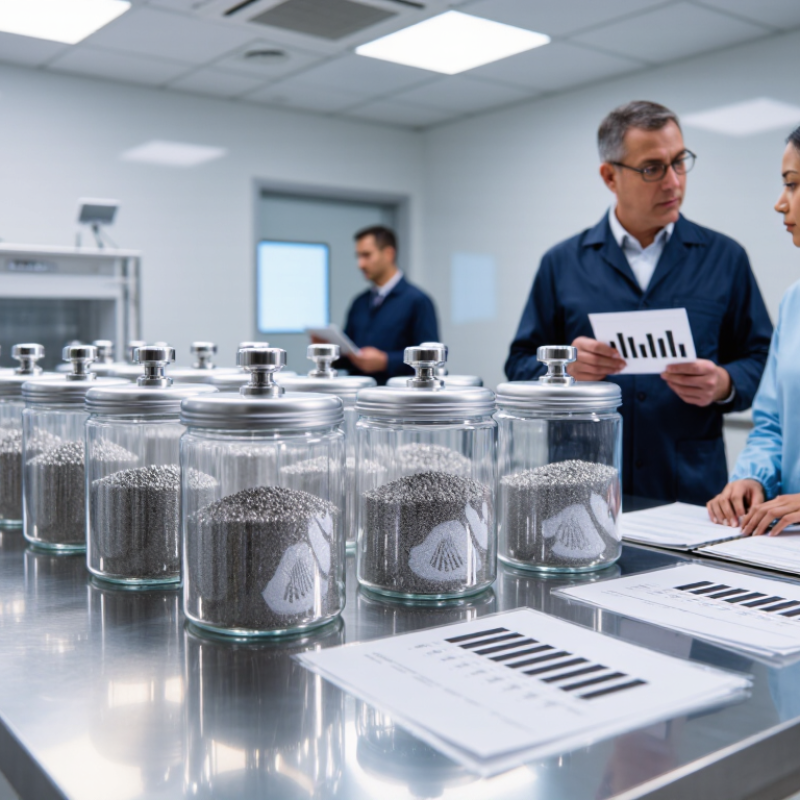
Application trials can expose gaps that a data sheet misses. Test a representative sample using your own handling and production steps, then compare flow, packing, and finished-part results. I have seen specifications become overly narrow before the process was fully understood; that can restrict supply without improving performance. Leave room for adjustment where evidence allows. Not every target is settled at the start. Record which properties are essential and which are preferences, so suppliers can respond with useful, verifiable options.
Research Suppliers with Relevant Materials and Manufacturing Expertise
Not every stainless steel powder is interchangeable. A reliable supplier should understand the grade you need and the process that will use it. Powder for additive manufacturing may require controlled particle shape and flow, while pressing applications can depend more on compaction behavior. Ask which grades and particle-size ranges the supplier routinely produces. Details matter.
Ask how the powder is made, such as through gas or water atomization, and which properties are measured for each lot. Useful records may include particle-size distribution, oxygen content, apparent density, and flow rate, with the test methods clearly stated. A certificate of analysis is more useful when its values can be traced to a specific batch. If the answers stay vague, that is worth noticing.
Manufacturing knowledge also shows in how a supplier handles variation, packaging, and production changes. Ask how they keep results consistent between lots and whether a sample comes from regular production. A small sample can look excellent. It may not represent a full order. I would compare several batches when consistency matters, though that takes time and adds work. No supplier is flawless; clear explanations of limits and corrective steps can be more credible than promises of perfect uniformity.
Verify Quality Systems, Certifications, Testing, and Traceability
A reliable stainless steel powder supplier should explain how its quality system works in daily production, not just send a certificate. Ask for the certificate, issuing body, expiry date, and scope. Confirm that the listed site and processes match the powder you plan to buy. A quality system is useful only when it covers the actual production and inspection steps.
Review test records for the powder grade and lot. Relevant results may include chemical composition, particle-size distribution, morphology, oxygen content, and flowability. Check that methods and acceptance limits are stated, and compare the certificate of analysis with your own requirements. For a first order, consider testing a retained sample through an independent laboratory. Paperwork can still look convincing. It is not a substitute for matching results to the material received.
Traceability should connect each package to a production lot, test report, and raw-material record. Ask how the supplier handles relabeling, split batches, and out-of-spec results. A simple exercise helps: choose one package and request its complete record trail. Note how quickly and clearly the supplier responds. Some gaps may be explainable, but unclear lot links deserve a closer look. Even experienced buyers can miss small inconsistencies when specifications change between orders. Keep the agreed limits and document revisions in writing.
Evaluate Production Capacity, Technical Support, and Supply Reliability
A dependable stainless steel powder supplier should prove its production capacity, not just describe it. Ask for typical monthly output, current lead times, and how capacity changes during maintenance or peak demand. Request recent batch records and traceability from melt or atomization through packaging. Ask for evidence. Small details matter.
Technical support is equally important. Confirm that the supplier can provide particle-size distribution, chemical composition, flowability, and apparent-density data for each grade. For additive manufacturing, ask how powder is tested, stored, and handled between production and dispatch. ISO/ASTM 52907 outlines methods for characterizing metal powder feedstocks, offering a useful basis for comparing test information. A polished certificate is helpful, but it does not replace clear answers about methods and variability.
Supply reliability means checking what happens when plans change. Ask about backup production, raw-material sourcing, safety stock, and how delays are communicated. World Stainless Association reported 58.4 million tonnes of stainless steel production in 2023. Wohlers Report 2024 put the broader additive manufacturing industry at $20.0 billion in 2023, up 11.1% year over year. These figures give market context, not proof of a supplier’s available powder capacity. Request references or sample lots, then compare actual delivery and test results. No checklist is perfect; even a careful review can miss a weak point.
Compare Samples, Pricing, Delivery Terms, and Supplier Agreements
Ask each stainless steel powder supplier for a representative sample, not a hand-picked showcase batch. Check particle-size data against your process, then inspect flow, visible contamination, and packaging condition. Small details matter. Record the lot number and test method, so results can be compared fairly. A sample can still differ from a later shipment; one test is not proof of consistency.
Compare quoted prices on the same basis. Include packaging, testing documents, freight, insurance, and any minimum order quantity. A lower price may hide costs that appear only after the first shipment. Check whether the quote is valid for a fixed period and how price changes are handled. Then test again. In-house measurements can vary, too, so note equipment limits rather than treating every decimal as certain.
Delivery terms should specify lead time, shipment frequency, packaging requirements, and what happens if material arrives late or damaged. Read the supplier agreement closely. It should identify the powder grade, agreed specifications, inspection and acceptance steps, document requirements, and a clear process for resolving quality concerns. Keep it written. If a clause feels vague, ask for a practical example before signing; I have seen small assumptions create avoidable delays. A careful comparison takes time, but it makes supplier performance easier to judge over repeated orders.