How to Find Reliable Tile Display Rack Suppliers?
Tile displays do more than hold samples; they help buyers compare color, texture, and finish. Choosing a rack supplier is therefore a practical sales decision, not a minor purchasing task. Grand View Research estimated the global ceramic tile market at about USD 192.7 billion in 2023, in its Ceramic Tiles Market Size, Share & Trends Analysis Report. That figure describes the scale of the tile category, not the quality of display equipment. The distinction matters.
Reliable Tile Display Rack Suppliers should be able to explain how their racks suit your tile sizes, showroom layout, and handling needs. Look for clear specifications, including rack dimensions, load capacity, materials, finish, and replaceable sample holders. Ask for drawings, production samples, packaging details, and realistic lead times. Ask for proof. A polished catalog alone cannot confirm consistent manufacturing. Check references where possible, and compare written specifications with the sample you receive. No checklist is perfect. I would also ask how the supplier handles a damaged part or a change in tile dimensions; those details can reveal more than a sales promise. Price still matters, of course, but a low quote may omit useful details. A careful comparison gives buyers a firmer basis for choosing a supplier and planning a display that works in the real showroom.
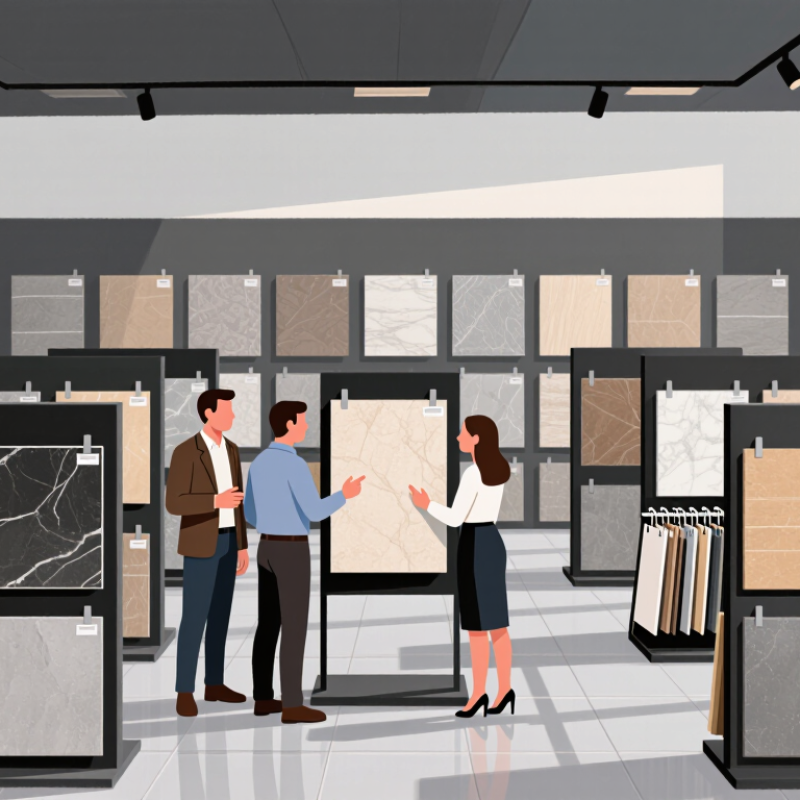
Define Your Tile Display Rack Requirements
Define Your Tile Display Rack Requirements
Before contacting suppliers, describe the tiles the rack must hold. Record each tile’s length, width, thickness, and weight. Include sample sizes, not just product specifications. A rack designed for thin ceramic samples may not support heavy stone slabs. Measure available showroom space, aisle width, and ceiling height. Measure twice. These figures help suppliers recommend suitable rack dimensions and capacity.
Decide how customers will handle the samples. Should panels slide, tilt, or lift out? Will staff move the rack between displays? Note whether it needs locking wheels, protective edges, or adjustable dividers. Specify the expected number of samples and how often the display will be restocked. Small details matter. In practice, requirements often change after teams test a loaded rack, so leave room for adjustment rather than choosing a design with no spare capacity.
Also define finish, material, packaging, delivery location, target quantity, and budget range. Ask suppliers to confirm load capacity and provide a drawing with dimensions before production. If possible, test a sample rack with real tiles; check that panels sit securely and remain easy to remove. A neat drawing is helpful, but it cannot show every handling issue. Record any concerns from the test, even small ones, and use them to refine the specification.
Identify Potential Supplier Sources
Finding reliable tile display rack suppliers begins with checking several source types, not relying on one search result. Industry trade shows let you inspect rack stability, welds, shelf edges, and finish quality in person. Trade directories can reveal regional manufacturers and fixture specialists, while referrals from tile retailers may point to suppliers with practical showroom experience. Compare these leads with local metal fabricators, especially when you need custom dimensions or movable sample panels.
Tips: Search terms such as “tile showroom display fixtures” can uncover more focused suppliers. Save product photos, dimensions, and contact details in one comparison sheet.
Before requesting a quote, ask for material specifications, load limits, packaging details, and realistic production times. Request recent project photos or a sample unit when possible. A neat catalog is useful, but it cannot prove how a rack handles heavy boards or frequent customer use. Check references and ask how replacement parts are handled. I would test one rack in a busy area before ordering many; that extra step may feel slow, but it can expose awkward loading or tipping issues early. Some suppliers may not have polished documentation, so confirm key details in writing and keep the questions specific.
Evaluate Product Quality and Manufacturing Capabilities
A reliable tile display rack supplier should prove quality with samples, not polished photos alone. Inspect a rack under the weight and tile sizes you plan to show. Check welds for gaps, edges for burrs, and finishes for chips near contact points. Small defects matter. A loose sample can become a costly showroom problem.
Ask how production is controlled from cutting through final packing. Request material specifications, load-test records, and inspection criteria for dimensions, coating, and stability. Compare a pilot order with the approved drawing; measure shelf spacing and base alignment. Manufacturing capacity matters, but consistency matters more. Ask how the supplier handles custom changes, replacement parts, and peak-season schedules. A factory may sound capable, yet vague answers deserve a second look. No process is perfect.
Tips: Request two samples from separate production runs. Photograph measurements, test loaded stability on level flooring, and record deviations before approving bulk production. Confirm packaging protects corners and tile faces. Keep the checklist simple. Use written tolerances.
Compare Pricing, Lead Times, and Service Terms
When evaluating tile display rack suppliers, compare like with like. Request a written quote for the same rack dimensions, finish, shelf load, packaging, and order quantity. A low unit price may exclude corner guards, sample fees, or delivery to your warehouse. Ask which costs are fixed and which may change after drawings are approved. Small omissions matter.
Lead times need the same scrutiny. Ask for separate dates for drawing approval, production, inspection, and dispatch. “Six weeks” means little if the clock starts only after a deposit or final artwork. For a showroom opening, allow time for transit and a damaged-part check. Request recent production photos or a simple progress update schedule. That takes time. It can prevent surprises.
Service terms reveal how a supplier handles problems, not just routine orders. Check the warranty period, what it covers, and whether replacement shelves or fittings can be ordered separately. Ask how quickly the supplier responds to questions and who pays for parts damaged in transit. Compare payment milestones and charges for design revisions, too. The comparison is rarely tidy, especially when quotes use different assumptions. Record agreed response times and remedies in the purchase documents.
How to Find Reliable Tile Display Rack Suppliers? - Compare Pricing, Lead Times, and Service Terms
The comparison below uses generic supplier profiles rather than named companies. Prices and timelines are indicative planning ranges for a standard floor-standing tile sample display rack; confirm specifications, shipping, and terms directly with suppliers before ordering.
| Supplier profile | Typical rack offering | Indicative unit price (USD) | Typical lead time | Order and payment terms to verify | Service checks |
| Local display-fixture fabricator | Made-to-order steel rack; dimensions and finish can often be customized | About $400–$1,200 | About 3–8 weeks after drawing approval | Ask about prototype charges, deposit, balance due, and delivery or installation costs | Request dimensioned drawings, a finish sample, and a written defect-repair process |
| Standard-rack wholesaler | Catalog floor rack with fixed sample capacity and limited configuration options | About $180–$600 | About 1–4 weeks if in stock; longer for replenishment | Confirm stock quantity, minimum order, freight charges, and return eligibility | Check replacement-part availability and whether assembly instructions are included |
| Custom metal fabricator | Rack designed around tile size, sample weight, branding area, and store layout | About $500–$1,500+ | About 4–10 weeks, including design and production | Clarify design fees, tooling costs, approval milestones, and cancellation terms | Review a prototype or production sample and confirm load capacity in writing |
| Import-oriented OEM supplier | Production runs of repeatable rack designs, with options for finish and packaging | About $120–$450 per unit at volume; shipping and import costs extra | About 6–12 weeks for production, plus transit and customs time | Check minimum order quantity, Incoterms, payment schedule, and import charges | Request a pre-shipment inspection plan, packaging details, and spare-part policy |
Before choosing: Compare like-for-like rack dimensions, material thickness, sample capacity, finish, packaging, freight, and taxes. Lead times and prices vary by order quantity, customization, location, and market conditions; obtain a dated quotation and written service terms.
Verify Supplier Reliability Through Samples and References
How to Find Reliable Tile Display Rack Suppliers?
Verify Supplier Reliability Through Samples and References
A polished catalog proves little. Request a production sample built with the same steel, finish, joints, and hardware as the quoted racks. Load it with tiles of your actual size and weight. Check for wobble, sharp edges, uneven coatings, and shelves that shift when touched. Test wheels and locks on the flooring used in your showroom. Measure the rack, too; small differences can disrupt a planned layout. Inspect the welds. Ask for the rated load per shelf in writing, then compare it with your own test. A sample is useful, but it cannot represent every production unit.
References help reveal what a sample cannot. Ask for two or three buyers with comparable rack quantities and project timelines. Confirm whether delivery matched the schedule, whether packaging prevented chipped finishes, and how quickly defects were corrected. McKinsey’s 2020 survey of supply-chain executives found that 93% planned to make their supply chains more resilient. That finding supports checking backup capacity and communication, not just price. Request dated project photos or inspection records where available. One limitation: references may be selective, and a showroom test cannot predict years of use. Record the answers, including vague ones, before comparing suppliers.