Finding China’s top Prison Ceiling Downlight suppliers takes more than comparing prices or polished catalogs. These fixtures serve demanding institutional spaces, where stable light output, durable housings, cleanable finishes, and predictable maintenance matter every day. Details count. Ask suppliers for photometric files, driver specifications, cutout dimensions, protection ratings, and test reports for the exact model offered. A certificate for a similar product is not enough. Confirm that documents identify the same model, components, and manufacturing site. This simple check can prevent costly misunderstandings later.
A practical shortlist should also consider production capacity, quality-control procedures, spare-part availability, warranty terms, and delivery schedules. Request a sample when possible. Inspect its finish, light distribution, and installation details against the project requirements. Supplier documents can look complete, yet a sample may reveal glare or uneven workmanship. No checklist removes every risk. Ask for written answers, and compare them with the product data rather than relying on sales claims. Independent testing or a factory review may be useful for larger orders. Requirements differ by project and destination, so verify applicable standards with qualified professionals. The lowest quote may not offer the best long-term value. This guide explains how to assess suppliers carefully, compare evidence, and choose a partner whose claims can be checked.
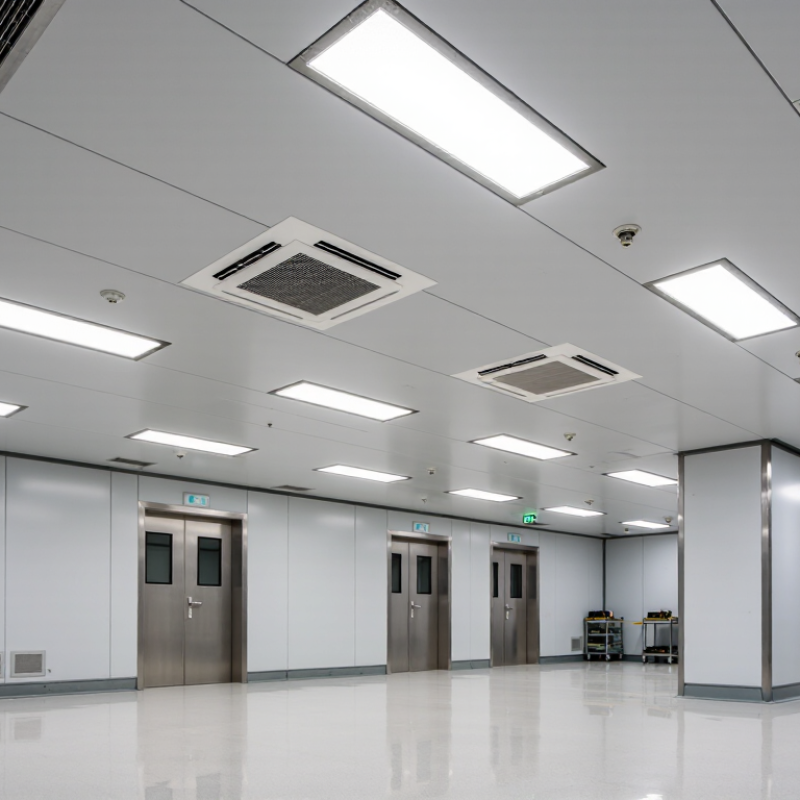
Prison ceiling downlights must provide clear, even illumination while resisting tampering and damage. A secure design usually uses a flush-mounted housing, a protected lens, and fasteners that cannot be easily loosened from the room side. Ask suppliers for documented impact and ingress-protection test results; “vandal-resistant” alone is not enough.
Details matter. Check the beam pattern on a photometric plan, especially near doors, corners, and observation points. Glare can obscure faces, while dark patches make routine checks harder. Confirm that the selected color temperature and color rendering suit the facility’s monitoring needs.
Maintenance access matters too. A fixture may be robust but still create problems if replacing its driver requires lengthy room access or special tools.
The U.S. Department of Energy’s LED guidance reports that LED lighting uses at least 75% less energy and can last up to 25 times longer than incandescent lighting.
That comparison is useful, but it does not prove a complete downlight will last as long under impact, heat, or frequent cleaning. Not always. When comparing Chinese suppliers, request photometric files, material specifications, test records, and a sample for hands-on inspection. It is easy to over-specify protection; practical performance deserves equal attention.
Finding China-based suppliers starts with checking who actually makes the fixture. Some trading companies present factory photos, so confirm the production address, core processes, and subcontracted work. Request a live video walkthrough of assembly, aging tests, and final inspection. Ask for current product drawings, material specifications, and sample test reports. Clear answers are useful; vague capacity claims deserve follow-up.
For prison ceiling downlights, match the design to installation conditions. Compare cut-out size, housing depth, lens impact resistance, ingress protection, light output, color temperature, and driver access. Ask how heat is managed inside a confined ceiling cavity and whether maintenance can be completed without damaging surrounding panels. Check that test results cover the exact model and configuration, not a similar product. A pre-production sample can reveal loose fasteners, uneven light, or awkward wiring. Small details matter. Still, one sample cannot prove consistent mass production.
Tips: Send the same request-for-quotation sheet to several suppliers. Include target quantities, drawings, finish, packaging, and inspection criteria. Compare lead times and defect-handling terms, not price alone. No checklist catches everything; record unanswered questions before placing an order.
When comparing China-based prison ceiling downlight suppliers, request a line-by-line specification sheet, not just a lumen figure. Check wattage, delivered lumens, beam angle, color temperature, color rendering, flicker data, and driver compatibility. Small details matter. Ask for independent photometric and electrical test reports, including tests conducted under IES LM-79. LM-80 data can help assess LED package lumen maintenance, but it does not prove the complete fixture’s service life. Verify which safety certifications apply to the destination market; IEC 60598 documentation is a useful reference for luminaire safety. The U.S. Department of Energy reports that LEDs use at least 75% less energy than incandescent lamps and can last up to 25 times longer. That comparison is not a guarantee of savings for a specific facility.
Customization should match the actual ceiling and maintenance conditions. Discuss cutout dimensions, mounting method, sealed construction, impact resistance, emergency options, and replaceable drivers. Request the relevant IP rating and test evidence rather than accepting “dustproof” as a technical claim. A supplier should provide drawings, sample units, and clear change-control records before production. It is easy to overvalue a polished catalogue. A datasheet cannot reveal glare from a low ceiling or how a fitting performs after repeated cleaning. Compare samples under the intended ceiling height, and record any differences between approved samples and delivered units.
When choosing China’s top prison ceiling downlight suppliers, verify experience with secure, high-use facilities, not just general commercial lighting. Ask for project references, production records, and evidence that each batch follows the same inspection process. A capable supplier should provide test reports for output, color consistency, heat management, and ingress protection. The U.S. Department of Energy reports that LEDs use at least 75% less energy and last up to 25 times longer than incandescent lighting. These are general LED comparisons, not proof of a specific fixture’s quality.
Inspect the details that affect daily maintenance and safety. Look for flush-fitting housings, tamper-resistant fasteners, impact-resistant covers, and secure cable entries. Request applicable impact and ingress-protection test results, then check that the tested model matches the quotation. Ask how the supplier tracks failed units and corrective actions. A polished sample is useful, but batch consistency matters more. I would also confirm replacement-part availability; this is easy to overlook.
Tips: Request a factory audit or a live quality-control walkthrough. Compare the sample against drawings and test documents. Check every fastener. A small mismatch can matter.
Suggested evaluation weighting (%) for comparing supplier experience, quality control, and security features. These are proposed procurement weights, not measured market data or supplier rankings.
Review project references and production history, verify inspection and testing procedures, and confirm that lighting specifications meet the facility’s security and operational requirements.
When evaluating China-based prison ceiling downlight suppliers, request a working sample before discussing large quantities. Check the housing, diffuser, mounting points, and finish under bright, even light. Small details matter. Ask for the same driver and components intended for production; a sample built differently can give a misleading impression. Record light output, color consistency, and any flicker after several hours of operation.
Compare quotations line by line. Confirm what the price includes, such as packaging, spare parts, testing, and delivery terms. A low unit price may leave important items unclear. Not always. Ask suppliers to state production and shipping lead times separately, then check whether those estimates depend on material availability or order size. Request dated updates during production. Keep the agreed specifications in writing, especially dimensions and electrical details.
After-sales support should be assessed before an order is placed. Ask how faults are reported, what evidence is needed, and how replacement parts are handled. Request a named contact and realistic response times. Review available inspection records and technical documents, but verify that they match the exact model being quoted. I would double-check this point; paperwork can be easy to misfile, even with a careful supplier. A clear process matters more than a reassuring promise.
Supplier comparison and verification checklist. No supplier-specific claims are presented; confirm every requirement against your project specification and written supplier evidence.
| Evaluation Area | Information to Request | How to Verify | Practical Acceptance Check | Status |
|---|---|---|---|---|
| Product specification | Fixture dimensions, ceiling cutout, wattage, lumen output, CCT, CRI, beam angle, driver details, and dimming method. | Compare the signed datasheet and drawings with the project schedule; check that dimensions and electrical details are consistent. | All values match the project requirements, or any deviations are listed and approved in writing. | Pending verification |
| Security and construction | Housing and lens materials, fastening method, access method, and any tamper-resistant or impact-resistant design options. | Inspect a physical sample and review construction drawings against the facility’s security and maintenance requirements. | The project security team accepts the construction and installation method; do not assume a feature is suitable without review. | Pending verification |
| Sample evaluation | A representative production sample, installation instructions, packaging details, and available photometric data. | Check fit, finish, wiring, light distribution, operation, and installation using the project’s review procedure. | Record sample approval in writing and confirm that the approved sample will be the production reference. | Sample required |
| Test reports and approvals | Applicable electrical safety, EMC, ingress-protection, and photometric documentation for the exact product configuration and destination market. | Check report issuer, model numbers, test scope, issue dates, and certificate validity with the issuing body where appropriate. | Documentation covers the offered model and meets the project and destination-market requirements. | Documents to review |
| Pricing and quote scope | Unit price, minimum order quantity, sample charges, tooling costs, packaging, payment terms, quote validity, and shipping terms. | Request an itemized written quotation and compare offers using the same specification, quantity, currency, and delivery basis. | All exclusions, additional charges, and price conditions are clearly stated before purchase. | Quote required |
| Lead time and capacity | Sample schedule, production lead time, order capacity, dispatch date, and any material or holiday-related constraints. | Ask for a dated production schedule that starts from clearly defined conditions, such as drawing approval and deposit receipt. | The supplier confirms milestones in writing and explains how schedule changes will be communicated. | Schedule required |
| Quality control | Incoming-material checks, in-process inspection, final inspection criteria, traceability, and defect-handling procedure. | Request a sample inspection report or quality-control plan and agree on acceptance criteria before production. | Inspection records and any required pre-shipment checks are agreed and documented. | Process to confirm |
| Warranty and after-sales support | Written warranty period and exclusions, replacement-part availability, claim process, technical contact, and response expectations. | Review the warranty terms and ask how claims are assessed, what evidence is required, and who pays return or replacement costs. | Support responsibilities, claim steps, and any response-time commitment are stated in the contract or warranty document. | Terms to confirm |
| Supplier due diligence | Legal business details, manufacturing or trading role, production location, relevant experience, and export documentation capability. | Check business records and request a live factory or production review when appropriate; confirm export paperwork needs with the buyer’s forwarder. | The contracting entity, payment beneficiary, product source, and delivery responsibilities are consistent and documented. | Due diligence required |
Before placing an order, retain the approved specification, sample record, itemized quotation, delivery schedule, inspection criteria, and warranty terms as part of the purchase documentation.
1901 West Main Street
Washington, MO 63090
Main Directory: 1-800-227-4873
Email: sale@pangcofurniture.com

We’re always looking for talented individuals to join our team. Send us your resume using the form below. When a position comes available that matches your skillset, one of our team members will reach out to you.
"*" indicates required fields