10 French Door Replacement Tips for Buyers
French Door Replacement can transform a dim room, but the right choice depends on more than style. Measure the rough opening, not just the existing door. Check the jamb for soft spots, look for daylight around the frame, and note whether the floor is level. A beautiful glass panel will not fix a drafty, poorly fitted opening.
Home-improvement contractor and educator Mark Clement is known for practical renovation guidance. A useful principle, paraphrased rather than presented as a verbatim quotation, is to inspect the whole installation—not just the visible product. That distinction matters. Buyers should compare materials, glass options, hardware, energy performance, and installation scope. Ask whether the quote includes removal, flashing, trim, disposal, and repairs to hidden water damage. Get those details in writing.
Small details count. A handle can strike nearby cabinetry. A threshold may catch a rug. And a door that swings the wrong way can crowd a narrow patio. Easy to miss. This guide presents 10 French Door Replacement tips to help buyers weigh appearance against fit, durability, comfort, and total cost. It also leaves room for a reality check: even careful measurements cannot reveal every problem behind old trim. A qualified installer should inspect the opening and explain uncertainties before work begins. The best choice is not always the most expensive one; it is the door that fits the home, works smoothly, and performs as promised.
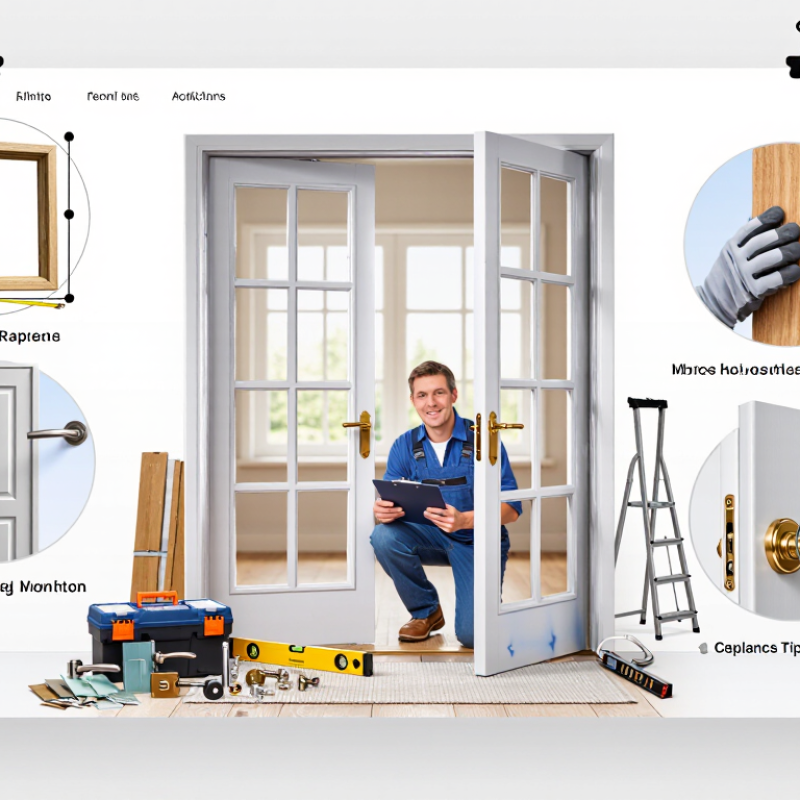
Survey the Existing Frame, Rough Opening, Threshold, and Door Swing
Before choosing a replacement, inspect the existing frame for soft wood, loose fasteners, or gaps around the casing. Use a level to check both jambs and the head; an opening can look square while leaning slightly. Measure the rough opening at the top, middle, and bottom, then compare the width and height readings. Record the smallest measurements, not just the easiest ones. Check it twice. If trim hides the framing, removing a small section may reveal conditions that affect installation. A tape measure does not tell the whole story.
Look closely at the threshold and surrounding floor. Note whether water stains, drafts, or a spongy sill suggest poor sealing or concealed damage. The threshold should meet the interior floor cleanly, while the exterior side must shed water away from the house. Also confirm which way the doors should swing. Mark the arc on the floor with tape, and check nearby walls, furniture, steps, and light switches. French doors need room to operate without striking anything. Small details matter. Measurements may still need adjustment after the old unit comes out, so avoid treating the rough opening as perfectly uniform. When you find significant rot or an uneven sill, ask an experienced installer to assess the opening before ordering.
Compare NFRC U-Factor and SHGC Ratings; Lower U-Factor Means Less Heat Transfer
When comparing French door replacement options, read the NFRC label rather than relying on glass descriptions alone. U-factor measures how quickly heat passes through the whole door assembly; a lower number generally means better insulation. In winter, that can help reduce heat loss near a chilly glass panel. In summer, it can help limit heat entering the room. Check that the products have comparable configurations before comparing ratings.
SHGC measures how much solar heat passes through the door. A lower SHGC can be useful where strong afternoon sun warms the living room, while a higher value may help capture winter sunlight in some settings. Neither number is automatically best everywhere. Consider the door’s direction, local climate, shading, and how you use the space. A bright south-facing doorway and a shaded north-facing one may call for different trade-offs.
Look closely at both ratings. A door with a low U-factor but high SHGC may still admit substantial solar heat. Frame material, glass coatings, seals, and installation also affect real-world comfort. Ratings are helpful, not magic. Measure drafts near the sill, and ask how the quoted rating applies to the exact size and glass layout you plan to buy. A small mismatch can matter.
Use California Title 24 as a Code Example: U-Factor 0.30, SHGC 0.23
When replacing French doors, treat California Title 24 as a useful code example, not a nationwide rule. For some California climate zones and residential compliance paths, the 2022 Building Energy Efficiency Standards specify a maximum U-factor of 0.30 and SHGC of 0.23. Requirements vary by project and location, so confirm the applicable code before ordering. Small numbers matter.
U-factor measures heat transfer; lower values generally mean better insulation. SHGC measures how much solar heat passes through the door. A lower SHGC may help a sunlit room stay cooler, but can also reduce welcome winter warmth. NFRC-certified labels provide standardized ratings for comparing products. Check the exact door configuration, including glazing and frame, rather than relying on a general product sheet.
The U.S. Department of Energy’s Energy Saver guidance estimates that windows account for about 25–30% of residential heating and cooling energy use through heat gain and loss. French doors can be a substantial glazed opening. Note afternoon sun, exterior shading, and whether the room overheats in summer. Then compare ratings with those conditions in mind. I’d also check air leakage and installation details; efficient glazing cannot fix a poorly sealed sill. That part is easy to overlook.
Check Safety Glazing and Product Performance Under IRC R308.4.2 and NAFS
Before ordering a French door, measure the glass beside the opening, not just the door slab. IRC R308.4.2 generally treats glazing as hazardous when it is within 24 inches of a door and its bottom edge is under 60 inches above the walking surface. That narrow sidelight matters. Verify that applicable safety glazing meets CPSC 16 CFR Part 1201 or ANSI Z97.1 requirements, and check for the permanent certification mark. Do not rely on a verbal assurance. Exceptions and local amendments may affect the requirements, so have a qualified installer or building official assess the actual layout.
Then compare the NAFS performance data for the exact door configuration. NAFS (AAMA/WDMA/CSA 101/I.S.2/A440) evaluates factors including structural performance, water penetration, and air leakage. Ask for the performance grade, design pressure, and water-test pressure. Not just the brochure. The U.S. Department of Energy’s Energy Saver guidance estimates that windows account for 25–30% of residential heating and cooling energy use, making fit and sealing important too. I would still inspect the sill and flashing after installation; a strong product rating cannot fix a poorly sealed threshold.
10 French Door Replacement Tips for Buyers
Check Safety Glazing and Product Performance Under IRC R308.4.2 and NAFS
How to read the chart: IRC R308.4.2 identifies hazardous glazing locations adjacent to a door using these dimensions: glazing is within 24 inches horizontally of either side of the door, and its bottom exposed edge is less than 60 inches above the floor or walking surface. Confirm the adopted code and applicable exceptions with your local building authority.
Buyer checklist
- Check whether glazing beside the door falls within the IRC R308.4.2 hazardous-location dimensions.
- Verify safety-glazing markings and documentation meet the applicable code requirements.
- Confirm the door’s NAFS performance rating suits the project’s specified design pressure and exposure.
- Review rated air-leakage, water-penetration-resistance, and structural-performance information.
- Measure the rough opening and confirm the replacement unit’s operating configuration.
- Check that the threshold works with the finished floor and required accessibility conditions.
- Confirm the frame, sill, and flashing details are compatible with the wall assembly.
- Ask how the unit’s performance information applies to the complete installed assembly.
- Review installation instructions, required clearances, and fastening requirements.
- Check local permit requirements and arrange inspection when required.
Confirm Installation Scope, Warranty Terms, and ENERGY STAR Certification Before Buying
Before paying a deposit, ask exactly what the installation includes. “French door replacement” may cover the door set but not disposal, interior trim, or repairs to a damaged frame. Have the quote name each task, who supplies the flashing and sealant, and whether extra work requires your approval. In writing. A narrow gap beneath the threshold or unfinished trim can become an annoying surprise after the crew leaves.
Read the warranty alongside the installation scope. Check how long product coverage lasts, whether labor is included, and which conditions may void coverage, such as unapproved alterations or missed maintenance. Keep the signed quote and completion records. They matter later. For energy performance, verify that the exact door configuration—not just a similar product—is ENERGY STAR certified for your climate region. Look up the model in the official certification directory, and confirm the glass package and frame options match. A label on a sales sheet is not enough. Ask the installer how the door will be sealed around the opening; even an efficient door can underperform if air leaks around its edges. Details are easy to miss, and buyers sometimes discover that only after the first cold draft.