In 2026, choosing Nail-Free Glue is not simply a search for the strongest tube. The right adhesive depends on what you are fixing, the surfaces involved, and the conditions around the repair. A lightweight trim piece on a dry indoor wall has different needs from a shelf bracket exposed to changing humidity. Small details matter.
Start by checking the product label and technical information. Confirm that the glue suits both materials, such as wood, ceramic, metal, or painted surfaces. Look for guidance on load limits, application temperature, curing time, and whether temporary support is needed. A tube may promise a quick grip, but full curing can take much longer. Read the fine print.
Surface preparation deserves equal attention. Dust, grease, loose paint, and moisture can weaken adhesion, even when the product is suitable. Clean and dry the area as directed, then test on an inconspicuous spot if appearance matters. I have found that rushing this step is tempting—and easy to regret. Also consider application control, cleanup, ventilation advice, and storage after opening. There is no perfect shortcut.
This guide will compare common glue types, explain how to match them with everyday projects, and highlight practical checks before purchase. It will also cover signs that a different fixing method may be more appropriate. When a repair carries substantial weight or failure could cause injury, follow the manufacturer’s instructions and seek qualified advice rather than relying on a quick guess.
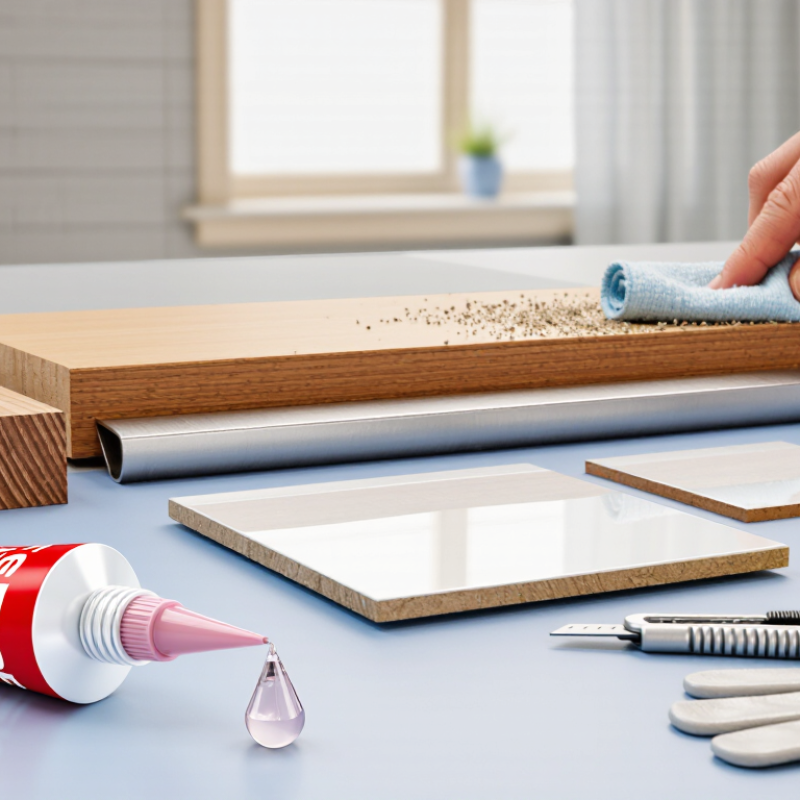
Nail-free glue is a broad label, not a single formula. Water-based adhesives often suit porous surfaces such as plaster or unfinished wood, but may struggle on smooth, non-absorbent materials. Solvent-based and hybrid formulas can bond a wider range of surfaces, though compatibility still depends on the product. Silicone-based adhesives remain flexible, which can help where small movements occur. Read the label for the listed materials, indoor or outdoor use, and curing conditions. Chemistry matters.
Then match the adhesive to the surface and the load. A small wooden trim piece is different from a heavy mirror or a shelf holding books. Check the stated load limits and whether temporary support is required while the adhesive cures. Dust, paint, moisture, and glossy finishes can weaken contact; a painted wall may fail at the paint layer, even when the glue itself holds. Test first. A small patch can reveal poor adhesion or surface damage before installation. I would not treat “nail-free” as “works everywhere”—that assumption is easy to make, and hard to fix later.
Define it by chemistry, substrate, and intended load. The chart compares typical substrate fit across common adhesive chemistries. Ratings are indicative guidance, not standardized test results; formulations and surface preparation can change performance.
How to read it: 1 = generally poor fit, 3 = formulation-dependent, 5 = often suitable when the product label permits. Water-based acrylic construction adhesives commonly suit porous surfaces but may need one surface to absorb moisture. MS polymer and polyurethane adhesives are often used across varied substrates; solvent-based contact adhesives can suit many dry surfaces but are generally unsuitable for damp conditions. These ratings do not indicate load capacity. For heavy, overhead, or safety-critical installations, follow the product’s stated load limits, curing instructions, and substrate requirements.
Choosing nail-free glue starts with the materials and the conditions they will face. MS polymer formulations usually stay flexible after curing, which can help where small movements or vibration occur. They often suit trim or panels, but curing may take longer than the initial tack suggests. Polyurethane adhesives can form a tough, flexible bond and may work well on porous surfaces. Some formulations expand slightly as they cure. Use a thin, controlled bead.
Acrylic adhesives often offer quick grab and strong bonding on close-fitting surfaces. Their cured bond can be less forgiving of movement, so they may not suit every flexible joint. Solvent-based products can provide fast initial grip, but drying depends on solvent evaporation. Thick beads may cure slowly or shrink. Ventilation matters.
Check the product label for compatible materials, indoor or outdoor use, and full curing time. A bond that feels firm after an hour may not be ready for a load. Clean dust and grease from both surfaces, then test on a hidden spot, especially with painted finishes or plastics. Keep the parts supported while curing. Small details matter. There is no universal “best” formula; matching the adhesive to the surface and job is easy to underestimate.
A practical comparison of common adhesive formulation types. “Nail-free glue” is a general product description, not a single standardized chemistry.
| Comparison factor | MS Polymer | Polyurethane (PU) | Acrylic | Solvent-Based |
|---|---|---|---|---|
| How it cures | Typically cures by reacting with moisture in the air and on the materials. | Many one-component types cure by reacting with moisture; two-component types cure through a chemical reaction between components. | Water-based types generally dry as water evaporates and the polymer particles form a film. Other acrylic systems may use different curing mechanisms. | Typically dries as the solvent evaporates, leaving an adhesive film. |
| Typical strengths | Often flexible, with good adhesion to many common building materials and good resistance to weathering. | Often offers strong adhesion and a tough, flexible bond; some grades can also provide good abrasion resistance. | Water-based products can be easy to use and have relatively low odor; suitable grades can be paintable. | Often provides quick initial grab and can bond well to selected non-porous or difficult surfaces. |
| Common applications | Interior or exterior bonding of suitable panels, trim, construction materials, and some metals or plastics. | Construction bonding and applications needing a durable bond with some movement tolerance. | Interior bonding of compatible porous materials, trim, and decorative components, depending on the product. | Fast-grab bonding of compatible materials where the product’s solvent and substrate guidance permit use. |
| Flexibility after cure | Usually remains elastic; useful where bonded materials may move slightly. | Often tough and flexible, although the degree varies by formulation. | Varies widely. Some products form a relatively rigid bond; others retain some flexibility. | Varies by formulation; many form a firmer bond than flexible sealant-like adhesives. |
| Initial grab and support | Can provide good grab, but heavy or overhead items may need temporary support while curing. | May provide good grab; follow the product instructions for clamping or temporary support. | Some products have lower initial grab, so support may be needed until the adhesive has dried. | Often selected for fast initial grab, but temporary support may still be necessary for heavy items. |
| Cure or drying considerations | Cure rate depends on humidity, temperature, bead size, and how much moisture can reach the adhesive. | Cure rate depends on formulation, temperature, humidity, and joint design. Thick or enclosed joints may cure more slowly. | Drying depends on temperature, airflow, substrate absorbency, and bond-line thickness; two non-porous surfaces can slow drying. | Drying depends on ventilation, temperature, solvent release, and bond-line thickness. Trapped solvent can delay drying. |
| Moisture and exterior exposure | Many grades are intended for exterior exposure, but water immersion and long-term exposure ratings are product-specific. | Some grades provide good moisture resistance after cure; check suitability for continuous wetting or immersion. | Water resistance varies. Many general-purpose water-based products are intended mainly for interior use. | Moisture resistance varies by chemistry and substrate; confirm the product’s stated exposure rating. |
| VOC, odor, and ventilation | Often formulated with low solvent content, but emissions and odor vary; consult the safety data sheet. | Formulations vary. Some products may contain hazardous reactive ingredients before cure; consult the safety data sheet. | Water-based grades often have lower solvent emissions, but “water-based” does not automatically mean zero emissions. | Usually has a stronger solvent odor and may release volatile organic compounds during use; provide ventilation and follow the label. |
| Paintability | Some grades are paintable after full cure; compatibility depends on the paint and adhesive surface. | Some grades can be painted after cure, but paint adhesion should be checked on a small area. | Often paintable when the product is designed for it and has dried fully. | Paintability varies; solvent residue, surface texture, and adhesive chemistry can affect the finish. |
| Surface compatibility cautions | Check adhesion on low-energy plastics, coatings, and oily or dusty surfaces; some plastics may need preparation. | Test sensitive plastics and coatings. Moisture and substrate condition can influence adhesion and cure. | Often needs at least one porous surface for water to escape; verify adhesion to sealed or non-porous materials. | Solvents can soften, stain, or craze certain plastics, paints, and finishes. Test compatibility before use. |
| Best fit when | You want a flexible, broadly useful construction adhesive and the selected grade is approved for the exposure conditions. | You need a tough bond and have checked the product’s cure, moisture, and substrate requirements. | You are bonding compatible materials indoors and value a water-based application or paintable finish. | Fast grab is a priority and the substrate, ventilation, and solvent-safety requirements are manageable. |
Selection tip: Compare the technical data sheet for the exact product, including approved substrates, bead size, working time, full-cure conditions, service temperature, and wet-area rating. Prepare surfaces as directed, test unfamiliar materials, and use the safety data sheet for handling and ventilation requirements.
A high MPa value can look reassuring, but it only means something when the test conditions are clear. ASTM D1002 and ISO 4587 measure tensile lap-shear strength: force applied along overlapping bonded pieces until the joint fails. Results are usually reported in megapascals (MPa). Higher is not automatically better.
Check the test report for the adherend material, overlap area, surface preparation, cure time, temperature, and loading speed. A value from prepared metal coupons may not predict performance on a painted wall, tile, or uneven trim. Compare figures only when the methods and conditions are similar. Small differences in preparation can shift the result.
Look for failure details, too. Did the adhesive separate cleanly, or did the substrate break? That matters. For a practical check, note the product’s stated cure time, then test a small, representative joint under realistic conditions. Keep the result in perspective: a controlled lap-shear test is useful evidence, not a promise for every installation. I would want the full test method before trusting a single MPa number.
When comparing nail-free glue, check the VOC content in grams per liter, not just claims such as “low odor.” Odor is not a reliable measure of exposure. Compare products using the same unit and confirm whether the figure applies to the product as sold. A lower VOC number can be useful, but it does not describe every ingredient or guarantee safer use. Read the hazard label, too. Pictograms and warning words can flag risks such as irritation or flammability. Labels may vary by market, so follow the instructions on the container in your hands. Small print matters.
Then review the Safety Data Sheet (SDS), especially its hazard identification, handling, exposure-control, storage, and first-aid sections. Look for practical details: required ventilation, glove guidance, and what to do after a spill. Check that the SDS matches the product and formulation; an old or mismatched sheet can mislead. Keep it accessible, not buried in a download folder. The SDS supports a careful choice, but it is not a substitute for the label or safe work practices. I would also note any unclear wording and ask the supplier for clarification before using the adhesive in a poorly ventilated room. My own easy mistake is treating one number as the whole story. Don’t.
Choosing a nail-free adhesive starts with the conditions at the job site, not a headline claim. Check the product TDS for open time: the workable period after application before positioning becomes difficult. A longer window can help with large panels or careful alignment. A short window may suit quick installations, but only if you can place and brace the pieces promptly. Keep the room, substrate, and adhesive within the stated application range. A cold wall can change handling. Check twice.
Full cure is different from surface skinning. The TDS may specify a cure time under particular temperature, humidity, and joint conditions. Do not load a shelf just because the bead feels dry; thick adhesive layers often need longer. Service temperature describes the range the cured bond is designed to tolerate, not necessarily the best temperature for applying it. Read the limits closely, especially where sunlight or heating may warm the surface. Even careful planning can miss a cold corner or uneven bead, so test on similar materials and allow the stated cure time before judging the bond. Real jobs rarely match ideal lab conditions exactly.
1901 West Main Street
Washington, MO 63090
Main Directory: 1-800-227-4873
Email: sale@pangcofurniture.com

We’re always looking for talented individuals to join our team. Send us your resume using the form below. When a position comes available that matches your skillset, one of our team members will reach out to you.
"*" indicates required fields