
Buying a Hand Road Roller is not just a matter of choosing the heaviest machine or the lowest price. The right model depends on the surface, the size of the job, and how often you expect to use it. A roller intended for compacting soil may not suit asphalt repairs or narrow paths. Small details matter.
Before comparing models, consider the ground you will compact and the space available for turning and storage. Check the drum width, operating weight, handle design, and the manufacturer’s guidance on suitable materials. A wider drum can cover more ground, but it may be awkward in a confined area. A heavier roller can provide greater compaction, yet it may be harder to move between jobs. There is no perfect choice for every site.
Look closely at construction, service access, and the availability of replacement parts. Ask how routine maintenance is performed, and confirm that the product specifications match your intended work. If possible, inspect the handle height and controls in person; a spec sheet cannot show how comfortable they feel after an hour. That trade-off matters. The seven tips below will help you compare practical features, avoid common purchasing oversights, and choose a Hand Road Roller with realistic expectations. Some details may seem minor at first. They can matter once the machine is working on uneven ground.
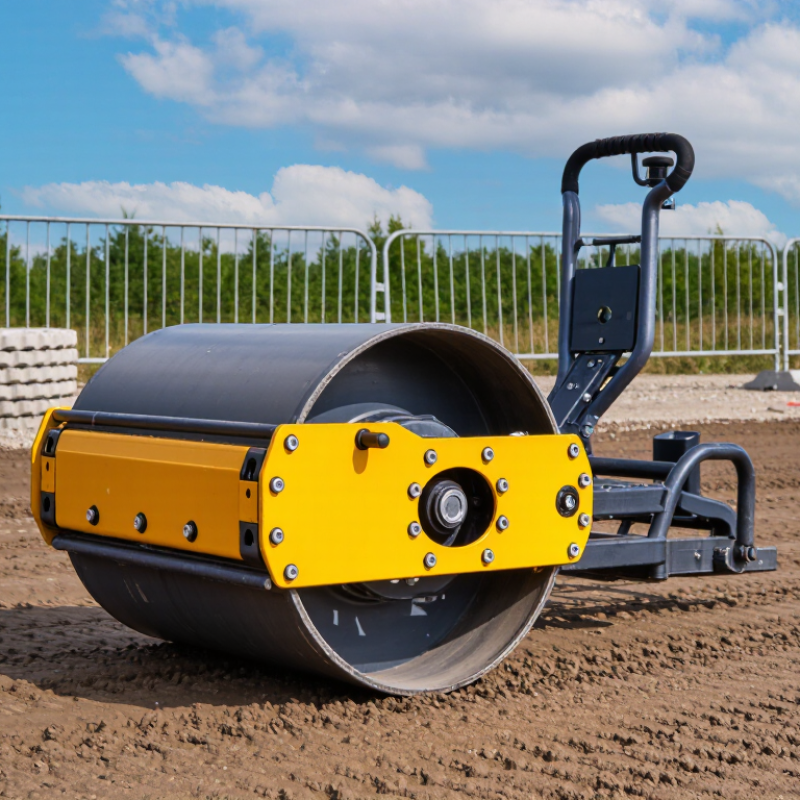
Define the Surface and Compaction Work
Before buying a hand road roller, identify the surface and the job it must handle. A narrow garden path, a patch of asphalt, and a compacted gravel base need different drum widths, weights, and passes. Check the material, layer thickness, working area, and access route. Can the roller turn beside a wall? Will it fit through the gate? Small details matter.
For asphalt, even coverage and correct compaction help limit early cracking and water entry. The National Asphalt Pavement Association’s technical guidance cites a common industry estimate: a one-percentage-point increase in pavement density may extend service life by about 10%. Treat this as a rule of thumb, not a promise; mix design, weather, and site conditions affect results. For soil or aggregate, use the project’s specified compaction target rather than assuming one roller suits every material. A hand roller is usually best for confined areas and repair work, not broad production runs. That distinction is easy to miss.
Before purchase, estimate daily area and required passes. A heavier drum may compact more effectively, but it can be tiring to steer on tight turns. Also check how the machine behaves near edges, where uneven pressure can leave a visible ridge. If the surface type or target density is still unclear, confirm the specification first. Guessing here can cost more than choosing a slightly slower machine.
When defining your work, consider both the surface area and the space available for maneuvering. The bars show theoretical coverage over a 100-metre straight run: drum width multiplied by travel distance. They do not account for overlapping passes, turns, or obstacles.
Choose the roller type by material and access, not by machine size alone. For asphalt patches and narrow paths, a smooth, double-drum walk-behind roller can compact and finish the surface evenly. A single-drum model may suit tighter turns and smaller repair areas. For cohesive soil, a padfoot drum can knead the material; smooth drums generally suit granular soil better. Check the manufacturer’s operating guidance for the soil, lift thickness, and vibration setting. Too much vibration near an edge can loosen material rather than improve compaction.
Drum configuration affects both coverage and maneuverability. A wider drum covers more ground per pass, but may struggle beside walls or around utility covers. Compare operating width, drum load, and static or vibratory force against the site’s available space. The National Asphalt Pavement Association’s 2010 technical report on pavement density estimates that a one-percentage-point density increase can extend pavement life by about 10% under its modeled conditions. That figure is not a guarantee for every project; mix, weather, and workmanship matter too. I still check turning room on site—catalog dimensions can feel misleading beside a curb.
Tip: Match the drum to the material. Measure the narrowest pass before buying. If possible, test the roller on a sample area and inspect the finish for ridges, loose edges, or uneven marks.
| Tip | What to Compare | Typical Characteristics | Selection Guidance |
|---|---|---|---|
| 1. Match the roller type to the material | Vibratory or static operation | Vibratory rollers use drum vibration to help compact suitable granular materials and asphalt. Static rollers rely on the machine’s weight and drum contact. | Choose based on the material, layer thickness, and job requirements. For thin or vibration-sensitive layers, check whether static operation is recommended. |
| 2. Choose a single-drum or tandem-drum layout | Drum arrangement and machine layout | A single-drum walk-behind roller has one compaction drum, often with wheels at the other end. A tandem roller has a drum at both the front and rear. | Compare maneuverability, surface coverage, and access to the work area. Tandem layouts can roll with both drums; single-drum layouts may be easier to steer in some confined spaces. |
| 3. Check drum width against the site | Working width and access clearance | Walk-behind roller drum widths vary by model; compact units may be around 20–30 in (about 500–760 mm), while other machines fall outside this range. | Measure gates, paths, and the narrowest work area. A wider drum covers more surface per pass, while a narrower one may fit better in tight spaces. |
| 4. Consider drum surface and finish | Smooth drum, scraper, and cleaning access | Smooth steel drums are common for compacting asphalt and granular surfaces. Scrapers help remove material that sticks to a drum. | For asphalt work, check drum-cleaning arrangements and the recommended use of water or another approved release method to help limit sticking. |
| 5. Compare operating weight and compaction settings | Machine mass, vibration frequency, and amplitude | These specifications differ substantially between models and affect how the machine applies compaction force. Frequency and amplitude should be considered together with the material and layer. | Compare manufacturer specifications and job requirements rather than selecting by weight alone. Follow the material supplier’s or project engineer’s compaction guidance. |
| 6. Make sure the roller suits the surface and working area | Turning space, access, and slope limits | Walk-behind rollers are designed for operator-guided work, but turning radius, travel speed, and safe operating gradients vary by model. | Check the operating manual for slope limits and safe handling instructions. Confirm the machine can reach the work area and turn without contacting edges or obstacles. |
| 7. Review controls, maintenance, and transport | Handle controls, service access, and transport weight | Control layout, engine type, routine service points, and lifting or loading provisions vary between machines. | Try the controls if possible, check access to routine maintenance items, and verify that the roller can be safely loaded and transported with the equipment available. |
A hand road roller should match the surface, not just the project description. For compacting a narrow path, a lighter machine may be easier to guide around edges. Heavier models can press more firmly, but they may be tiring to transport and awkward on soft ground. Check the stated operating weight, including any water or ballast. That detail matters. A roller that feels manageable in a showroom can feel different after an hour on uneven gravel.
Tip: Compare engine power with drum width and expected working pace. More power is not automatically better; the machine still needs controlled movement and steady compaction. Ask about fuel use, starting method, service access, and noise. Inspect the controls in person if possible. Your hands should reach them without straining, and the stop control should be easy to find. Small details count.
Operating features deserve close attention. Look for vibration controls, clear sightlines to the drum, and handles that suit the operator’s height. Check turning space and transport requirements before buying. Some specifications are hard to compare directly, so confirm how each machine’s weight and performance figures are measured. I would not choose from a brochure alone. A short demonstration on similar material can reveal uneven tracking or tiring vibration that numbers miss.
A hand road roller should feel solid before it ever reaches a job site. Check welds for cracks, handles for looseness, and the drum for dents or uneven wear. Roll it across a flat surface; wobbling may point to alignment problems. Look closely. Ask for the operating manual, service records, and a clear explanation of any recent repairs. Paint can hide wear, so inspect underneath too.
Safety depends on more than a warning label. Check that controls move smoothly, guards are secure, and the machine can be stopped without awkward reaching. The U.S. Bureau of Labor Statistics reported
1,075 fatal work injuries in construction in 2023, representing 20.7% of all workplace fatalities.
That figure covers the whole sector, not hand rollers, but it underlines why practical checks matter. Make sure the handle suits the operator’s height and that the roller can be moved without forcing a strained posture.
Maintenance needs should fit the work schedule and the buyer’s skills. Look for accessible lubrication points, replaceable wear parts, and a simple daily inspection routine. Ask how often the drum, bearings, and fasteners need checking, and whether parts are readily available. Small details matter. A tidy service log helps, but it cannot prove every repair was done well; verify condition in person, and leave room for doubt.
A hand road roller’s purchase price is only one part of its cost. Request an itemized quote that separates the machine, delivery, setup, and any included accessories. Small charges add up. Ask what fuel and routine service it needs, and how often the engine oil, filters, or drum components should be checked. If possible, inspect a cold start and watch the roller move across firm ground. Look for leaks, uneven vibration, and controls that feel stiff. A quick demonstration is useful, though it cannot reveal every future repair.
Seller support can make a modestly priced machine easier to own. Ask how warranty claims work, who handles service questions, and whether common replacement parts are usually available. Get the answers in writing. Ask early. A vague promise of “help when needed” is hard to plan around. Request the operator’s manual, maintenance schedule, and a realistic estimate for routine parts. Also note how quickly the seller responds before you buy; that may tell you something about support afterward.
It is tempting to choose the lowest total today. I would compare the likely first-year costs instead, including transport and scheduled maintenance. My own checklist would still miss something, especially on a used machine. Leave room in the budget for an unexpected repair, and do not treat a clean appearance as proof of good condition.
1901 West Main Street
Washington, MO 63090
Main Directory: 1-800-227-4873
Email: sale@pangcofurniture.com

We’re always looking for talented individuals to join our team. Send us your resume using the form below. When a position comes available that matches your skillset, one of our team members will reach out to you.
"*" indicates required fields