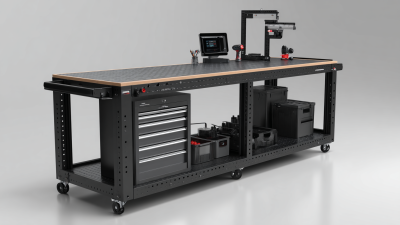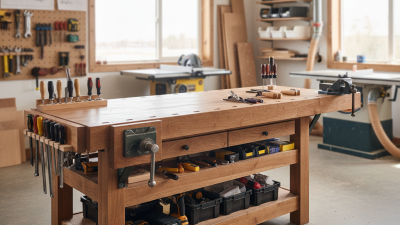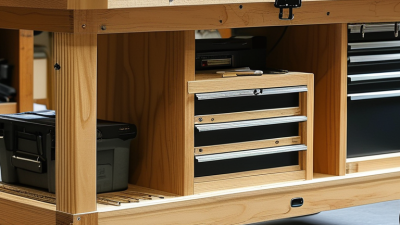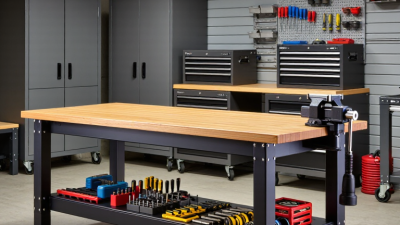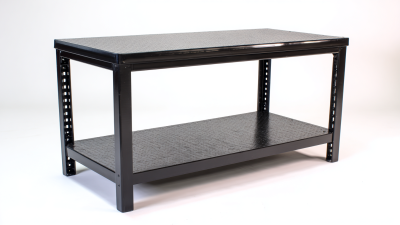
Choosing a heavy duty work table is not simply a matter of picking the thickest steel. It is a practical decision involving load capacity, working height, stability, surface durability, and daily comfort. A table may claim a 2,000-pound rating, yet still wobble when a vise holds a steel component. The details matter.
Dr. Alan Hedge, a respected ergonomics researcher, often emphasized, “The best posture is the next posture.” That idea belongs in any serious workstation discussion. A fixed-height table can strain your shoulders during long assembly tasks. Adjustable legs, a suitable work height, and enough knee clearance may improve real-world productivity. Small choices matter.
This guide presents seven useful tips for selecting the right heavy duty work table. It examines steel gauge, rated capacity, frame construction, leveling feet, mobility, surface finish, and accessory compatibility. Look closely at welded joints, undershelf support, and the floor beneath the table. A 30-inch-deep surface may suit precision assembly, while a deeper top may better support bulky equipment. Casters can help with cleaning, but they may reduce stability if poorly locked.
There is no perfect table.
Your tools, materials, workspace, and working posture should guide the decision. I have seen buyers focus on maximum capacity and overlook vibration control. That is an easy mistake. A strong table should not only carry weight; it should feel dependable during drilling, clamping, packaging, and repeated impact. Practical testing remains valuable, especially when product specifications seem unusually impressive.
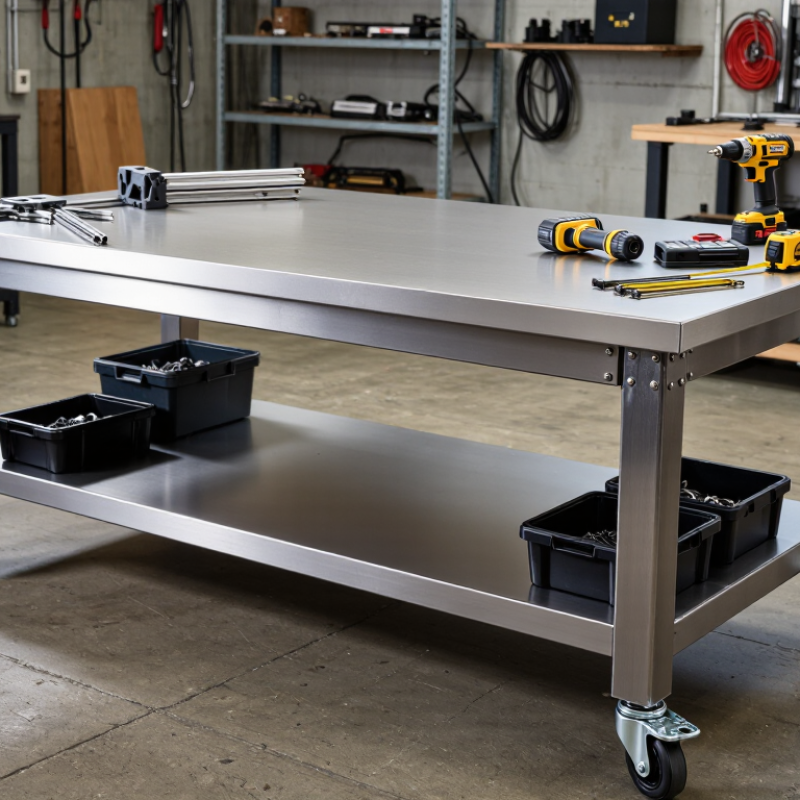
7 Tips for Choosing a Heavy Duty Work Table
Define the Seven Selection Criteria: Load, Size, Height, Top, Frame, Mobility, Safety
A heavy duty work table should match the real workload, not an optimistic estimate. Check both static and dynamic load ratings, especially when parts are dropped or repositioned. Measure the available floor area, then leave room for walking and tool access. A table that fits tightly may become frustrating during daily work.
Height affects posture and control. Choose a level that keeps elbows comfortable during repeated tasks. Adjustable legs can help when several people share one station. The worktop also deserves careful attention. Steel resists impact, while solid wood can reduce vibration and noise. Select thickness, finish, and edge design according to the work. I once chose a smooth top for easy cleaning, but small parts slid too easily.
The frame should resist twisting under uneven loads. Inspect welds, joints, legs, and leveling feet. Mobility is useful when cleaning or rearranging the workspace, but casters need reliable brakes and sufficient capacity. Locking wheels are not optional for precision work. Safety includes rounded corners, stable footing, pinch-point control, and a clearly stated load rating. Ask for test information and maintenance guidance. Do not trust appearance alone. A thick frame can still wobble. Regularly check bolts, casters, and surface damage, because small defects often become expensive problems.
7 Tips for Choosing a Heavy Duty Work Table?
A work table’s capacity rating is not a single number. Calculate static, dynamic, and point loads before comparing models. Static load means equipment that remains still. For example, a 600-pound machine, 80-pound fixture, and 40-pound tools create a 720-pound static load. OSHA 29 CFR 1910.176(b) requires workplaces to keep stored materials stable and within safe load limits. Treat that as a minimum discipline, not a design shortcut.
Tip: Add movement. A sliding fixture, dropped component, or press operation can create dynamic forces above the equipment’s weight. Apply the manufacturer’s tested impact factor, or ask a qualified engineer to define one. NIOSH’s Revised Lifting Equation uses a 51-pound load constant only under ideal lifting conditions; it does not approve a table’s capacity. Do not borrow that figure casually. It is a common mistake.
Tip: Check point loads. A 900-pound machine may stand on four feet, but one foot can carry more than 225 pounds. Uneven floors, vibration, and shifting centers of gravity increase the risk. Use the largest realistic reaction at each contact point, then compare it with the table’s published point-load rating. OSHA’s General Duty guidance and BLS injury reporting both reinforce a practical lesson: overexertion and unstable work conditions remain recurring workplace hazards. Leave a clear safety margin. I would not rely on a rounded estimate, even when the table looks overbuilt.
Calculate static, dynamic, and point loads before choosing the capacity rating. The chart below uses realistic example loads and illustrative safety factors to show how the required rated capacity can change by loading condition.
Static loads remain stationary and are commonly checked with a lower design margin. Dynamic loads include movement, rolling, or impact and require additional allowance. Point loads concentrate force over a small area, so local reinforcement and a higher capacity rating may be necessary. Select a table whose rating meets or exceeds the most demanding applicable condition, and verify the manufacturer's published test method.
Choosing a heavy duty work table starts with the steel, but the details matter more than appearance. In field inspections, a thick-looking frame can still flex under repeated loads.
Tip 1: Compare steel gauges carefully. A lower gauge number usually means thicker steel, but confirm the actual thickness in millimeters. Gauge systems can vary.
Tip 2: Check the load rating and test method. A table carrying an engine needs different evidence than one holding hand tools.
Tip 3: Examine the welds. Look for continuous, even beads, clean corners, and no visible cracks or excessive spatter. Poor weld geometry may weaken a joint before the tabletop bends.
Tip 4: Inspect the legs and cross-bracing. Four heavy legs are not enough if the frame twists during side loading.
Tip 5: Review ANSI/ISEA 121-2018 requirements with care. This standard focuses on dropped object prevention, including securing tools and equipment at elevated work areas. It does not replace structural testing for the table itself.
Tip 6: Choose tables with compatible attachment points, edge protection, or tethering options when falling objects could injure workers.
Tip 7: Ask for engineering documents, test conditions, and maintenance guidance. Marketing language is not proof. I have seen ratings quoted without clear assumptions, which deserves questions. A practical check helps: place the expected load on the table, observe deflection, and inspect fasteners afterward. No table is perfect. Use judgment, document findings, and reassess the setup when the work changes.
Choosing a heavy-duty work table starts with the worker, not the catalog. Set the working height near elbow level for precision tasks. Lower it for forceful pressing or heavy handling. Provide clearance for knees, tools, and pallet movement. A perfect height rarely exists. Adjustable legs can reduce awkward bending, but they may reduce stability if poorly locked.
Surface size must support the job and control storage. Measure the longest item, handling zone, and required access space. Keep frequently used tools within easy reach. Do not turn unused tabletop space into a high stack. OSHA 29 CFR 1910.176(b) requires stored materials to remain stable and secure against sliding or collapse. It also requires tiered materials to be blocked, interlocked, and limited in height. The rule does not prescribe a specific tabletop height or width. That distinction matters. A large surface can still create a storage hazard.
Use seven checks before purchase: measure operator height, identify the main task, estimate peak load, verify leg capacity, inspect the surface edge, plan material flow, and test reach distance. The NIOSH Revised Lifting Equation uses a 51-pound load constant only under ideal conditions. Real tables rarely provide ideal conditions. BLS data show musculoskeletal disorders make up roughly one-quarter of days-away-from-work cases. That supports reducing twisting, reaching, and repeated lifting. In practice, I would load the table gradually and observe movement. A small wobble is easy to dismiss, until it is not. Recheck the layout after one week of actual use.
7 Tips for Choosing a Heavy Duty Work Table
Tip 1: Verify the rated load, not just the advertised capacity. A 1,000-pound rating may apply only to evenly distributed weight. Ask for test conditions, safety factors, and deflection measurements. ANSI/BIFMA testing guidance emphasizes repeatable loading and stability checks, but workbench specifications can vary widely.
Tip 2: Examine stability at the edges. Place a heavy tool near each corner and watch for rocking, frame flex, or caster movement. Tip 3: Confirm storage limits separately. Drawers, shelves, and cabinets often carry lower loads than the main surface. OSHA material-handling guidance recommends keeping loads secure and preventing unexpected movement. That practical detail matters.
Tip 4: Test mobility before buying. A table that rolls smoothly empty may become difficult under load. Check caster ratings, wheel diameter, brakes, and floor transitions. The U.S. Bureau of Labor Statistics reported about 2.6 million nonfatal private-industry workplace injuries and illnesses in 2023. Poor movement control can add unnecessary handling risk. Tip 5: Review independent test data, not promotional language. Look for static-load, impact, fatigue, and anti-tip results. Tip 6: Inspect welds and fasteners closely. Thin joints can fail first. Tip 7: Leave a margin below the maximum rating. I would not operate at the limit daily. Loads shift, floors are uneven, and real workshops are rarely perfect.
| Tip | Data Dimension | Recommended Benchmark | Verification Method | Illustrative Test Result | Selection Interpretation |
|---|---|---|---|---|---|
| 1. Check the rated load | Evenly distributed static load | ≥ 500 lb / 227 kg for general workshop use | Place calibrated weights evenly across the worktop for 24 hours. Inspect for permanent deformation, joint movement, and fastener loosening. | 500 lb / 227 kg applied; no visible structural damage and less than 1/8 in / 3.2 mm permanent deflection. | Choose a table whose published rating exceeds the expected working load. Do not treat an evenly distributed rating as a point-load rating. |
| 2. Verify point-load resistance | Localized load at the work area | ≥ 150 lb / 68 kg applied over a 4 in / 102 mm diameter area | Apply the load at the center and at the most flexible edge location. Measure deflection with a dial indicator or digital displacement gauge. | 150 lb / 68 kg point load; deflection remained below 1/8 in / 3.2 mm and recovered after load removal. | Important for vises, presses, repair fixtures, and concentrated impacts that can exceed the average worktop load. |
| 3. Test frame stability | Side-to-side and front-to-back movement | ≤ 3 mm frame movement under a 50 lb / 23 kg horizontal force | Apply a horizontal force at worktop height while the table is unloaded. Measure movement at the opposite corner and repeat from both directions. | 2.1 mm maximum lateral movement; no rocking after the force was removed. | Lower movement generally indicates better bracing, tighter joints, and more controlled handling of precision work. |
| 4. Confirm anti-tip performance | Stability with drawers or shelves extended | ≥ 10° tip-resistance angle with the heaviest drawer extended | Place the table on a level test platform, fully extend the heaviest drawer, and gradually incline the platform until the first leg loses contact. | No leg lift at 10°; drawer remained latched and the frame returned to level after closing. | Use an anti-tip interlock or restrained drawers when tools or parts are stored above the center of gravity. |
| 5. Evaluate storage capacity | Shelf and drawer load ratings | Drawer: ≥ 100 lb / 45 kg; lower shelf: ≥ 200 lb / 91 kg | Load each storage component evenly to its stated capacity, open and close drawers repeatedly, and inspect slides, shelf supports, and welds. | 100 lb / 45 kg drawer load completed 50 open-close cycles; 200 lb / 91 kg shelf load showed no permanent sag. | Compare storage ratings separately from the worktop rating because drawers and shelves usually have lower allowable loads. |
| 6. Verify mobility and wheel locks | Rolling load, caster capacity, and locked movement | Four casters rated for at least 750 lb / 340 kg total; locked movement ≤ 2 mm | Roll the fully loaded table over a smooth, level surface, then apply a 50 lb / 23 kg horizontal force with all caster brakes engaged. | 750 lb / 340 kg combined caster rating; rolled 10 m without binding and moved 1.4 mm with brakes locked. | Divide the total rated caster capacity by four only as a starting point; uneven floors and dynamic loads reduce practical capacity. |
| 7. Inspect the worktop and finish | Surface durability, flatness, and corrosion resistance | Flatness within ±2 mm per 1 m; no through-coating corrosion after 24-hour moisture exposure | Check flatness with a straightedge and feeler gauge. Wipe the surface dry after exposure and inspect edges, welds, fasteners, and damaged coating. | Measured flatness: 1.6 mm per 1 m; no red rust or coating blistering after the test. | Select a sealed or corrosion-resistant surface for wet, oily, chemical, or outdoor work, and protect cut edges from moisture. |
Testing note: The figures above are neutral engineering screening benchmarks and illustrative acceptance results, not claims for any specific product. Always follow the manufacturer’s rated-load instructions, use calibrated test equipment, and reduce the working load when impact, vibration, uneven loading, or elevated temperatures are involved.
1901 West Main Street
Washington, MO 63090
Main Directory: 1-800-227-4873
Email: sale@pangcofurniture.com

We’re always looking for talented individuals to join our team. Send us your resume using the form below. When a position comes available that matches your skillset, one of our team members will reach out to you.
"*" indicates required fields