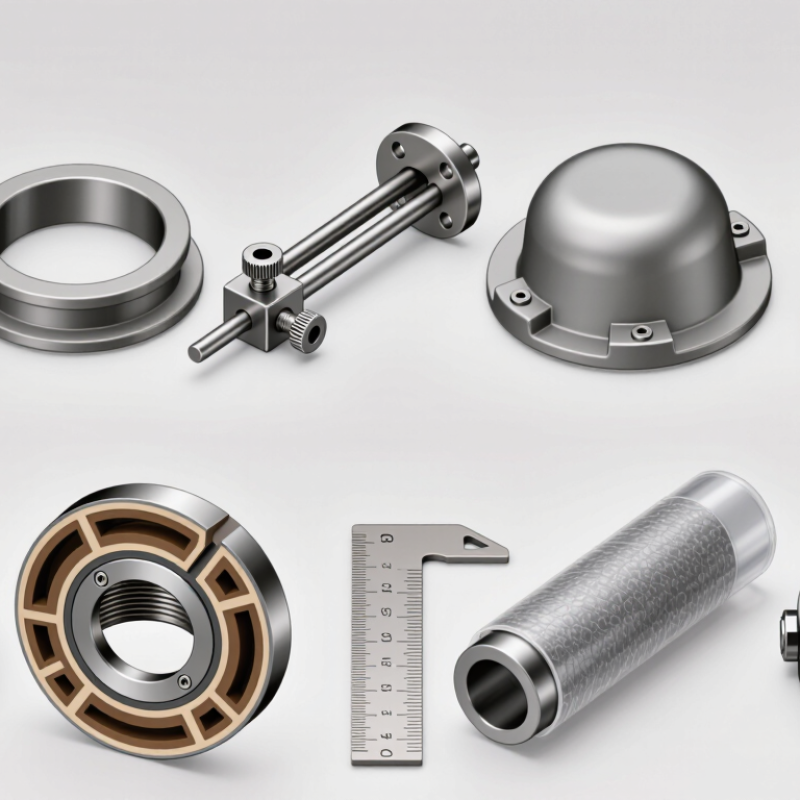
Industrial flange systems depend on more than pipes, gaskets, and bolts. The right Flange Accessory can support alignment, sealing, inspection, or safe handling during installation and maintenance. Small components matter. A mismatched protector or lifting aid can slow work, damage a finished flange face, or complicate routine checks. Buyers should compare each product’s function, material, dimensions, and rated service conditions before ordering.
This guide examines ten flange accessories, from guards and spacers to alignment tools and protective covers. Their uses differ, and no single option suits every application. For stainless-steel service, confirm material compatibility and corrosion exposure rather than relying on a product label alone. Check drawings, project specifications, and manufacturer data. Ask for clarification when dimensions or ratings are unclear. For unusual or critical service, consult qualified engineering staff before selecting components.
Good procurement is rarely perfectly neat. Inventory limits, lead times, and site practices can shape the practical choice, sometimes more than a catalog suggests. Still, verified fit and performance should guide the decision. A simple receiving check can also catch wrong dimensions or visible damage before installation. Not every accessory is essential. The sections ahead explain what each item does, what buyers should inspect, and which questions can help prevent avoidable purchasing mistakes. Some requirements may be easy to overlook; reviewing them early is worthwhile.
Flange accessories are the components that help a flanged joint seal, stay aligned, or be safely isolated. Common examples include gaskets, studs, nuts, washers, blinds, and insulating kits. The gasket sits between flange faces; tightened fasteners compress it to limit leakage. Small parts matter. The U.S. Energy Information Administration describes a natural-gas pipeline network spanning more than 3 million miles in the United States (Natural Gas Explained: Natural Gas Pipelines). At that scale, reliable joints depend on suitable materials and careful installation, not just large pipe.
Selection starts with the service conditions. Buyers should check pressure, temperature, fluid compatibility, flange dimensions, and the required gasket type. ASME B16.5 covers dimensions and pressure-temperature ratings for many pipe flanges, while related standards address components such as gaskets. These details help teams specify parts that fit and perform as intended. A mismatch can mean uneven gasket compression, corrosion, or a leak at the joint. Still, accessory selection is sometimes treated as a checklist item. That deserves a second look. A clean-looking gasket may not be suitable for the fluid or temperature, and visual inspection alone cannot confirm compatibility. Clear specifications and installation records make maintenance decisions more dependable.
Top 10 Flange Accessories for Industrial Buyers
How to Assess Compatibility Across Flanges, Materials, and Pressure Ratings
Compatibility starts with the flange, not the accessory catalogue. ASME B16.5-2020 covers NPS 1/2 through NPS 24 and Classes 150 to 2500. Its pressure-temperature tables show why “same class” alone is not enough: allowable pressure also depends on material and operating temperature. Check the flange standard, nominal size, facing, bolt-hole pattern, and service conditions before selecting gaskets, bolts, nuts, or washers. Small mismatch, big leak risk.
For larger sizes, ASME B16.47 covers NPS 26 through NPS 60; its Series A and B dimensions are not interchangeable by assumption. The same checks matter for spacers, spectacle blinds, orifice plates, insulation kits, flange guards, and grounding jumpers. Match gasket material to the fluid, temperature, and flange face; confirm bolt material and length against the joint design. ASTM material specifications can help verify material grade, but the project’s engineering documents should govern final selection. I still double-check field measurements. Drawings can lag behind repairs. Before installation, compare markings and dimensions on the actual parts, then have a qualified engineer verify the pressure-temperature rating and assembly procedure.
Compatibility checks to assess across flange standards, materials, facing, and pressure ratings
Bars count the relevant checks in this selection checklist—not an industry ranking or a product pressure rating. Verify the applicable flange standard and pressure-temperature rating, matching facing and dimensions, material compatibility with the service, and installation requirements before selection. Actual ratings depend on the specific standard, material, and operating temperature.
Industrial piping joints rely on more than flanges. The right accessories help seal connections, manage flow, and simplify maintenance. Gaskets fit between flange faces; their material and thickness should suit the fluid, temperature, pressure, and face finish. Stud bolts, nuts, and hardened washers provide clamping force. A neat-looking joint can still be wrong if bolts are unevenly tightened.
Insulating kits limit electrical continuity across selected joints. Spectacle blinds and paddle blinds, also called spades, provide positive line isolation when specified for the system. Line spacers maintain separation between flanges, while flange guards help shield exposed joints from dirt or accidental contact. Orifice plates create a defined restriction for flow measurement and require compatible sealing arrangements. That makes ten useful accessory types, but not every pipeline needs all of them.
Tips: Check drawings, flange ratings, materials, and dimensions before ordering. Confirm gasket and bolting requirements against the equipment documentation. During installation, use the specified tightening sequence and torque method. Small mismatches matter; field conditions can expose assumptions that looked fine on paper.
| No. | Accessory | Main Function | Common Types or Materials | Key Selection Checks | Relevant Guidance |
|---|---|---|---|---|---|
| 1 | Flange gasket | Forms a seal between mating flange faces to help prevent fluid or gas leakage. | Nonmetallic sheet, spiral-wound, and metallic ring-type gaskets. | Match the gasket type and dimensions to the flange facing, service fluid, pressure, temperature, and joint design. | ASME B16.20 covers metallic gaskets; ASME B16.21 covers nonmetallic flat gaskets. |
| 2 | Stud bolts | Provide clamping force to hold a flanged joint together. | Threaded studs selected in suitable material and grade for the service environment. | Check diameter, length, thread, material, coating, and compatibility with the flange and nut specifications. | ASTM A193 includes specifications for alloy-steel and stainless-steel bolting for pressure and high-temperature service. |
| 3 | Bolting nuts | Engage with studs or bolts to apply and maintain joint load. | Heavy-hex nuts are commonly specified for piping flange assemblies. | Confirm thread fit, material grade, strength compatibility, and any lubrication or coating requirements. | ASTM A194 covers carbon- and alloy-steel nuts for bolts used in pressure and high-temperature service. |
| 4 | Washers | Can distribute bearing load under a nut or bolt head when specified by the joint design. | Flat washers in materials compatible with the bolting and surrounding environment. | Use only where specified; verify dimensions, hardness, material compatibility, and suitability for the joint. | Follow the piping project specification and engineered bolting procedure; washers are not required for every flange joint. |
| 5 | Flange insulation kit | Electrically separates flange components to help control current flow and reduce galvanic-corrosion risks. | Insulating gasket, sleeves, and washers assembled as a joint kit. | Check flange size and facing, dielectric requirements, temperature and pressure limits, and compatibility with the process. | Selection is typically governed by the piping design, corrosion-control plan, and cathodic-protection requirements. |
| 6 | Spectacle blind | Provides a visible, changeable means of isolating or opening a line by rotating the blind or spacer section into position. | A solid blind joined to an open spacer by a narrow web. | Verify line size, pressure class, material, flange facing, operating procedure, and space for rotation. | ASME B16.48 covers steel line blanks for flanged joints. |
| 7 | Paddle blind (spade) and spacer | A paddle blind blocks flow; a matching spacer allows flow when installed between flanges. | Solid plate blind and open ring spacer, generally selected as a matched set. | Confirm dimensions, thickness, material, flange rating, and safe access for insertion or removal. | ASME B16.48 provides dimensional and rating guidance for covered steel line blanks. |
| 8 | Orifice plate | Creates a defined restriction used with differential-pressure instrumentation to measure flow. | Precision-machined plate with a specified bore and plate geometry. | Coordinate bore, plate orientation, material, tapping arrangement, and installation details with the flow-measurement design. | Meter design and installation may be based on ISO 5167 or the applicable project measurement specification. |
| 9 | Flange spray shield | Helps direct or contain spray from a leaking flange joint, reducing exposure risk in designated services. | Removable shields made from materials selected for the fluid and operating environment. | Assess chemical compatibility, temperature, pressure-release behavior, inspection access, and site safety requirements. | Use as a supplementary safeguard; it does not replace correct joint design, installation, inspection, or leak control. |
| 10 | Flange protector or end cover | Protects flange faces and openings from impact, dirt, and moisture during storage or transport. | Temporary covers made from plastic, metal, or other suitable protective materials. | Choose a cover that fits the flange and protects the facing without damaging it; remove before installation. | Specify according to handling, storage, and shipping conditions; it is not a pressure-containing component. |
A flange accessory is not a minor detail; it helps determine whether a joint seals, aligns, and remains serviceable. Common choices include gaskets, studs, nuts, washers, insulating kits, spacers, spectacle blinds, orifice plates, alignment tools, and flange protectors. Standards specify dimensions, pressure ratings, and material requirements, but the correct reference depends on the piping system and project specifications. Check compatibility rather than assuming that similar-looking parts are interchangeable.
Operating conditions narrow the options. A gasket exposed to hot steam may behave differently from one used with a mild water line. Corrosion, vibration, thermal cycling, and frequent maintenance also matter. Confirm temperature and pressure limits, fluid compatibility, flange facing, and bolt materials before ordering. In practice, mismatched components can cause leakage or make later disassembly difficult. A tidy specification sheet can still miss a real operating detail. That deserves a second look.
Tips: Record the service fluid, temperature range, pressure, and flange standard on the purchase request. Ask suppliers for traceable material and dimensional documentation. For critical joints, have a qualified engineer review the selection. Small details matter. Don’t guess.
Top 10 Flange Accessories for Industrial Buyers
Industrial buyers should specify flange accessories as a matched connection, not as isolated line items. List the flange standard, size, pressure class, facing, material, and operating temperature. Then define gasket type, bolt diameter, length, grade, coating, and washer requirements. Details matter. A gasket that fits the bore may still fail if its material cannot handle the process fluid or temperature. Confirm compatibility against the project specification and applicable engineering standards.
Traceability deserves equal attention. Request material test reports, heat numbers, dimensional checks, and clear packaging labels before shipment. The World Stainless Association’s Stainless Steel in Figures 2024 reports 58.4 million tonnes of global stainless-steel production in 2023. That figure describes the wider material market, not flange-accessory availability, but it underlines why buyers should state the exact alloy grade rather than simply “stainless steel.” Compare suppliers on documented conformity, stock status, lead time, and replacement-part consistency. One weak point in many purchase orders is vague coating language; “corrosion resistant” is not a measurable acceptance criterion. Specify the coating system and inspection method, then check samples against the written requirement before approving a large order.
1901 West Main Street
Washington, MO 63090
Main Directory: 1-800-227-4873
Email: sale@pangcofurniture.com

We’re always looking for talented individuals to join our team. Send us your resume using the form below. When a position comes available that matches your skillset, one of our team members will reach out to you.
"*" indicates required fields