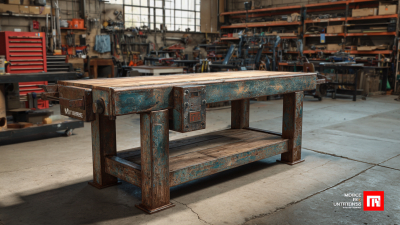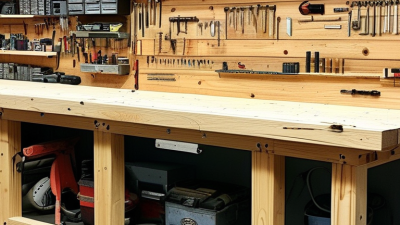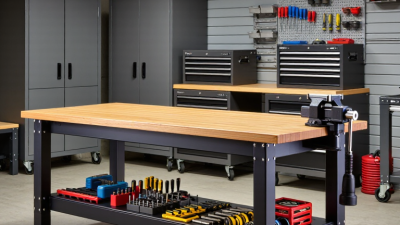
Global buyers are paying closer attention to workshop efficiency, product safety, and long-term value. A dependable tool table now supports organized assembly, repairs, maintenance, and light industrial work. It is no longer just a wooden or steel surface with drawers.
Market evidence supports this shift. Grand View Research estimates that the global hand tools market will continue expanding through 2030, driven by construction, automotive servicing, and professional maintenance. Mordor Intelligence also identifies manufacturing growth and workplace organization as important demand factors. These reports do not measure every tool table directly. However, they reveal the broader market conditions shaping buyer expectations.
China remains a major sourcing base for workshop equipment. Its manufacturers offer steel fabrication, powder coating, modular storage, adjustable frames, and private-label production. Quality still varies. That matters. A low quotation may hide thin sheet metal, weak drawer slides, uneven welding, or unclear load ratings. Experienced buyers should request material specifications, factory audit evidence, sample inspections, and performance testing before placing large orders.
This guide reviews ten China tool table manufacturers for global buyers. The selection considers manufacturing experience, product range, customization, export capability, quality systems, and after-sales communication. Certifications such as ISO 9001, CE-related documentation where applicable, and verified factory records can strengthen supplier evaluation. They cannot replace independent inspection.
No ranking is perfect. Buyer priorities differ. A repair shop may need compact drawers, while an industrial plant may require a heavy-duty mobile workstation. The best supplier is not always the cheapest. It is the one that delivers consistent dimensions, safe operation, durable finishes, and reliable support across repeated orders.
A high-quality tool table manufacturer in China must prove more than production capacity. It should show repeatable processes, material traceability, and measurable inspection results. The ISO Survey 2022 recorded over 1.26 million ISO 9001 certificates worldwide. Certification alone proves little, but a controlled quality system provides a useful starting point.
In factory audits, buyers should inspect steel grades, weld penetration, coating thickness, and drawer-load testing. A reliable supplier keeps batch records for tubing, fasteners, and surface treatments. Each table should also receive dimensional checks before packing. Ask for calibration records, not only polished photographs. Small details matter. A 2023 industry report from the International Federation of Robotics highlights growing automation in manufacturing, yet automation cannot correct poor specifications or weak supervision. Human review still matters.
Experience appears in practical design choices. Rounded edgesstable castersreplaceable work surfaces, and balanced drawer slides reduce problems on crowded workshop floors. Manufacturers should provide load ratings based on documented tests, preferably under conditions close to actual use. I would also examine packaging trials, because a strong table can arrive with bent corners. That failure is easy to overlook. Chinese manufacturers serving global buyers should explain tolerances, inspection frequency, corrective-action procedures, and export documentation clearly. Some suppliers may offer impressive customization but lack disciplined change control. That is where buyers need patience, evidence, and a second inspection.
The selection process combines factory evidence, product testing, and export experience. Grand View Research valued the global hand tools market at about USD 23.8 billion in 2023. This demand increases pressure on manufacturers to deliver stable quality, not attractive catalogs alone. Each candidate should show production capacity, material specifications, and inspection records. Cold-rolled steel thickness, drawer load ratings, coating adhesion, and wheel performance deserve close review. ISO 9001 certification can support credibility, but it cannot replace independent factory checks.
We also examine sample consistency, packaging strength, lead times, and communication during technical discussions. A serious supplier should provide clear drawings, test procedures, and traceable quality documents. TÜV Rheinland and other testing organizations emphasize risk-based product evaluation, which is useful for comparing tool tables across different factories. However, no ranking is flawless. A strong sample may hide weaker batch control. That concern should remain visible. We therefore compare at least two production batches when possible, review corrective-action records, and verify export references without relying on testimonials alone.
Tips: Request a sample with real tools inside. Measure drawer alignment, caster movement, weld quality, and surface finish. Ask for loading tests and carton-drop results. Visit the factory if budgets allow. If not, use a qualified third-party audit. Small details often reveal more than polished sales material.
China’s top tool table manufacturers serve different workshop needs. Their strengths are not identical. One focuses on heavy welded frames for automotive repair. Another produces modular tables with perforated tops and replaceable fixtures. A third specializes in compact benches for training rooms and small factories. These differences matter.
A fourth manufacturer is known for adjustable-height workstations and clean cable routing. A fifth develops stainless steel tables for assembly areas requiring easy cleaning. Another supplies drawer-based stations with ball-bearing slides and labeled storage.
One factory concentrates on custom dimensions, using laser cutting for repeatable panels. A smaller producer offers economical tables, though its powder coating may need closer inspection. Factory visits and sample checks reveal these details better than brochures.
The ninth profile is a precision-oriented maker with tight welding control and measured flatness reports. The tenth combines standard frames with customized tops, helping buyers shorten development time.
Strong suppliers usually provide load tests, material information, assembly drawings, and replacement-part guidance. Ask how they handle warped panels, damaged cartons, and late design changes.
Do not judge quality from a polished showroom alone. A bright finish can hide weak joints. This is where many comparisons become imperfect.
Buyers should inspect corners, casters, drawer alignment, and packaging before placing larger orders. Different regions may also require different electrical or safety documentation.
China Top 10 Tool Table Manufacturers for Global Buyers?
Comparing products requires more than counting drawers or checking paint thickness. Buyers should inspect steel gauge, drawer load ratings, wheel brakes, surface treatment, and replacement-part availability. A 2023 industrial quality survey by ISO recorded over 1.26 million ISO 9001 certificates worldwide. Certification helps, but it does not replace factory audits. Ask for batch records, torque tests, welding samples, and inspection photos from recent production.
Customization can include drawer layouts, foam inserts, colors, logos, packaging, and electrical modules. However, every change affects tooling, minimum order quantity, and lead time. Request a dimensioned drawing before approving samples. A practical comparison should record sample approval time, defect rates, packaging damage, and corrective-action speed. Small details matter. One loose caster can damage an entire shipment.
Production capacity also needs evidence. Review monthly output, assembly lines, powder-coating capacity, warehouse space, and peak-season utilization. The UNCTAD Review of Maritime Transport 2024 reported continuing pressure on shipping networks, making realistic lead-time planning essential. A factory claiming high capacity may still struggle with customized orders. This is where buyers should remain skeptical. Compare three months of production records, not one impressive visit. The World Bank’s 2023 Logistics Performance Index also shows that delivery reliability varies significantly across countries and trade routes, so factory capability and export execution must be assessed together.
| Rank | Anonymous Manufacturer Profile | Primary Product Coverage | Customization Capability | Quality and Manufacturing Controls | Indicative Annual Capacity | Typical Lead Time | Export Readiness | Best Fit for Global Buyers |
|---|---|---|---|---|---|---|---|---|
| 1 | Profile A Large integrated metal-tool producer |
Steel tool cabinets, rolling tool carts, workbenches, drawer systems, and workshop storage. |
High Cabinet dimensions, drawer layouts, locking systems, colors, logos, packaging, and accessory configurations. |
Automated or semi-automated sheet-metal forming; powder-coating control; dimensional inspection; load testing for drawers and casters; batch traceability. | 50,000–100,000 units/year | 30–50 days | Container-load planning, export packaging, multilingual manuals, and common international pallet formats. | Large distributors, retail programs, and multi-market private-label projects. |
| 2 | Profile B Mid-to-large workshop-equipment specialist |
Tool chests, mechanic carts, modular benches, pegboards, and industrial storage accessories. |
High Strong options for drawer combinations, worktop materials, color matching, caster specifications, and branding. |
Incoming steel inspection; welding-jig control; coating thickness checks; drawer cycle tests; final visual and functional inspection. | 35,000–80,000 units/year | 35–55 days | Experience with mixed-SKU containers, retail cartons, barcode labels, and documentation for overseas buyers. | Automotive aftermarket, hardware wholesalers, and professional workshop channels. |
| 3 | Profile C OEM-focused precision storage producer |
Heavy-duty tool cabinets, mobile workstations, drawer modules, and industrial tool-storage systems. |
High CAD-based development, prototype sampling, custom load ratings, special dimensions, and integrated electrical features. |
Engineering drawings; first-article approval; weld-strength checks; dimensional reports; load and stability tests; corrective-action records. | 25,000–60,000 units/year | 40–65 days | Suitable for technical procurement with inspection reports, product specifications, and controlled packaging requirements. | Industrial buyers needing engineered products and repeat OEM production. |
| 4 | Profile D Value-oriented mass-production factory |
Entry-level tool cabinets, compact carts, hand-tool organizers, and basic workshop benches. |
Medium Standard platforms with selectable colors, handles, casters, drawer counts, labels, and packaging. |
Standardized stamping; routine weld inspection; coating appearance checks; assembly inspection; carton drop testing for selected models. | 60,000–120,000 units/year | 25–45 days | Competitive container utilization, export cartons, basic manuals, and common retail labeling support. | Price-sensitive retail, promotional programs, and high-volume standard products. |
| 5 | Profile E Industrial workstation and storage specialist |
Modular workbenches, industrial cabinets, tool panels, parts bins, and factory-floor storage. |
High Worktop materials, height, electrical outlets, lighting, shelving, drawer modules, and workstation layouts. |
Project-based engineering review; material certificates when requested; structural checks; surface-finish inspection; installation-fit verification. | 15,000–40,000 units/year | 45–75 days | Supports project packing, installation drawings, component lists, and consolidated shipments. | Factories, maintenance departments, laboratories, and industrial system integrators. |
| 6 | Profile F Compact tool-cart and mechanic-storage producer |
Rolling tool carts, service carts, portable toolboxes, drawer units, and workshop cabinets. |
Medium Custom drawer depth, caster type, handle design, surface color, foam inserts, and accessory kits. |
Drawer smoothness testing; caster load checks; weld-point inspection; coating adhesion checks; final assembly audits. | 20,000–50,000 units/year | 30–50 days | Suitable for distributor packaging, replacement-part lists, and mixed model shipments. | Automotive service, maintenance suppliers, and professional tool distributors. |
| 7 | Profile G Small-batch OEM and private-label manufacturer |
Custom tool boxes, portable storage, light-duty cabinets, and promotional workshop products. |
High Low-to-medium minimum order quantities, custom colors, packaging, inserts, labels, and product combinations. |
Sample approval; incoming material checks; assembly checklists; visual inspection; customer-defined inspection standards. | 8,000–25,000 units/year | 35–60 days | Flexible documentation and packaging support, although large multi-SKU orders may require longer scheduling. | Emerging brands, specialty distributors, online sellers, and pilot product launches. |
| 8 | Profile H Heavy-gauge industrial cabinet producer |
Heavy-duty cabinets, industrial drawer units, machine-side storage, and secure tool lockers. |
Medium Strong structural customization, including steel thickness, locking systems, shelves, drawer loads, and mounting options. |
Steel-thickness verification; structural load testing; door and drawer alignment checks; lock-function testing; corrosion-resistant coating options. | 12,000–35,000 units/year | 45–70 days | Able to manage reinforced export packaging and heavy-goods handling requirements. | Industrial plants, construction equipment service, utilities, and secure storage applications. |
| 9 | Profile I Modular workshop-furniture manufacturer |
Complete workshop sets, wall storage, workbenches, cabinets, tool panels, and modular accessories. |
High Layout planning, module combinations, worktop selection, color schemes, accessories, and project-specific dimensions. |
System-level fit checks; component inspection; cabinet squareness checks; load verification; pre-shipment assembly review. | 10,000–30,000 sets/year | 50–80 days | Supports room-layout drawings, installation instructions, component coding, and consolidated project packing. | Dealerships, training centers, professional garages, and turnkey workshop projects. |
| 10 | Profile J Standardized export-tooling supplier |
Basic tool chests, portable boxes, utility carts, storage shelves, and general workshop organizers. |
Standard Mainly catalog-based customization covering color, labels, cartons, accessory packs, and minor hardware changes. |
Routine material and dimension checks; assembly inspection; packaging inspection; random sampling before shipment. | 30,000–70,000 units/year | 25–45 days | Efficient for standard export orders, repeat SKUs, retail cartons, and full-container shipments. | Importers prioritizing stable pricing, simple specifications, and fast replenishment. |
Choosing among China’s top tool table manufacturers requires more than comparing catalog prices. Global buyers should request a factory profile, production photos, and recent quality records. Check whether the manufacturer controls welding, machining, coating, and final inspection internally. A clean workshop matters. So does traceability.
Ask for a pre-production sample before approving a large order. Measure tabletop flatness, frame alignment, drawer clearance, and load capacity. Request the steel grade and coating thickness in writing. A strong table should remain stable when drawers are fully loaded. Small defects often appear around welds, caster mounts, and sharp edges. These details deserve photographs and measurements, not promises.
Review packaging carefully. Confirm carton strength, moisture protection, spare parts, labeling, and pallet dimensions. Clarify inspection standards, delivery terms, payment stages, and the process for handling damaged goods. Independent inspection can be worthwhile, especially for a first order. However, inspection is not a substitute for clear specifications. Some buyers focus heavily on unit price and later discover expensive replacement costs. That mistake is easy to repeat. Ask for references from comparable export markets, but verify them independently. Communication speed also matters; delayed answers before production may signal larger problems later. A reliable supplier should explain limitations honestly, even when the answer is inconvenient.
1901 West Main Street
Washington, MO 63090
Main Directory: 1-800-227-4873
Email: sale@pangcofurniture.com

We’re always looking for talented individuals to join our team. Send us your resume using the form below. When a position comes available that matches your skillset, one of our team members will reach out to you.
"*" indicates required fields