What Are the Top Hot Stamping Plate Types in 2026?
Hot stamping remains a practical way to add metallic detail, tactile contrast, and clear brand cues to packaging and printed materials. Yet the result depends on more than foil. The Hot Stamping Plate must match the artwork, substrate, press conditions, and expected production volume.
Market context matters. Smithers’ report, The Future of Global Packaging to 2028, forecast the global packaging market would reach about US$1.2 trillion by 2028. That forecast does not measure demand for stamping plates directly. It does, however, show the scale of the packaging sector where decorative finishing competes for attention. FSEA’s finishing resources also emphasize process choices such as foil, substrate, and tooling setup. Small setup differences can change edge sharpness, foil release, and waste.
This guide compares common plate types, including magnesium, brass, copper, and steel, through practical selection factors: detail, durability, cost, and run length. A finely engraved brass die may suit repeated, intricate work; a magnesium plate can be more economical for shorter runs. There is no universal winner. Even a well-made plate can disappoint when heat, pressure, or stock varies across a job. That part is easy to underestimate. The right choice is usually the one that meets the design and production target without adding unnecessary tooling cost.
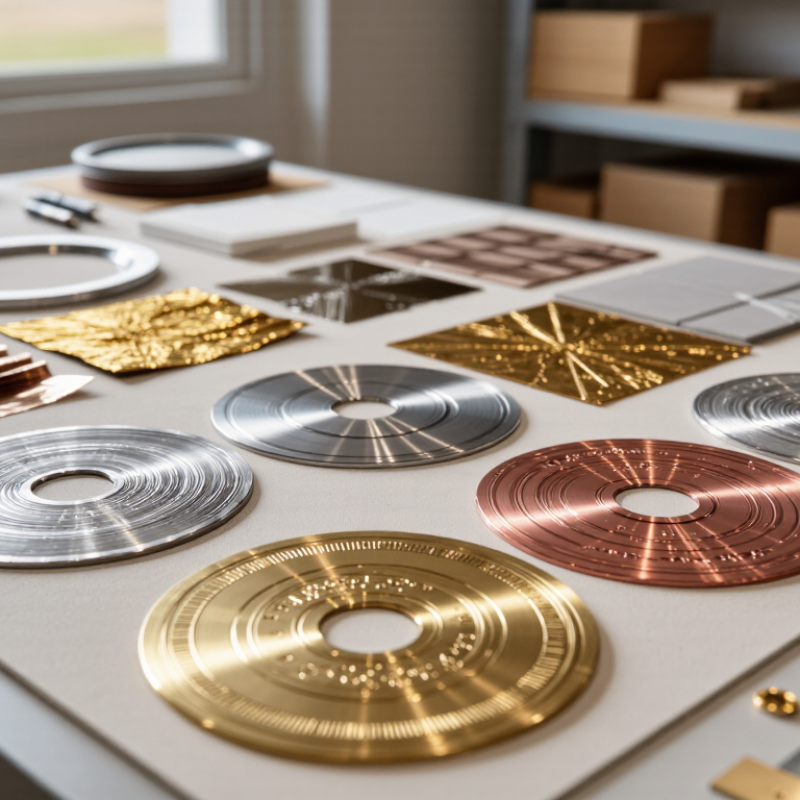
What Is a Hot Stamping Plate and How Does It Work?
A hot stamping plate, often called a die, is an engraved metal tool that transfers foil onto paper, board, or another suitable surface. The press heats the die, then applies it to foil and substrate under controlled pressure and dwell time. Heat activates the foil’s release layer; pressure bonds its decorative layer to the material. The result can be a crisp metallic mark or a subtle, unfoiled emboss. It is a physical process, so uneven stock or poor setup can leave patchy edges.
Common die materials include magnesium, copper, and brass. Magnesium can suit shorter runs, while brass is often selected for durability and fine detail. Copper is another option, though the best choice depends on artwork, substrate, run length, and press conditions. Grand View Research estimated the global packaging market at USD 1.10 trillion in 2023 and projected USD 1.33 trillion by 2030. This broad market figure is not a hot-stamping forecast, but it shows the scale of packaging where decorative finishes compete for attention. In practice, setup is rarely perfect on the first pass. That deserves a test.
Tips: Check the die face for residue, then test pressure and temperature on the actual stock. Look closely at small letters and foil edges. A good impression should be even, not crushed. Record settings; the same numbers may behave differently on another material.
Which Materials Are Used to Make Hot Stamping Plates?
Hot stamping plates are commonly made from magnesium, brass, copper, or steel. The right choice depends on the artwork, production volume, and press setup. A plate’s material affects how finely it can hold engraved detail, how quickly it transfers heat, and how well it withstands repeated pressure. Small details matter.
Magnesium is relatively easy to machine and can suit short runs or designs with fine lines. It is softer than brass or steel, so heavy use may wear its surface sooner. Brass offers a useful balance of detail and durability, making it a frequent choice for repeat production. Copper can transfer heat effectively, though its suitability depends on the design and working conditions. Steel is harder and can serve long runs, but machining it may take more time and effort.
These are practical tendencies, not guarantees. The foil, paper, relief depth, pressure, and temperature all affect the result. A plate that performs well on smooth coated stock may behave differently on textured paper. That part is easy to overlook. In a real job, even a carefully selected metal can need small adjustments after a test impression.
What Are the Main Types of Hot Stamping Plates in 2026?
Hot stamping plates in 2026 are still mainly classified by material: magnesium, copper, brass, and steel. Each responds differently to heat, pressure, artwork detail, and production volume. The right choice depends on the job, not a yearly trend.
Magnesium plates are lightweight and quick to machine, making them practical for short runs and straightforward designs. Copper can capture fine lines and small lettering, while offering more wear resistance than magnesium in many applications. Brass is a common choice for detailed work and longer runs. Steel is especially durable, but its higher cost and machining time may not suit every order. Small details matter.
A print operator should also consider the foil, substrate, press temperature, and impression pressure. A plate that works well on coated paper may behave differently on textured stock. Test impressions can reveal weak edges, uneven coverage, or excessive pressure before a full run begins. There is no universal winner, and material selection can still involve some trial and adjustment.
What Are the Top Hot Stamping Plate Types in 2026? — Main Types and Uses | Plate Type | Common Applications | Key Advantages | Considerations | Relative Cost |
| Magnesium | Short-run foil stamping, packaging prototypes, labels, and designs with relatively simple details. | Lightweight and comparatively quick to engrave; often economical for short production runs. | Generally wears faster than harder metal plates and may be less suitable for long runs or demanding production conditions. | Low to moderate |
| Brass | Premium packaging, book covers, stationery, and jobs requiring fine detail or repeated use. | Durable, dimensionally stable, and capable of producing crisp detail over many impressions. | Typically takes more time and specialized equipment to machine than softer plate materials. | High |
| Copper | Detailed foil-stamping work and applications where precise image reproduction is important. | Can reproduce fine features and offers good heat transfer during stamping. | Cost and suitability depend on plate thickness, engraving method, artwork, and production requirements. | Moderate to high |
| Steel | Long production runs, demanding industrial applications, and some combined stamping and embossing work. | High hardness and wear resistance can support extended use under appropriate press conditions. | Harder to engrave and usually requires more specialized tooling and setup than softer metals. | High |
| Selection note: The best plate depends on the substrate, artwork detail, press and temperature settings, expected run length, and finishing requirements. Cost levels are relative and can vary by plate size, engraving method, and supplier. |
How Do Hot Stamping Plate Types Differ in Performance?
Magnesium plates are light and quick to machine, making them practical for short runs and fine artwork. They can wear sooner under repeated pressure, so they may not suit every high-volume job.
Brass plates cost more and take longer to prepare, but they generally hold detail and withstand longer production runs. A small letter stays crisp.
Copper transfers heat efficiently and can work well for detailed designs, though its softer surface calls for careful handling.
Steel is very durable, but machining it can take more time; for delicate, short-run work, that may be unnecessary.
Hot stamping plate types differ in heat transfer, detail, setup time, and useful life.
The best choice depends on the material being stamped, the foil, and the required impression. A thicker plate is not automatically better. For example, a thin brass design may heat evenly on coated paper, while the same settings could mark a softer surface too deeply.
Test a sample. Shops should compare setup time, pressure, temperature consistency, and wear across a realistic run—not just inspect the plate under magnification.
There is a catch: results also depend on the press and operator, so material alone cannot guarantee a clean impression. A quick test can reveal what specifications miss.
How to Choose the Right Hot Stamping Plate for an Application?
Choosing a hot stamping plate starts with the substrate, artwork, and expected production volume. Magnesium plates heat quickly and are often practical for short runs or fine details. Brass offers greater durability for repeated jobs and works well with intricate designs. Steel is typically considered for long runs where wear resistance matters. Copper transfers heat efficiently, but its suitability depends on the plate design and job requirements.
Match the plate to the material being stamped. Thin paper, coated stock, leather, and plastic can respond differently to the same heat and pressure. A delicate sheet may wrinkle, while a textured surface may need a deeper engraving to capture detail. Plate thickness, engraving depth, and press temperature also affect the result. Not always obvious.
Ask your plate supplier about compatible temperature ranges and mounting requirements, then run a small test using the actual substrate and foil. Check edge sharpness, adhesion, and whether the impression crushes the material. A sample can reveal problems that a specification sheet misses. Keep notes on pressure and dwell time; small adjustments can change the finish. Even experienced operators sometimes need another pass at setup.
What Are the Top Hot Stamping Plate Types in 2026?
Typical thermal conductivity of commonly used plate materials
Copper transfers heat quickly, while steel generally offers greater wear resistance. Magnesium and brass can suit applications that balance heat transfer, weight, machinability, and durability. These approximate room-temperature values vary by alloy and plate specification; choose a plate based on the required detail, production volume, press conditions, and working temperature.