What Are China Top Metal Racking System Manufacturers?
China has become a major sourcing base for warehouse storage equipment, including the Metal Racking System. Its manufacturers serve factories, distribution centers, retail warehouses, and cold-chain facilities worldwide. However, “top” should not mean the largest factory alone. It should reflect engineering capability, production consistency, safety testing, and dependable after-sales support.
This introduction explores leading Chinese manufacturers through practical purchasing criteria. It considers rack design, steel grades, load calculations, welding quality, powder coating, and automated production lines. It also examines certifications, factory audits, sample approval, and traceable quality records. A reliable supplier should provide clear drawings, accurate load ratings, installation guidance, and replacement-part support. Site experience matters here. A rack that looks strong in a brochure may perform differently under uneven pallets, forklift impacts, or humid conditions.
Not every manufacturer fits every project. That matters.
Some companies excel at heavy-duty pallet racks. Others focus on carton flow, cantilever storage, or customized mezzanine systems. Pricing can also mislead buyers when steel thickness, surface treatment, or accessories are reduced. A lower quotation may create higher operating costs later. This guide therefore compares manufacturers with a balanced view, rather than treating marketing claims as proof. It also recognizes an unavoidable limitation: supplier rankings can change as factories expand, outsource processes, or improve their testing systems. Careful verification remains necessary before signing a contract. The strongest choice is usually the manufacturer that combines sound engineering, transparent communication, stable delivery, and evidence of real-world performance.
What Are Metal Racking Systems and How Are They Used?
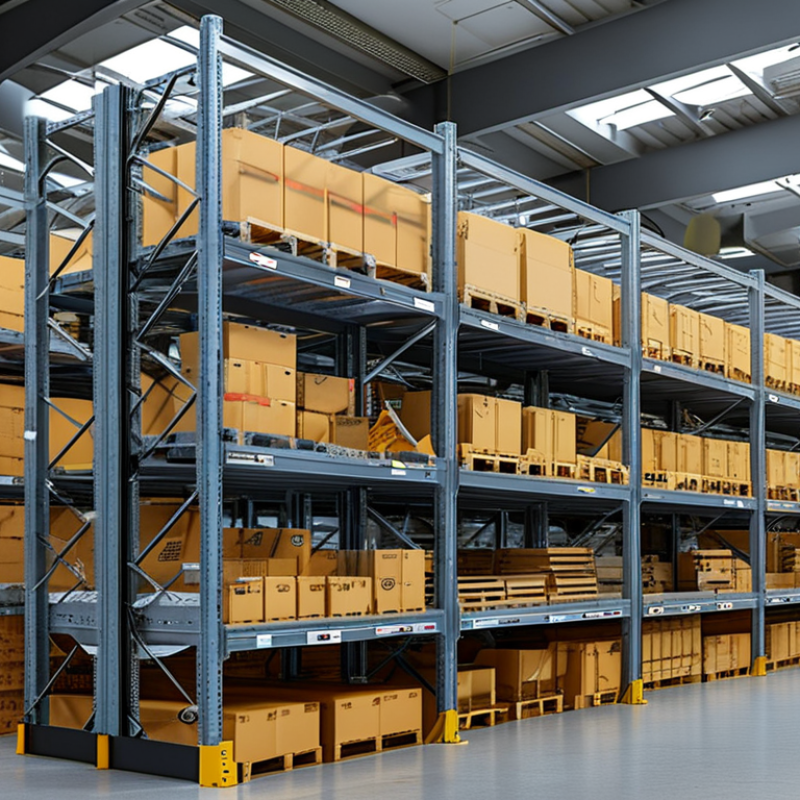
Metal racking systems are engineered steel structures for storing pallets, cartons, tools, and long materials. Common designs include selective pallet racks, drive-in racks, cantilever racks, and multi-tier shelving. Each system changes how workers use aisle space, lifting equipment, and vertical clearance.
Grand View Research estimated the global warehouse racking market at about USD 9.7 billion in 2023. Its report projects continued growth through 2030, driven by e-commerce, inventory expansion, and warehouse modernization. Metal racks support this shift by using vertical space instead of costly floor extensions. In a practical warehouse review, a 6-meter rack can hold several pallet levels, but only when the floor, beams, and forklifts match the design.
Safety depends on more than steel thickness. Load capacity, pallet dimensions, aisle width, anchoring, corrosion protection, and seismic conditions require documented engineering checks. The Occupational Safety and Health Administration advises regular inspection and safe storage practices for material-handling equipment and racks. Manufacturers should therefore provide drawings, rated capacities, installation guidance, and inspection support.
Details matter.
Top manufacturers are not judged only by price. Their capabilities include automated cutting, controlled welding, traceable materials, and tested load performance. However, published capacity figures may assume ideal loading. Real warehouses face uneven pallets, damaged frames, and rushed changes. That gap deserves honest review. Reports from the Material Handling Industry also show growing investment in warehouse technology, yet manual handling remains common. A reliable racking solution must work for both advanced facilities and ordinary operators.
Typical Load Capacity of Metal Racking Systems
Metal racking systems are steel storage structures used to organize pallets, cartons, long materials, and inventory in warehouses, factories, and distribution centers.
The chart compares representative rated load capacities per storage level for common racking configurations. Actual capacity depends on beam dimensions, upright design, steel grade, bay width, load distribution, anchoring, and local safety standards. Selective pallet racks provide direct access to each pallet, while drive-in, push-back, cantilever, and mobile systems are selected for specific storage density or product requirements.
What Products and Customization Services Do They Provide?
China’s leading metal racking system manufacturers offer more than standard warehouse shelves. Their product ranges often include selective pallet racks, drive-in racks, cantilever racks, carton flow racks, and multi-level mezzanine systems. Each design serves a different storage challenge. Selective racks support direct pallet access, while cantilever racks handle long materials such as pipes, timber, and metal profiles. Mobile shelving can also improve space use in archives, workshops, and compact warehouses.
Customization usually begins with a site review and storage calculation. Engineers assess ceiling height, aisle width, floor strength, pallet size, and forklift movement. They may then provide layout drawings, 3D models, load data, and installation guidance. Beam lengths, column heights, decking types, guardrails, back mesh, and safety barriers can be adjusted. Surface treatments may include powder coating or galvanized finishes for demanding environments. Cold storage requires different material choices. Humid facilities need better corrosion protection.
Details matter.
Reliable suppliers should explain allowable loads clearly and provide inspection records, material certificates, and assembly instructions. Some also arrange sample production, load testing, and on-site installation. In my experience, the cheapest layout is not always the most practical. A narrow aisle may save floor space but slow daily picking. A high rack may increase capacity but require suitable equipment and stricter safety checks. Even a well-prepared drawing can miss drainage, lighting, or emergency access. Regular inspections remain necessary after installation, especially when pallets, forklifts, and operating habits change.
How to Compare Quality, Compliance, Pricing, and Support?
China’s top metal racking manufacturers should be judged by evidence, not export volume. China produced about 1.019 billion tonnes of crude steel in 2023, according to the World Steel Association. This scale supports competitive material sourcing and flexible production. However, steel origin alone does not prove rack quality. During a factory audit, inspect coil certificates, welding consistency, coating thickness, and load-test records. Ask for traceable batch numbers. Small details matter.
Compliance should match the destination market and application. Request structural calculations, installation instructions, and inspection procedures aligned with EN 15635 or relevant local standards. An ISO 9001 certificate is useful, but it cannot replace product testing. Pricing requires a landed-cost comparison, including steel grade, beam thickness, packaging, freight, duties, installation, and replacement parts. The cheapest quotation may become expensive after damage or redesign. MHI’s 2024 Annual Industry Report reported that 55% of respondents planned to increase supply-chain technology investment. This signals stronger demand for adaptable storage systems, not merely low prices. Support should include engineering drawings, sample approval, spare-part availability, and a written response-time commitment. I would also test communication before signing. A fast quotation is not the same as reliable support. My own review would still leave room for doubt when inspection evidence is incomplete.