Top 10 Roll Coating Machine Manufacturers Worldwide
A Roll Coating Machine can look simple on a factory floor: two polished rolls, a moving web, and a thin film of liquid. Getting a uniform layer is harder. Roll geometry, viscosity, line speed, tension, and drying conditions all affect the result. A small change in roll gap can leave stripes or uneven edges. Buyers comparing the top 10 manufacturers worldwide should look beyond brochure speed. They should examine coating accuracy, material compatibility, cleaning access, controls, and local technical support. These details matter when the machine must run through long production shifts.
Coating technology author Edward Cohen’s work offers a useful perspective. In paraphrase, not as a verbatim quotation: “Stable coating control matters more than headline speed.” This guide compares manufacturers through that practical lens, while recognizing that no single supplier fits every plant. Some serve narrow, specialized applications; others offer broad production systems. Specifications can also be difficult to compare. A quoted maximum speed, for example, may not reflect performance with a buyer’s actual liquid or substrate. We therefore focus on stated capabilities and useful selection criteria, rather than treating a ranking as a guarantee. Some gaps remain. Readers should confirm critical details with manufacturers and request application-specific trials before making a decision.
What Roll Coating Machines Are and How They Work
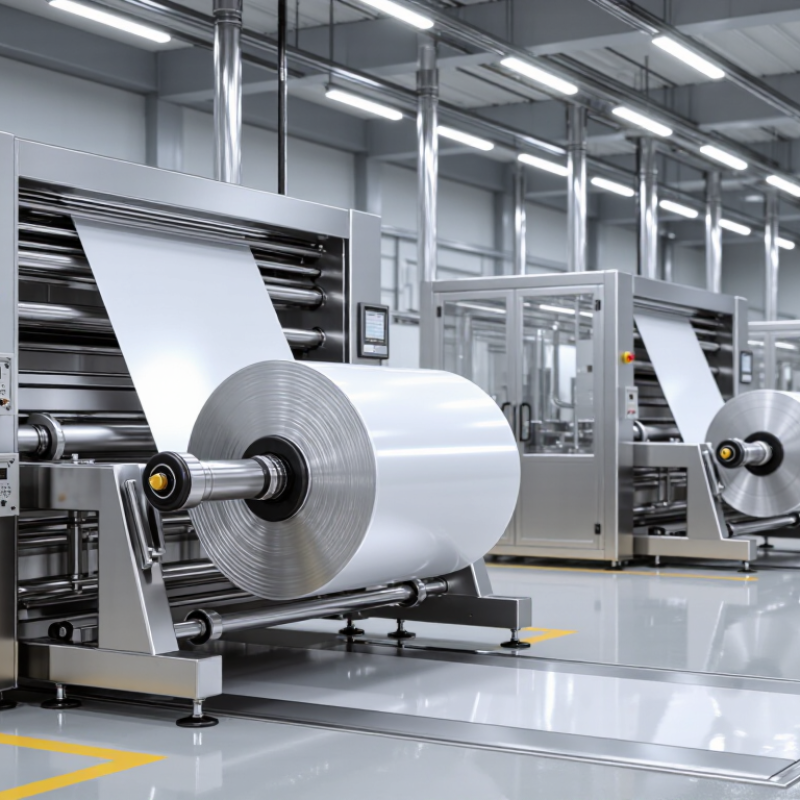
A roll coating machine transfers a controlled liquid film onto a moving surface. The substrate may be paper, metal foil, plastic film, or a rigid panel. In a common setup, one roll carries coating from a tray while another meters the film before it reaches the substrate. Direct-roll systems turn rolls in the same direction; reverse-roll systems use opposing motion for finer control. Nip pressure, roll speed, liquid viscosity, and surface tension all affect the final coat. Small changes matter.
The process looks simple, but uniformity depends on balancing those variables. Operators check wet-film appearance, edge coverage, and streaks, then adjust speed or roll pressure. A coating that is too thick can sag or dry unevenly; one that is too thin may leave bare spots. The practical target is a repeatable coat weight across the web, not merely a smooth-looking sample. Grand View Research’s 2023 paints and coatings market report estimated the global market at USD 190.1 billion, illustrating the scale of industries that rely on coating processes. That figure is not specific to roll coating, though. It gives context, not a machine-performance benchmark. Production conditions also change with the material, so settings that work on paper may fail on a low-energy plastic film. There is no universal recipe.
How the Top Manufacturers Are Identified and Compared
A credible comparison begins with a clear definition of “manufacturer.” The shortlist should include companies that design and build roll coating systems, not merely resell equipment. Public technical documents, application records, and customer references can help verify that distinction. Useful evidence includes machine specifications, documented coating trials, and support arrangements.
Performance should be judged against the intended process. A line coating flexible film may not suit metal foil or paper. Compare working width, production speed, coating-weight range, web-tension control, and drying options. Ask how results were measured; a stated thickness tolerance means little without substrate and test conditions. Small details matter. A sample run should show whether the coating stays even near the edges and through speed changes.
Service and maintainability deserve equal attention. Review commissioning, operator training, spare-part access, and typical response times, then check these claims with references where possible. Pricing should include installation and likely maintenance, not just the machine itself. Rankings remain imperfect: suppliers may report performance under different conditions, and public data can be thin. A comparison should flag missing evidence rather than treat every specification as directly equivalent.
I would still want more independent trial data.
Profiles of Leading Roll Coating Machine Manufacturers Worldwide
Leading roll coating machine manufacturers differ less by sales claims than by the problems they solve well. Some specialize in compact coaters for narrow webs, where careful tension control helps prevent wrinkles. Others build integrated lines with unwinders, ovens, and inspection stations. The differences matter.
Profiles of established suppliers should explain their coating methods, supported materials, and practical operating range. Look for details such as achievable wet-film thickness, line speed, width tolerance, and temperature uniformity. A useful profile also describes installation, operator training, spare-part access, and service response. These details affect daily production more than impressive showroom finishes.
Manufacturers in major industrial regions often reflect local strengths: precision drive systems, automation integration, or flexible custom engineering. Still, geography is only a starting point. Ask for a trial using your actual substrate and coating formula, then inspect the dried surface under consistent lighting. Check edge quality, streaking, and repeatability across several runs. Even a polished brochure can leave important questions unanswered. That is not enough. Request clear test conditions and references for applications similar to yours; vague performance figures are difficult to compare.
Key Technologies and Industries Served by the Top 10
Top 10 Roll Coating Machine Manufacturers Worldwide: Key Technologies and Industries Served
Leading roll coating equipment manufacturers typically combine precision coating heads with controlled web handling. Common technologies include gravure, reverse-roll, slot-die, and microgravure coating. Each method suits different coating weights, viscosities, and surface finishes. A stable tension system helps keep flexible webs flat as they move through the line. Small changes matter.
Many systems also integrate drying ovens, temperature controls, and inline thickness or defect inspection. These features serve packaging, battery materials, electronics, textiles, automotive components, and protective films. For example, a converter coating adhesive onto a thin film may prioritize accurate metering and quick changeovers. An electronics producer may need cleaner handling and tighter coating uniformity. Capabilities vary by configuration, so a machine’s headline speed alone can be misleading. Real production results depend on the material, coating chemistry, and operator setup.
Tips: Match the coating method to your material and target coat weight. Ask for a trial using your actual substrate and coating fluid. Check cleaning access, tension stability, and oven control—not just maximum speed. Even experienced teams can overlook changeover time. That deserves a closer look.
Roll Coating Technologies Across Industries
Bars show the number of commonly used roll-coating process families represented in each industry's examples, including gravure, slot-die, reverse-roll, knife, and rod coating. This is a technology overview—not a manufacturer ranking, market-share estimate, or count of suppliers. Specific capabilities vary by application and equipment.