
What Are the Top Steel Fabrication Materials in 2026?

Steel Fabrication Materials shape a project long before the first weld is made. In 2026, buyers still rely on carbon steel for frames, plates, and beams because it is strong, widely available, and straightforward to fabricate. Stainless steel suits equipment exposed to moisture or corrosive environments. Aluminum offers lower weight, while high-strength low-alloy steel can help reduce structural mass without sacrificing strength. Each choice has trade-offs.

Materials scientist Michael F. Ashby’s materials-selection work offers a useful principle: compare performance, manufacturing needs, and cost together, rather than choosing by habit. That matters on the shop floor. A thick carbon-steel plate may handle heavy loads, but it also adds weight and can increase handling time. A stainless component may resist corrosion, yet its higher purchase price and different welding requirements can complicate a tight schedule. Details matter.

This guide examines the leading steel fabrication materials in 2026, including carbon steel, stainless steel, alloy steel, galvanized steel, and aluminum. It considers strength, weldability, corrosion resistance, availability, and lifecycle cost. Actual results depend on grade, design, finish, and working conditions; no material wins every job. One point deserves a second look: familiar choices can feel safer, but familiarity alone does not prove they are right. The best selection begins with the load, environment, fabrication process, and budget—and then checks the compromises honestly.
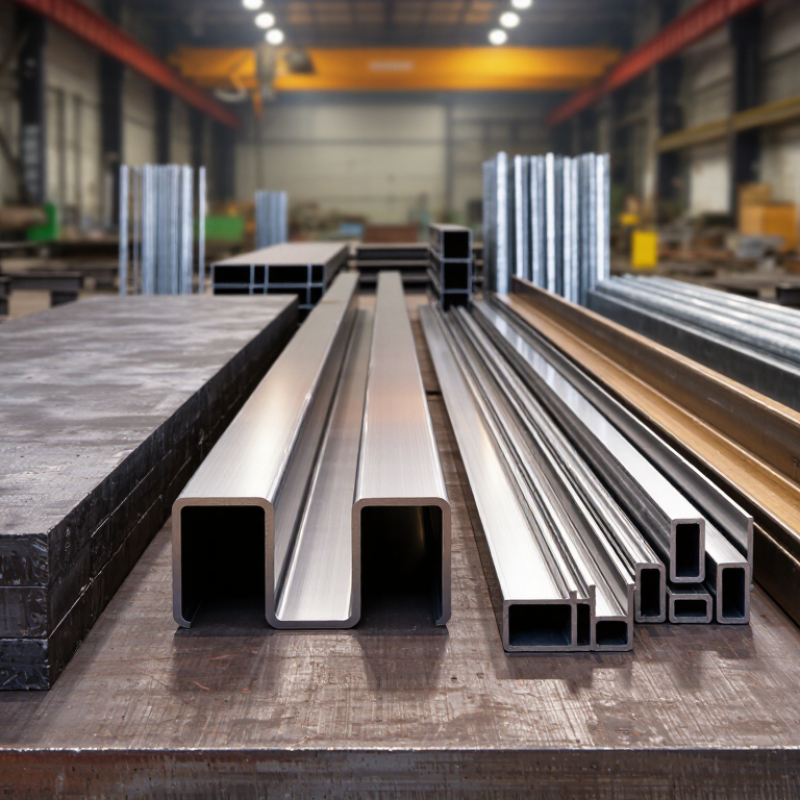
What Are the Top Steel Fabrication Materials in 2026?

What Steel Fabrication Materials Are and How They Are Selected

Steel fabrication materials are metals supplied as plate, sheet, bar, tube, or structural sections. The choice is not simply “strongest steel wins.” Fabricators compare strength, thickness, formability, weldability, corrosion exposure, finish, availability, and cost against the part’s job. Common options include carbon steel for general structures, higher-strength low-alloy steel for strength at reduced weight, and stainless steel where corrosion resistance matters. Small details matter.

The scale of supply helps explain why grade and specification matter. World Steel Association’s World Steel in Figures 2025 reports 1,882.6 million tonnes of crude steel production in 2024; that figure describes production, not the suitability of any grade for a particular component. Environment matters too: NACE International’s 2016 IMPACT study estimated corrosion costs at $2.5 trillion worldwide, or 3.4% of global GDP. That estimate makes exposure, coating, drainage, and maintenance access practical selection questions, not afterthoughts. A material schedule can look precise yet still miss a damp interior corner or a difficult repair location. Check the applicable design requirements, supplier certificates, and welding procedures before cutting. A modest-looking bracket may need different steel from a sheltered beam, even when both are indoors.

Key Properties That Shape Material Performance in 2026

In 2026, material performance starts with the job, not the catalogue. Carbon steel remains practical for frames and machine bases because it combines strength with familiar cutting and welding behavior. ASTM A992/A992M structural steel has a specified minimum yield strength of 345 MPa. That figure helps engineers compare options, but it does not describe weld quality, fatigue life, or the finished part.

For lighter structures, high-strength low-alloy steel can reduce section weight while retaining useful toughness. Stainless steel is often chosen where moisture or chemical exposure makes corrosion resistance important. But its higher initial cost is not the only trade-off: grade, surface finish, weld procedures, and the fabrication environment all affect results. Small details matter. A tidy specification can still miss a shop-floor surprise.

Energy and emissions also shape material choices. The International Energy Agency’s Iron and Steel Technology Roadmap estimates that steelmaking produces about 2.6 gigatonnes of direct CO2 emissions each year, roughly 7% of global energy-system emissions. The World Steel Association’s World Steel in Figures 2025 reports 1,882.6 million tonnes of crude steel production in 2024. That scale makes efficient design meaningful, though one project’s best material is rarely obvious. Compare strength, ductility, corrosion resistance, weldability, and service conditions before selecting a grade.

What Are the Top Steel Fabrication Materials in 2026? — Key Properties That Shape Material Performance in 2026

Representative properties and fabrication considerations for commonly used steel grades
Material / Common Specification Typical Density Specified Minimum Yield Strength Specified Tensile Strength Corrosion Performance Fabrication Characteristics and Common Uses
Carbon structural steel
ASTM A36 plate and shapes
About 7.85 g/cm³ 250 MPa (36 ksi) for common thickness ranges 400–550 MPa (58–80 ksi) Requires protective coating or maintenance in most outdoor environments. Generally easy to cut, form, and weld. Widely used for frames, brackets, base plates, and general structural fabrication.
High-strength low-alloy structural steel
ASTM A572 Grade 50
About 7.85 g/cm³ 345 MPa (50 ksi) for common product thicknesses 450 MPa (65 ksi) minimum Similar to ordinary carbon steel; coatings are commonly used for exposure protection. Higher strength can reduce member weight in suitable designs. Weldable with appropriate procedures; used in bridges, buildings, and equipment structures.
Weathering structural steel
ASTM A588 Grade A
About 7.85 g/cm³ 345 MPa (50 ksi) for thicknesses up to 100 mm 485–690 MPa (70–100 ksi) for common thickness ranges Can develop a protective patina in suitable wet-dry atmospheric conditions. Not a universal substitute for coatings, especially in persistent moisture or chloride exposure. Used for exposed bridges, architectural features, and outdoor structures. Joint detailing and drainage matter because trapped water can prevent protective patina formation.
Structural tubing
ASTM A500 Grade C
About 7.85 g/cm³ 345 MPa (50 ksi) minimum for common round and shaped tubing 427 MPa (62 ksi) minimum Needs appropriate coating or corrosion protection for outdoor or aggressive environments. Available in round, square, and rectangular hollow sections. Common in frames, columns, supports, and welded assemblies; design values depend on section and product requirements.
Austenitic stainless steel
Type 304, ASTM A240 plate
About 8.0 g/cm³ 205 MPa (30 ksi) minimum in the annealed condition 515 MPa (75 ksi) minimum Good general atmospheric and many indoor corrosion resistance applications. Susceptible to pitting and crevice corrosion in chloride-bearing environments. Good formability and weldability. Used for food equipment, architectural components, tanks, and general-purpose corrosion-resistant fabrications.
Molybdenum-bearing austenitic stainless steel
Type 316, ASTM A240 plate
About 8.0 g/cm³ 205 MPa (30 ksi) minimum in the annealed condition 515 MPa (75 ksi) minimum Typically offers better resistance than Type 304 to chloride-related pitting and crevice corrosion, but is not immune to seawater corrosion. Good weldability and formability. Often selected for chemical equipment, coastal components, and process environments where its added corrosion resistance is appropriate.
Ferritic stainless steel
Type 430, ASTM A240 plate
About 7.7 g/cm³ 205 MPa (30 ksi) minimum in the annealed condition 450 MPa (65 ksi) minimum Provides useful resistance in mild indoor and atmospheric environments; generally less corrosion resistant than Types 304 and 316. Magnetic and commonly used for appliance panels, trim, and interior components. Welding and forming practices should account for ferritic stainless behavior.
Low-carbon steel sheet
Commercial cold-rolled sheet, such as ASTM A1008 CS Type B
About 7.85 g/cm³ Varies by product specification and condition; check the applicable sheet standard and mill certificate. Varies by product specification and condition; check the applicable sheet standard and mill certificate. Uncoated sheet typically needs a finish or protective coating where corrosion is a concern. Often selected for smooth surface finish, bending, and formed parts. Common in enclosures, cabinets, panels, and light-gauge fabricated products.

Values are representative specification figures, not design allowables. Strength requirements can change with thickness, product form, grade, and applicable standard edition. Confirm the governing specification, material certificate, service environment, welding procedure, and design code before selection.

The Leading Steel Grades Used in Fabrication

In 2026, fabrication shops continue to use carbon, high-strength, and stainless steels for different demands. ASTM A36 is a familiar choice for plates, brackets, and structural frames. It cuts and welds readily in many standard shop processes. For heavier loads, ASTM A572 Grade 50 offers higher yield strength, which can reduce member size when the design allows. Stronger is not always simpler.

For tubing and hollow sections, ASTM A500 steel is widely used in frames, guards, and supports. Its shape can provide useful stiffness without adding unnecessary bulk. Common stainless options include 304 for general corrosion resistance and 316 for harsher, chloride-rich environments. Stainless costs more and may require careful handling to avoid surface contamination. That detail is easy to overlook.

The right grade depends on loads, exposure, forming, welding, and the applicable project specification. A grade that performs well outdoors may be excessive for a dry indoor fixture. Verify the material certificate and specified grade before cutting; similar-looking stock is not necessarily interchangeable. Fabricators sometimes choose by habit, and that deserves a second look. A short review with the engineer can prevent costly rework.

What Are the Top Steel Fabrication Materials in 2026?

Minimum specified yield strength of selected, widely used steel grades

Higher yield strength can support lighter designs, while grade selection also depends on formability, weldability, corrosion resistance, and the application. Values shown are minimum specified yield strengths; product form, grade, and thickness can affect requirements. A500 Grade C refers to round tubing, and A514 Grade B refers to plate up to 2.5 inches thick.

How Fabrication Materials Compare Across Common Applications

Steel fabrication materials perform differently once the part meets its working environment. Carbon steel suits building frames, equipment bases, and brackets where strength and manageable cost matter. It is easy to cut and weld, but exposed surfaces need protection from moisture. A painted frame can look sound while rust gathers at a scratched edge. Small details matter.

Stainless steel is often chosen for food-processing surfaces, washdown areas, and components exposed to corrosive conditions. Its resistance depends on the grade and environment, so “stainless” alone is not a complete specification. Galvanized steel offers a zinc coating that helps protect outdoor railings, ducts, and utility supports. Cut edges and damaged coatings still need attention. Weathering steel can work for exterior structures that experience suitable wet-and-dry cycles, but it is not ideal where water stays trapped or appearance must remain uniform. A simple ranking can mislead: I would compare exposure, thickness, joining method, and maintenance access before choosing. The cheapest sheet may become the most expensive part to repair.

Emerging Material Trends in Steel Fabrication for 2026

What Are the Top Steel Fabrication Materials in 2026?

Emerging Material Trends in Steel Fabrication for 2026

In 2026, material choices are increasingly shaped by strength, service life, and fabrication demands. High-strength low-alloy steel can reduce component weight while maintaining useful strength. But thinner sections may require tighter control during cutting, forming, and welding. A lighter design is not automatically an easier one to build.

Recycled-content steel is also drawing attention as fabricators and buyers examine material sourcing. Its suitability still depends on verified specifications, consistent properties, and the project’s requirements. Weathering steel may suit outdoor structures where its protective surface can develop properly. It is not ideal for every site, especially where moisture remains trapped. Stainless steel remains useful in corrosive environments, though its cost and joining requirements need consideration. No single material fits every job.

Tips: Check material certificates and confirm grade, thickness, and weldability before production. Ask the design team about exposure conditions. Test a sample bend or weld when a new grade enters the shop. Small checks can prevent costly rework.