Why Choose a Multi Function Induction Cooker?
A Multi Function Induction Cooker can make everyday cooking more flexible without taking over the counter. Depending on the model, it may offer boiling, simmering, steaming, or keep-warm settings in one compact appliance. That can help when preparing soup after work, warming sauce, or cooking in a room with limited space. The controls are often simple: choose a heat level, set a timer, and check the display. Small details matter. Read the manual, confirm your cookware is induction-compatible, and leave clear space around the unit.
Induction heats compatible cookware directly, so the cooking surface may be easier to wipe than an exposed burner. Heat response can also feel quick, though results vary with the pan, recipe, and appliance. No miracle. A multi-function label does not guarantee that every setting suits every dish, and some models take practice to use well. Compare capacity, power levels, timer options, cleaning needs, and safety features before buying. A compact cooker may suit a student, a small household, or a kitchen that needs extra cooking space. But if you regularly prepare large meals, one portable unit may feel limiting. This guide explores practical reasons to choose one, features worth checking, and trade-offs that product descriptions can overlook. The goal is to match the appliance to real cooking habits, not just an attractive list of functions.
Definition and Operating Principle: How Induction Heats Compatible Cookware
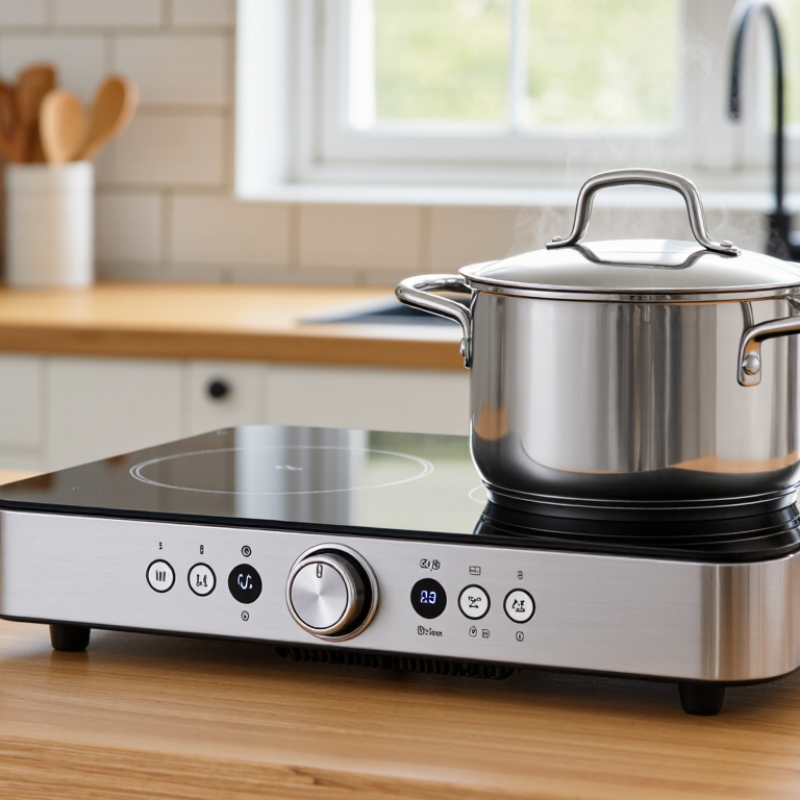
A multi-function induction cooker is an electric appliance that heats compatible cookware directly, rather than warming a burner first. Beneath its glass surface, a coil carries alternating current and creates a changing magnetic field. When a magnetic pan sits on the cooking zone, the field induces electrical currents in its base. The pan’s electrical resistance converts those currents into heat, which cooks the food. The glass may still feel warm, mostly from contact with the hot pan.
Simple physics, with one catch: cookware must be magnetic. Try a magnet on the pan’s base; if it clings firmly, the pan will usually work.
The U.S. Department of Energy’s Energy Saver guidance estimates induction cooking is about 85% energy-efficient, compared with roughly 32% for gas cooking. These figures describe energy transfer, not a guarantee that every meal cooks faster. Pan shape, food quantity, and power settings matter. A small saucepan may heat unevenly if its base does not cover the marked zone.
Multi-function models can offer boiling, simmering, and temperature controls, but the heating principle stays the same. A quiet hum is common. It is not always a fault. Check the manual and test cookware before relying on a new setting; labels and real kitchen results can differ.
DOE Efficiency Estimates: 85% Induction, 75–80% Electric Coil, 32% Gas
DOE efficiency estimates put induction cooking at about 85%, compared with 75–80% for electric coils and roughly 32% for gas. These figures describe how much input energy reaches the cooking process, not a guaranteed reduction in every household’s energy bill. Actual use depends on cookware, settings, meal size, and cooking habits.
The difference is easy to picture at the stove. An induction surface transfers energy directly to compatible cookware, so less heat escapes around a pan’s sides. A pot of water may heat quickly, while lowering the setting can bring a sauce to a gentler simmer. Electric coils also transfer energy efficiently, though their elements and nearby surfaces can stay hot after cooking. Gas loses more heat around the cookware, and room ventilation can affect how the kitchen feels.
Useful detail. A multi-function induction cooker can combine heating, simmering, and temperature controls in one compact appliance. Check that your pots work with induction, and remember that efficiency estimates do not predict every meal’s results. A warped pan or an oversized pot can change how evenly heat spreads. I would treat the percentages as a helpful comparison, not a promise; real kitchens are rarely quite so tidy.
Multi-Function Controls: Boiling, Sautéing, Simmering, and Temperature Settings
A multi-function induction cooker makes it easier to match heat to the task. For boiling, choose a strong setting to bring water to a steady boil, then lower the power once pasta or vegetables are added. Sautéing calls for quick, responsive heat: warm the pan, add a small amount of oil, and keep ingredients moving so they brown without scorching. The controls make these changes simple. Still, food can cook faster than expected, especially in a thin pan.
Simmering needs gentler heat. A low setting can keep soup bubbling softly while you stir or prepare other ingredients. Temperature settings are useful for tasks that benefit from steadier warmth, such as melting butter or keeping a sauce from getting too hot. The displayed temperature may not match the exact temperature inside every pan, so check the food and adjust as needed. A little practice helps. Use cookware designed for induction, and leave space around the cooker for airflow. One small drawback: switching between modes may take a moment to learn, but the controls become more intuitive with regular cooking.
Cookware and Safety: Ferromagnetic Bases, Pan Detection, and Residual Heat
Why Choose a Multi Function Induction Cooker?
Cookware and Safety: Ferromagnetic Bases, Pan Detection, and Residual Heat
Induction works only when a pan’s base responds to a magnetic field. Try a refrigerator magnet: if it grips the underside, the pan will usually heat. The magnet test is useful, not perfect. Some cookware has layered bases, and warped pans may heat unevenly even when magnetic. A flat-bottomed skillet sits steadily and makes better contact with the cooking zone.
Pan detection adds a practical safeguard. Remove the pan, and many cookers stop transferring power; use an unsuitable pan, and the unit may not start. The U.S. Department of Energy’s Energy Saver guidance estimates that induction transfers about 85% of its energy to food, compared with roughly 75–80% for conventional electric resistance and 32% for gas. These figures describe energy transfer, not guaranteed household savings.
Residual heat still deserves attention. The glass surface is not heated directly like a traditional hotplate, but a hot pan can warm the glass beneath it. Watch for the residual-heat indicator, and avoid touching the cooking zone after removing cookware. A damp cloth may look harmless. Wait until the surface cools before wiping it, especially around a pot’s outline. That small pause is easy to forget.
Why Choose a Multi Function Induction Cooker? - Cookware and Safety: Ferromagnetic Bases, Pan Detection, and Residual Heat
| Feature or check | What to know | Practical guidance | Safety consideration |
| Ferromagnetic cookware base | Induction heating requires a magnetic, electrically conductive layer in the cookware base. | Check the cookware instructions or place a magnet against the base. A firm attraction is a useful basic check; the pan should also meet the cooker's size requirements. | A magnet test does not confirm that a pan is flat, undamaged, or suitable for every cooking zone. |
| Common cookware materials | Cast iron and many magnetic stainless-steel pans work. Plain aluminum, copper, glass, and ceramic cookware generally do not work unless they have an induction-compatible base. | Look for an induction-compatible symbol or manufacturer guidance. Some stainless-steel cookware is not magnetic, so material name alone is not enough. | Use cookware with a stable, flat base to reduce wobbling and improve contact with the cooking zone. |
| Pan detection | Many induction cookers detect whether compatible cookware is present and may stop heating or show an indicator if it is missing or unsuitable. | Center the pan on the marked zone and consult the appliance instructions for minimum pan diameter and detection behavior. | Detection is a helpful feature, not a substitute for supervision or correct cookware use. Behavior varies by model. |
| Residual-heat indicator | The pan is heated directly by induction, but heat from the hot pan can warm the glass surface. Many cookers display a residual-heat warning while the surface remains hot. | Wait for the warning to switch off before touching or cleaning the cooking zone, and follow the manual for the specific indicator. | The surface can remain hot after cooking ends. Keep children and heat-sensitive items away until it has cooled. |
| Pan size and placement | Cookers are designed for particular cookware sizes; a base that is too small or poorly positioned may heat unevenly or fail to be detected. | Match the pan base to the cooking zone guidance and keep it centered. Avoid using cookware with a warped base. | Do not slide heavy cookware across a glass surface; lift it to help prevent scratches or damage. |
| Multi-function cooking | Depending on the model, functions may include adjustable power or temperature settings, timers, and preset cooking modes. | Choose a setting suited to the task and cookware, and check the manual for the operating limits of each mode. | Presets and automatic controls do not remove the need to monitor food, especially when heating oil or liquids. |
Selection Criteria: Compare Wattage, Cooking Zones, Controls, and Safety Listings
Why Choose a Multi Function Induction Cooker?
A multi-function induction cooker can handle quick boiling, gentle simmering, and everyday pan cooking in one compact unit. Compare wattage, but do not treat the highest number as an automatic win. More power may heat a pot faster, while shared output can limit two zones running together. Check the manual for combined-zone limits. Then match zone size to the pans you actually use; a small saucepan can feel awkward on a wide cooking area.
Controls matter during busy meals. Clear temperature steps and responsive buttons make it easier to lower heat before a sauce boils over. If you prefer presets, check that they suit your cooking rather than assuming more options mean better control. Review the safety listings on the product and its documentation. Look for certification from an independent testing organization recognized in your market, and confirm the listed model matches the unit. This detail is easy to miss.
Tips: Measure your counter and largest pan before buying. Try the controls with dry hands if possible. I would not choose by wattage alone; the trade-off between speed, noise, and usable cooking space deserves a second look.