Why Choose Mild Steel Pipe for Global Projects?
Why Choose Mild Steel Pipe for Global Projects?
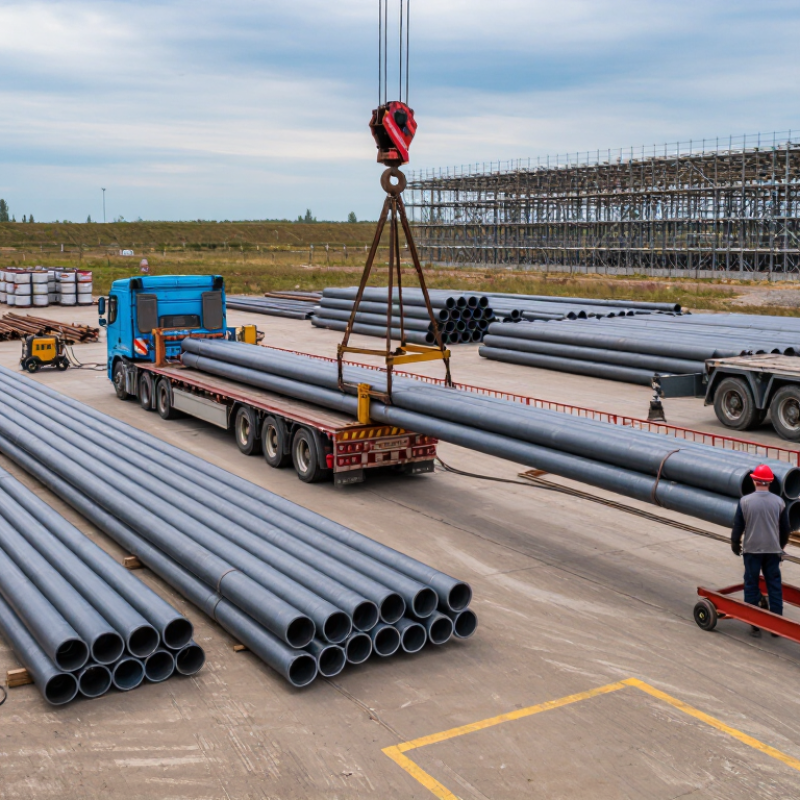
Across global infrastructure projects, Mild Steel Pipe remains a practical choice for water lines, structural supports, irrigation systems, and industrial frameworks. Its strength, weldability, and broad availability simplify fabrication in busy yards and remote project locations. A six-metre pipe section can move from a delivery truck to a welding station with familiar equipment and limited adjustment. That operational familiarity matters when schedules, labor skills, and local supply chains differ between countries.
Materials scientist Michael F. Ashby states, “Materials selection is a process of elimination.” His principle fits Mild Steel Pipe well. Engineers compare pressure requirements, wall thickness, corrosion exposure, temperature, transportation limits, and total project cost. Mild steel often survives this comparison because it offers dependable mechanical performance without the premium price of many alloy alternatives. Standard grades and established manufacturing practices also support clearer inspection and procurement decisions.
Still, Mild Steel Pipe is not flawless. It can corrode quickly in wet, salty, or chemically aggressive environments without suitable coatings, linings, or cathodic protection. That weakness deserves honest attention. A cheaper pipe can become an expensive replacement if designers ignore drainage, paint preparation, or maintenance access. Global projects also face inconsistent documentation and changing delivery conditions. Careful specifications, traceable certificates, qualified welding procedures, and realistic lifecycle calculations reduce those risks. The strongest choice is not always the cheapest pipe. It is the pipe that performs reliably after installation, during maintenance, and under the actual conditions of service.
Mild Steel Defined: ASTM A53 Grade B Offers 415 MPa Tensile Strength
Why Choose Mild Steel Pipe for Global Projects?
Mild steel remains practical for water lines, structural supports, and process piping. ASTM A53 Grade B offers 415 MPa tensile strength, giving engineers a clear baseline for load assessment. This value describes the stress the material can withstand before breaking. It does not replace design calculations. Wall thickness, temperature, pressure, and joining methods still matter.
Tips: Check the material certificate before installation. Confirm the Grade B designation, dimensions, heat number, and testing results. Inspect pipe surfaces for dents, deep corrosion, or damaged threads. Simple checks prevent expensive site delays.
In field work, mild steel is often easier to cut, weld, and source than specialized alloys. Its predictable performance can simplify international procurement. However, tensile strength alone can mislead. A pipe may meet 415 MPa yet fail through poor welding, incorrect support spacing, or aggressive soil contact. I have seen projects focus heavily on strength values while overlooking coating damage during transport. That weakness deserves attention. Select the pipe against the complete service environment, then verify fabrication quality and inspection records.
Why Choose Mild Steel Pipe for Global Projects? - Mild Steel Defined: ASTM A53 Grade B Offers 415 MPa Tensile Strength
| Data Dimension | ASTM A53 Grade B Mild Steel Pipe | Project Relevance |
|---|---|---|
| Material Definition | Carbon steel pipe commonly classified as mild steel because of its relatively low carbon content and practical weldability. | Suitable for general industrial, construction, utility, and mechanical piping applications when the design requirements are met. |
| Applicable Standard | ASTM A53/A53M, Specification for Pipe, Steel, Black and Hot-Dipped, Zinc-Coated, Welded and Seamless. | Provides a recognized technical basis for material, manufacturing, testing, dimensions, and inspection requirements. |
| Grade | Grade B | Offers higher minimum mechanical strength than ASTM A53 Grade A and is widely selected for general-purpose piping. |
| Minimum Tensile Strength | 415 MPa (60 ksi) | Indicates the minimum stress required to cause tensile failure during a standard tensile test. |
| Minimum Yield Strength | 240 MPa (35 ksi) | Defines the minimum stress at which permanent deformation begins under the applicable standard test conditions. |
| Available Manufacturing Types | Seamless and welded pipe are covered by ASTM A53, subject to the applicable product type and requirements. | Allows engineers to select a manufacturing route according to size, service conditions, availability, and project specifications. |
| Common Surface Conditions | Black steel pipe or hot-dip zinc-coated pipe, depending on the specified product and corrosion-protection requirements. | Surface selection can support different installation environments, but coating performance must be evaluated for the actual exposure conditions. |
| Typical Product Forms | Round pipe supplied in various nominal pipe sizes and wall thicknesses, including commonly used schedule designations. | Standardized sizing helps simplify design coordination, fittings selection, fabrication, and replacement planning. |
| Selected Outside Diameters | NPS 1/2: 21.3 mm NPS 1: 33.4 mm NPS 2: 60.3 mm NPS 4: 114.3 mm NPS 6: 168.3 mm NPS 8: 219.1 mm | These nominal pipe size outside diameters are commonly used in dimensional systems based on ASME B36.10M. |
| Example Schedule 40 Wall Thicknesses | NPS 2: 3.91 mm NPS 4: 6.02 mm NPS 6: 7.11 mm NPS 8: 8.18 mm | Wall thickness must be confirmed against the selected nominal size, schedule, design pressure, temperature, corrosion allowance, and applicable code. |
| Weldability | Generally suitable for conventional carbon-steel welding procedures, subject to the material certificate, welding procedure, thickness, and service conditions. | Supports fabrication of piping assemblies, structural connections, supports, and utility networks when qualified procedures are used. |
| Typical Applications | Water lines, air lines, low-pressure steam service, fire-protection systems, structural applications, and general industrial piping. | Application suitability must be verified against pressure, temperature, fluid compatibility, corrosion, and local regulatory requirements. |
| Strength-to-Cost Advantage | Provides a practical combination of carbon-steel strength, broad availability, fabricability, and relatively straightforward processing. | Can help control material and fabrication costs in projects that do not require alloy steel or specialized corrosion-resistant materials. |
| Global Project Compatibility | ASTM A53 is an internationally recognized material specification frequently referenced in engineering and construction documentation. | Improves communication among designers, fabricators, inspectors, and contractors, while project-specific codes and local standards still apply. |
| Required Verification Before Use | Confirm grade, pipe type, nominal size, wall thickness, heat or batch traceability, chemical composition, mechanical test results, and inspection documents. | Material selection should be finalized through engineering calculations and the governing project specification rather than tensile strength alone. |
Note: Mechanical values shown are minimum requirements for ASTM A53 Grade B. Actual design pressure, temperature limits, allowable stress, corrosion allowance, joining method, and service suitability must be determined under the applicable engineering code and project specification.
Footer
Affiliations