10 Best Workshop Tables for Global Buyers
Choosing the right workshop table is more than comparing prices, sizes, and glossy product photos. Global buyers need a dependable surface for assembly, repair, fabrication, inspection, and training. A strong workshop table should remain stable under pressure, support safe movement, and fit the user’s working height. Small details matter. Think about steel thickness, load capacity, edge protection, adjustable feet, drawer access, and cable management.
Industry data reinforces this practical concern. The International Labour Organization estimates that nearly three million workers die each year from work-related accidents and diseases. Not every incident involves a workbench, but the figure highlights why workplace design deserves careful attention. The U.S. Bureau of Labor Statistics reported 2.6 million nonfatal occupational injuries and illnesses among private-industry workers in 2023. A poorly planned workstation can add unnecessary reaching, bending, congestion, or instability. These risks are easy to overlook during purchasing.
Sustainability also shapes the decision. The Global E-waste Monitor 2024, published by UNITAR and the International Telecommunication Union, recorded 62 million tonnes of e-waste generated in 2022. Repair-oriented spaces therefore need durable, adaptable furniture that supports longer product lifecycles. This guide reviews ten workshop table options for international buyers, considering construction, ergonomics, modularity, maintenance, and real operating conditions. The shortlist is not flawless. Prices, specifications, and regional availability can change. Still, each selection offers a clear reason to consider it, whether you need a compact electronics station or a heavy-duty industrial workbench.
Workshop Table Types: Steel, Hardwood, Stainless Steel, and ESD Models
10 Best Workshop Tables for Global Buyers
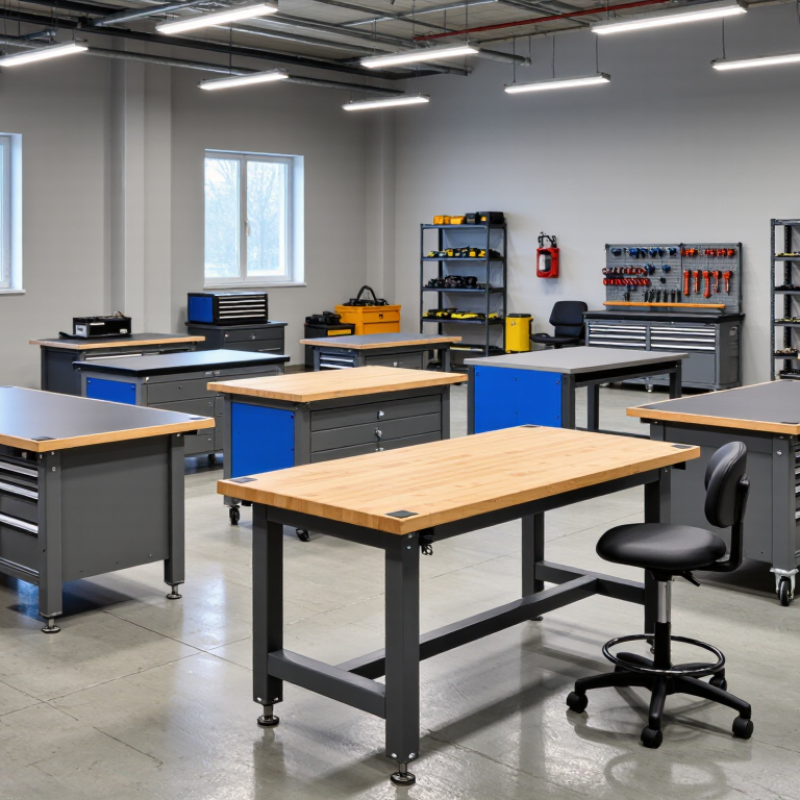
Workshop tables differ sharply in strength, surface behavior, and maintenance needs. Steel tables suit heavy fabrication, repair work, and frequent impact. Their welded frames should resist twisting under uneven loads. Check load ratings, leg adjustability, and coating thickness before ordering. A damaged coating can invite rust in humid workshops.
Hardwood tables provide a warmer surface for assembly, woodworking, and precision hand tasks. Dense timber can reduce vibration and protect delicate components. However, wood may absorb oil, moisture, and chemical stains without proper sealing. Inspect the top for flatness, joint quality, and replaceable sections. Natural variation is attractive, but it can also complicate consistency.
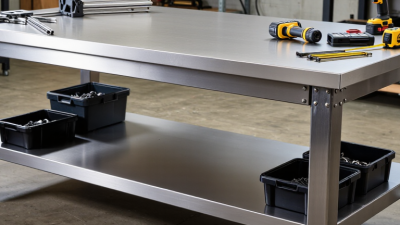
Stainless steel tables are valuable where hygiene, corrosion resistance, and easy cleaning matter. They work well in laboratories, food-related production areas, and clean maintenance zones. Look for smooth welds, rounded edges, and a surface that does not trap debris. ESD models require more than a conductive-looking tabletop. Verify resistance measurements, grounding points, wrist-strap connections, and tested dissipative materials. Static control can fail through a loose cable or unsuitable floor. Small detail, major risk. Global buyers should also confirm electrical specifications, packaging protection, assembly instructions, and replacement-part availability. In practice, the best table is not always the strongest one. A heavy steel frame may be unnecessary for light assembly, while a beautiful hardwood top may demand more care than expected. I would still recheck supplier measurements before placing a large order.
Load Capacity Benchmarks: Comparing 500–2,000 kg Rated Workbenches
10 Best Workshop Tables for Global Buyers
Load capacity is the clearest way to compare workshop tables, but the rating needs careful interpretation. A 500 kg workbench may suit electronics repair, light fabrication, or routine assembly. A 1,000 kg model offers more stability for vices, compact machinery, and dense steel components. Tables rated near 2,000 kg support heavier fixtures, though the floor must carry the combined weight safely. I have seen buyers overlook this point. A strong tabletop cannot correct a weak floor or uneven installation.
Check whether the stated capacity is evenly distributed or concentrated in one area. A 2,000 kg rating may assume balanced loading across the entire surface. A small engine placed near one corner creates different stress. Frame thickness, weld quality, adjustable feet, and cross-bracing also affect daily performance. Ask for test methods, technical drawings, and allowable deflection data. A table that bends visibly during work may still survive, but precision suffers.
Tips: Match the rating to your heaviest task, then add a practical safety margin. Inspect the floor, delivery route, and assembly space before ordering. Consider vibration, not only static weight. My own judgment is less confident when sellers provide only a maximum number. Request load-distribution details and confirm whether accessories reduce usable capacity. A 500 kg table can outperform a poorly installed 1,000 kg table. That detail deserves more attention.
10 Best Workshop Tables for Global Buyers - Load Capacity Benchmarks: Comparing 500–2,000 kg Rated Workbenches
| No. |
Workshop Table Type |
Rated Load |
Overall Dimensions
(L × W) |
Working Height |
Worktop Construction |
Frame and Support Design |
Recommended Application |
| 1 |
Heavy-Duty Assembly Bench |
2,000 kg |
2,400 × 1,200 mm |
850 mm |
6 mm steel plate over a laminated hardwood core |
Welded structural-steel frame with six reinforced legs |
Large machinery assembly, fabrication, and high-load maintenance work |
| 2 |
Industrial Machine-Service Table |
1,800 kg |
2,000 × 1,000 mm |
800 mm |
8 mm steel plate with replaceable sacrificial surface |
Fully welded box-section frame with adjustable leveling feet |
Motor, pump, gearbox, and industrial equipment servicing |
| 3 |
Modular Steel Workbench |
1,500 kg |
1,800 × 900 mm |
750–950 mm |
4 mm steel sheet over a 40 mm engineered-wood panel |
Bolted modular frame with height-adjustable legs |
Production lines requiring flexible layouts and reconfiguration |
| 4 |
Welding and Fabrication Table |
1,200 kg |
1,500 × 750 mm |
850 mm |
10 mm heat-resistant steel plate with clamping holes |
Heavy welded frame with cross-bracing and heat-resistant feet |
Metal fabrication, welding fixtures, and alignment operations |
| 5 |
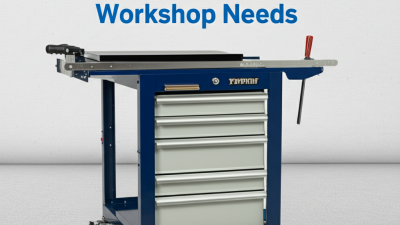
Mobile Tooling Workbench |
1,000 kg |
1,800 × 800 mm |
900 mm |
5 mm steel surface with hardwood impact layer |
Reinforced steel base with four industrial swivel casters and brakes |
Maintenance teams that need to move tools and assemblies between work areas |
| 6 |
Hydraulic-Height Workbench |
1,000 kg |
1,600 × 800 mm |
700–1,000 mm |
4 mm steel top with replaceable anti-slip work mat |
Manual hydraulic lifting frame with mechanical safety locking points |
Ergonomic repair, inspection, and mixed-height assembly tasks |
| 7 |
Electronics and Instrument Bench |
750 kg |
1,500 × 750 mm |
720–900 mm |
Static-dissipative laminate over a 30 mm reinforced panel |
Powder-coated steel frame with cable management and rear service rail |
Instrument assembly, testing, calibration, and controlled workshop environments |
| 8 |
Precision Inspection Table |
750 kg |
1,200 × 750 mm |
800 mm |
40 mm granite or precision-ground steel inspection surface |
Rigid four-leg frame with leveling mounts and vibration control |
Dimensional inspection, metrology, quality control, and gauge work |
| 9 |
Compact Maintenance Bench |
600 kg |
1,200 × 600 mm |
850 mm |
3 mm steel surface over a 30 mm laminated wood core |
Bolted steel frame with lower shelf and adjustable feet |
Small workshops, repair rooms, service depots, and limited floor areas |
| 10 |
Portable Service Worktable |
500 kg |
1,000 × 600 mm |
800 mm |
2 mm steel sheet over a sealed plywood core |
Knock-down steel frame with locking casters and folding side handles |
Field service, installation work, light mechanical repair, and mobile operations |
Benchmark note: Rated loads are representative static capacities for evenly distributed weight on a properly leveled workbench. Point loads, impact loads, caster use, uneven floors, lifting operations, and dynamic movement can reduce the safe working capacity. Global buyers should confirm test standards, safety factors, surface finish, corrosion protection, packaging dimensions, and local electrical or workplace requirements before purchase.
Ergonomic Dimensions: Evaluating 750–1,100 mm Working Heights
10 Best Workshop Tables for Global Buyers
Ergonomic Dimensions: Evaluating 750–1,100 mm Working Heights
Working height changes how comfortably people inspect, assemble, and repair equipment. A 750 mm table usually supports seated precision work. It suits microscope use, electronics inspection, and small components. A 900 mm surface often works well for mixed tasks. Operators can sit briefly or stand without excessive bending. Tables near 1,100 mm support standing assembly and heavier hand tools. They reduce deep forward flexion, but may strain shorter users.
Measure the user, not only the product. An operator wearing safety footwear may need extra clearance. Check elbow position while holding a screwdriver or measuring device. The work surface should keep shoulders relaxed and wrists reasonably straight. Adjustable legs provide greater flexibility across international teams. A 50 mm adjustment range can matter in daily production. It sounds minor. It is not.
During workshop evaluations, I also check knee space, foot stability, and cable access. A table can meet its height target yet feel awkward. Thick work mats raise the effective surface by 10 to 20 mm. Vises and fixtures can add more. This detail is easy to miss during procurement. Buyers should test the table with real tools, real footwear, and typical workloads. My own assessments have sometimes favored a lower setting, then changed after a full shift. Ergonomics needs observation, not guesswork.
Global Buyer Criteria: Certifications, MOQ, Warranty, Shipping, and Cost
10 Best Workshop Tables for Global Buyers
Global buyers should judge workshop tables beyond surface finish and advertised load ratings. Start with certifications relevant to the destination market, such as material safety, electrical compliance, or factory quality systems. Ask for current certificates, test reports, and the issuing organization. A logo on a product sheet proves little without traceable documents.
MOQ can change the real purchase cost. A table priced well may require 50 units, while a smaller order costs more per unit. Confirm carton dimensions, pallet requirements, lead time, and available customization before approving a sample. Warranty language needs equal attention. Check coverage for frames, drawers, casters, welding, and replacement parts. Also ask who pays return freight. Small details matter.
Shipping quotes should state the delivery term, port, insurance responsibility, and whether duties are excluded. A heavy steel table can become expensive when packaging is weak or unloading needs special equipment. Compare landed cost, not factory price alone. I would request photos of packed goods and a pre-shipment inspection for larger orders. That approach is not perfect, but it reduces unpleasant surprises. Some buyers focus too heavily on certifications and forget daily usability. Test drawer travel, worktop stability, edge comfort, and height adjustment with real tools. A table that looks excellent online may feel awkward after eight hours.