
What Is a Garage Bench and Which Type Is Best?
A garage bench is a sturdy work surface for repairs, projects, and everyday tasks. It might hold a vise, a toolbox, or a half-finished birdhouse. The right bench can make a crowded garage easier to use. The wrong one can block a walkway or wobble under pressure. Small details matter.
Common options include fixed benches, folding benches, and rolling benches. A fixed model offers a steady place for heavier work, while a folding one can free up floor space. A rolling bench adds mobility, but its wheels need reliable locks. Some benches include drawers or shelves; others keep the design simple. Materials matter, too. Wood can suit general projects, while metal surfaces may be easier to clean after messy jobs. Check the maker’s stated load capacity rather than judging strength by appearance alone.
So, which type is best? It depends on your space, the work you do, and how often you need to move the bench. Measure the area, including room to open doors and pull out drawers. Consider whether the surface height feels comfortable for your usual tasks. A large bench may seem useful, yet it can leave too little room to park a car. There is no universal winner. Even careful planning can miss an awkward corner or a frequently used outlet. This guide explains what a garage bench does, compares the main types, and highlights practical features to check before choosing one.
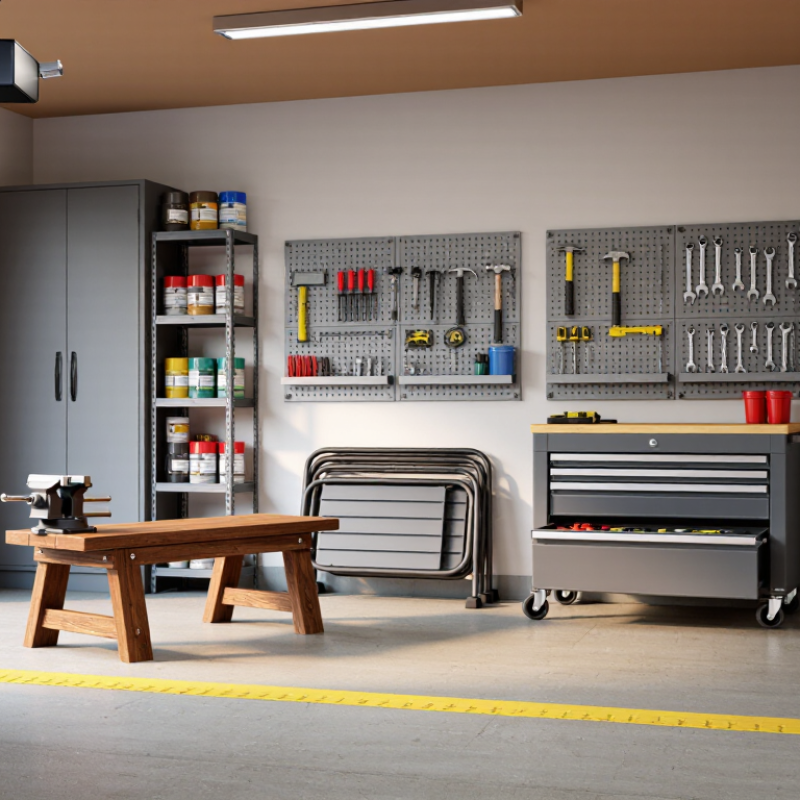
What a Garage Bench Is and How It Is Used
A garage bench is a stable work surface for repairs, maintenance, and hands-on projects. It gives you a place to clamp a board, sort screws, or inspect a bicycle without balancing parts on the floor. Many benches include drawers, shelves, or a pegboard for tools. Others are simple tables with a thick top and sturdy legs.
The best bench depends on the work and the space available. A wooden top can feel comfortable for light assembly and small repairs, while a metal surface may suit tasks involving oily parts. A mobile bench is useful when the garage layout changes, but its wheels should lock firmly before you work. Check the bench’s load rating, dimensions, and stability. A wobbly surface is frustrating.
Keep frequently used tools within reach, and leave enough clear space for the project itself. For example, a vise needs room for its handle, and long boards need support beyond the bench edge. I’ve found that a bench often becomes a storage shelf by accident. That makes it less useful. A small, honest setup may serve better than a large bench crowded with boxes. Tie the choice to your actual tasks, not an idealized workshop.
| What Is a Garage Bench and Which Type Is Best? — What a Garage Bench Is and How It Is Used | |||||
|---|---|---|---|---|---|
| Bench Type | What It Is | Common Uses | Typical Features | Best For | Main Consideration |
| Freestanding workbench | A fixed-height work surface supported by legs or a solid frame, usually placed against a wall or in the center of a garage. | General repairs, measuring, hand-tool work, and projects that need a stable surface. | Often made with a wood, plywood, or metal top. Common depths are about 24–30 inches; height should suit the user and the work. | Homeowners who want a versatile, dependable everyday work area. | It occupies permanent floor space. Stability and load capacity depend on its construction and assembly. |
| Wall-mounted folding bench | A work surface attached to a wall that folds up or down when needed. | Light repairs, hobby projects, and occasional tasks in a compact garage. | Folds away to free floor space. Requires secure attachment to suitable wall framing or masonry. | Small garages where keeping the floor clear is a priority. | Capacity and rigidity vary; it may not suit heavy work or repeated impact unless specifically designed for it. |
| Rolling workbench | A workbench mounted on casters, often with brakes and storage drawers or shelves. | Moving tools and projects around the garage, or repositioning a work surface as needed. | Mobile frame, storage options, and usually locking casters. A level, firm floor helps it stay steady during work. | Users who need flexible layouts or want tools close to different work areas. | Lock the wheels before working. Mobility, storage, and stability depend on the caster and frame design. |
| Workbench with cabinets or drawers | A bench that combines a worktop with built-in enclosed or drawer storage. | Organizing hand tools, fasteners, and supplies while keeping frequently used items near the work surface. | Storage is integrated beneath or beside the top; some models include a backsplash or pegboard area. | Garages where organized, accessible tool storage is important. | Storage can add weight and cost, and drawers or cabinets require clearance to open. |
| Assembly or project bench | A larger, sturdy bench intended for assembling, fitting, or working on projects that need more surface area. | Woodworking, household repairs, model building, and projects involving larger components. | May have a broad top, clamping points, or a replaceable sacrificial surface. | People who regularly work on projects that need room for materials and tools. | Needs more floor space; choose a top and frame suited to the materials and forces involved. |
| Portable folding workbench | A lightweight bench or work support that folds for storage or transport. | Occasional cutting, repairs, and tasks carried out in different locations. | Folds for storage and is generally easier to move than a permanent bench; some designs include clamping features. | Users who need a temporary work surface or have very limited storage space. | Check the stated load limit and stability; it may be less rigid than a fixed-frame bench. |
| Choosing tip: The best garage bench depends on available floor space, the tasks you perform, desired storage, and whether you need mobility. Check the manufacturer’s stated load capacity and installation requirements for any specific bench; capacities are not interchangeable between designs. | |||||
Related Posts
-
10 Best Garage Benches for Every Workshop?
-
What Is the Best Workshop Table to Buy?
-
How to Choose the Perfect Rolling Workbench for Your Workspace
-
How to Choose the Best Rolling Workbench for Your Needs?
-
Why Choose a Shop Workbench for Your Workshop?
-
How to Choose the Best Rolling Workbench for Your Workshop Needs
Footer
Affiliations